SEBI Demat 2.0: How Tokenised Bonds Change Investing
Overview
India’s SEBI and RBI have launched the Demat 2.0 blockchain pilot, successfully raising ₹1,025 crore via tokenized corporate bonds within the first week. By utilizing the central bank’s digital rupee for atomic settlement, this system slashes processing times to same-day delivery. This shift marks a major evolution in market plumbing, promising faster liquidity for future investors.
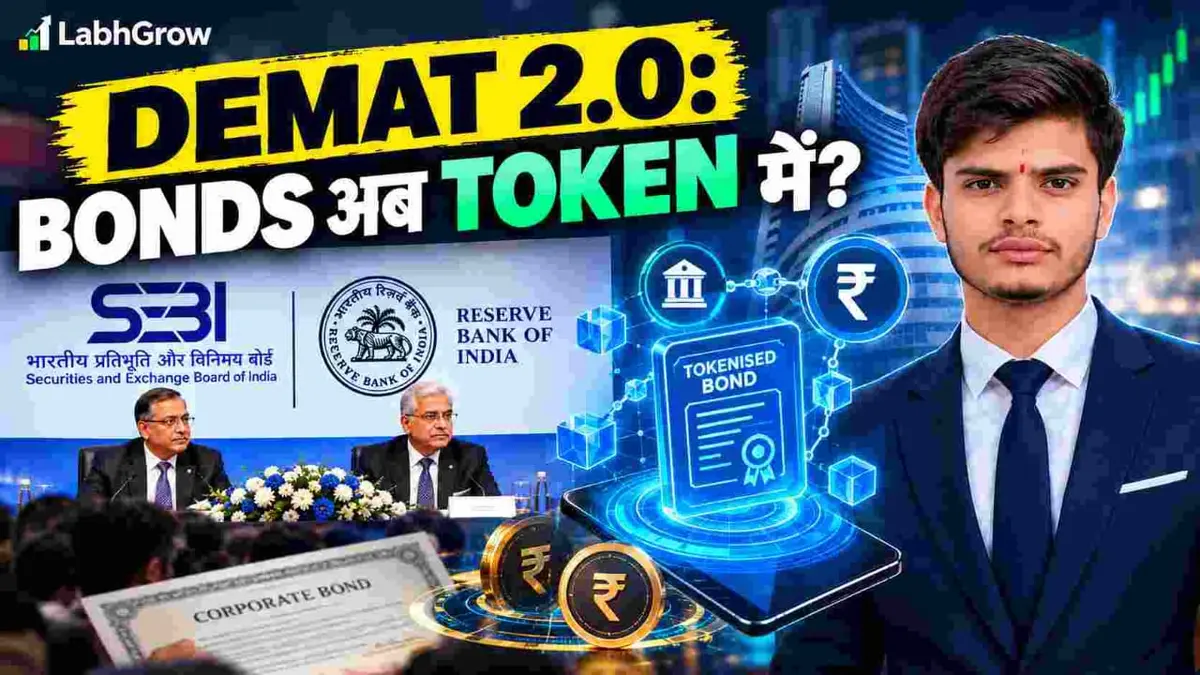

India's corporate bond market just got its first real taste of blockchain-style settlement. On September 10, 2026, market regulator SEBI and the Reserve Bank of India jointly rolled out Demat 2.0, a pilot that converts corporate bonds into digital tokens and settles them using the central bank's wholesale digital rupee. Within days of going live, three companies had already raised over ₹1,000 crore through the new system.
For an investor base used to hearing "demat account" only in the context of stocks, this is a meaningful shift in how bonds get issued, held, and paid out.
What Is SEBI Demat 2.0
Demat 2.0 does not create a new type of bond. It changes the plumbing behind an existing one. Under the pilot, corporate bonds are recorded as native digital tokens on a shared ledger maintained by the depositories, using distributed ledger technology (DLT).
The bond itself keeps its usual legal character — same coupon rate, maturity, credit rating, and investor rights as a regular listed bond. What changes is how ownership is recorded and how money moves when the bond is issued or serviced.
The pilot is being run inside SEBI's Regulatory Sandbox, meaning it is a controlled test rather than a market-wide rollout. Any broader rules will depend on how this trial performs.
₹1,025 Crore Raised in the First Week
The numbers so far give a sense of scale for a pilot project:
- REC Ltd issued the first tokenised bond on September 7, raising ₹500 crore from 18 institutional investors
- L&T followed on September 9, raising another ₹500 crore from four investors
- IIFL raised ₹25 crore from a single investor the same day
That puts total issuance under Demat 2.0 at ₹1,025 crore in under a week — a bigger start than earlier reports had suggested.
Quick Fact: Instead of the usual two to three working days, issuers under Demat 2.0 can potentially access funds on the same day the bond is issued, because the bond and the payment settle together instead of separately.
How the e-Rupee Settlement Works
The settlement side of Demat 2.0 leans on the RBI's wholesale central bank digital currency, often written as e₹-W. This connects to the depositories through the RBI's Unified Market Interface.
In a traditional bond issue, the transfer of the bond and the transfer of cash happen as two separate steps, which is where settlement risk usually creeps in — one leg can fail while the other goes through. Demat 2.0 links both legs so they move together, a method often called atomic settlement.
Bondholder records are visible to authorised institutions on the shared ledger in real time, and interest or maturity payments are designed to land directly in an investor's wholesale digital rupee wallet.
How Investors Currently Access Demat 2.0
Right now, participation is limited to the institutional side, but the process is worth understanding since retail access is expected later:
1. An eligible institutional investor gets the tokenised bond facility activated with their depository (NSDL or CDSL)
2. The investor also needs a wholesale digital rupee wallet with a participating bank, since that is how the cash leg settles
3. Bids are placed for the tokenised bond issuance through the existing bidding process
4. Once allotted, the bond token and the e-rupee payment settle simultaneously
5. The tokenised bond then sits inside the investor's regular demat account — no separate account is required
What This Means for Everyday Investors
For now, Demat 2.0 is an institutional pilot, so retail investors cannot directly buy these tokenised bonds yet. But the direction matters for anyone who holds or is considering fixed-income investments.
SEBI has said the pilot will expand in phases — first to secondary market trading through existing request-for-quote platforms, and later to retail investor access. If that happens, buying and holding corporate bonds could eventually feel as simple as buying shares, with faster settlement and fewer manual steps for interest payouts.
Until retail access opens up, investors looking for predictable, low-effort fixed-income options can still compare returns on traditional instruments using a FD Calculator to see how a fixed deposit stacks up against current bond yields before deciding where to park funds.
What Happens Next
SEBI has indicated more primary issuances are already in progress under this first phase. The next stages on the roadmap include bringing tokenised bonds onto secondary trading platforms and eventually opening the framework to retail investors, though no firm date has been announced for either step.
Market participants have also pointed to automated corporate actions — like interest payments and redemptions handled through smart contracts — as a longer-term goal, though this remains an early-stage ambition rather than a confirmed feature.
Key Takeaways
- Demat 2.0 is a SEBI-RBI pilot that tokenises corporate bonds using distributed ledger technology
- ₹1,025 crore has been raised so far by REC, L&T, and IIFL
- Settlement uses the RBI's wholesale digital rupee for same-day, synchronised transfer of bonds and payment
- The bond's legal terms — rating, coupon, maturity — remain unchanged
- Retail investor access is planned for a later phase, not available yet
Conclusion:
Demat 2.0 is still an early-stage pilot, and it's worth being clear-eyed about that — the current phase covers institutional issuances only, and features like secondary trading and smart contract-based servicing are still being tested in the sandbox. But the early numbers suggest SEBI and RBI are moving quickly, and if the pilot succeeds, it could reshape how India's roughly ₹50 lakh crore corporate bond market is issued, held, and settled in the years ahead.
The Market News and News section of LabhGrow covers general updates related to the economy, companies, government policies, and financial markets, compiled from publicly available sources for informational purposes only. This content does not constitute financial, investment, trading, or business advice of any kind, nor should it be interpreted as a recommendation to buy, sell, hold, or avoid any stock, fund, scheme, commodity, or financial instrument. LabhGrow is not a SEBI-registered research analyst, investment advisor, or financial institution, and does not guarantee the accuracy, completeness, or timeliness of the news or data presented. Market conditions are subject to constant and rapid change, and past updates or trends do not guarantee future outcomes. Readers are strongly advised to cross-verify information through official or regulatory sources and consult a qualified, registered financial advisor before making any financial or investment decision based on news covered here. LabhGrow and its team accept no liability for any loss or damage resulting from the use of this information.

Head of Content & Lead Writer
Senior financial & news writer specializing in Indian government schemes, market rates, and banking policies.
lakshyabhardwaj.hoc@labhgrow.in
Senior Research Analyst (Fact-Checker)
Dedicated researcher and data verifier ensuring 100% authenticity and fact-checking from primary government and financial feeds.
harshitsharma.sra@labhgrow.inFrequently Asked Questions
Related News & Articles

BRICS Payments Push: What It Means for Indian MSMEs
Sep 12, 2026

Saharanpur Fake Note Case: ₹17.29 Crore Scam At PNB
Sep 9, 2026

RBI ₹7 Lakh Cr VRRR Auction 2026: Your FD Rate Change Guide
Sep 5, 2026

₹15,000 Per Acre: Chhattisgarh Announces New Incentives for Farmers Diversifying Away from Paddy
Sep 2, 2026