BRICS Payments Push: What It Means for Indian MSMEs
Overview
BRICS finance ministers meeting in New Delhi this September 12-13 are prioritizing cross-border payment interoperability and the use of local currencies to slash trade friction. By integrating central bank digital currencies and boosting MSME financing, the bloc aims to bypass global financial dependencies, lowering costs for emerging market businesses through practical reform.
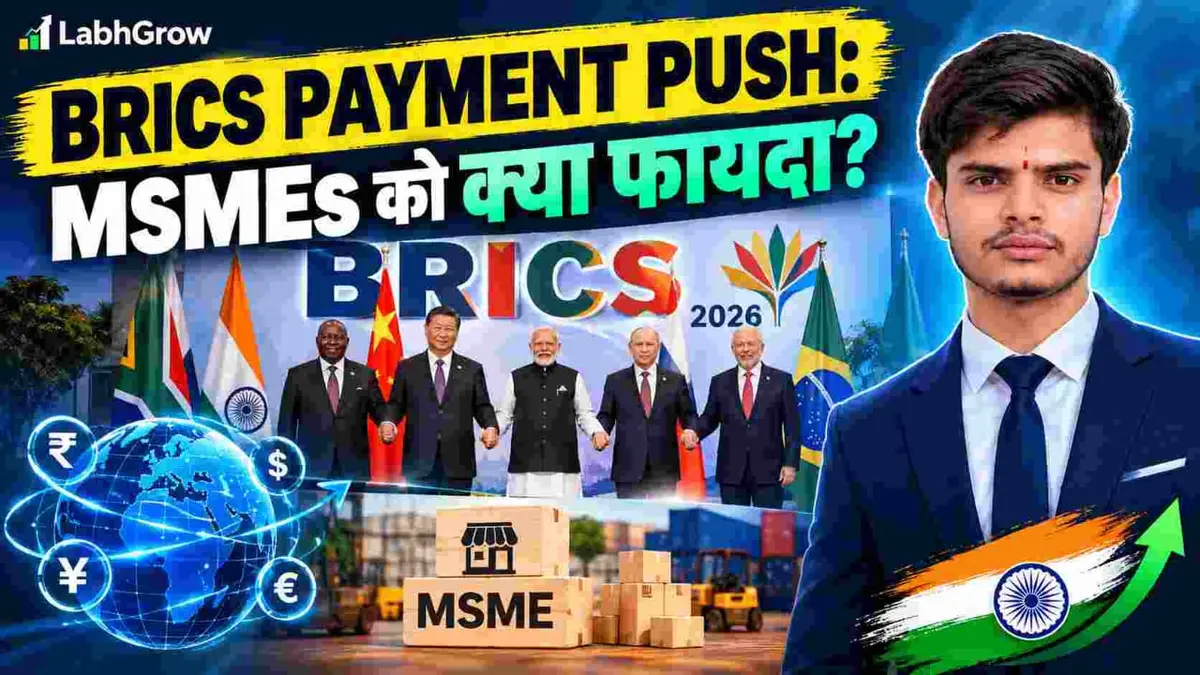

Leaders from eleven BRICS nations are gathering in New Delhi on September 12-13 for this year's summit, and for once, the finance track isn't playing second fiddle to geopolitics. Under India's chairship, cross-border payments and MSME finance have moved to the centre of the agenda, with real groundwork already laid in the months leading up to the summit.
What BRICS Finance Chiefs Have Actually Agreed On
BRICS Finance Ministers and Central Bank Governors met twice this year, first in Jaipur on August 12-13 and again in Mumbai on September 10. Their joint statement commits the grouping to continue work on cross-border payment interoperability and to explore trade settlements and investments in local currencies. The stated goal is simple: reduce friction and cost for businesses moving money across BRICS economies, at a time when global trade is facing fragmentation and protectionist pressure.
The ministers also welcomed progress on the BRICS Multilateral Guarantees initiative, aimed at mobilising private capital and lowering financing costs for development projects across BRICS and the wider Global South. On the trade-facilitation side, India's chairship pushed through the first BRICS Joint Customs Enforcement Operation and work on a Customs Mutual Administrative Assistance Agreement, both intended to make cross-border trade smoother and better policed.
Why MSMEs Are Getting Special Attention This Year
India's Ministry of MSME has been given a specific mandate this chairship: convene three SME Working Group meetings and host the first-ever BRICS MSME Forum. The first working group meeting was held online on April 24, with a sharp focus on access to finance for small businesses.
Two themes dominated that meeting. One was bridging the MSME credit gap through better financial inclusion, financial literacy and credit readiness. The other was building fintech-driven ecosystems that let small businesses tap SME credit and settle global trade payments more seamlessly. Officials from member countries compared notes on where their MSMEs struggle most — usually timely access to adequate, affordable credit — and agreed this needed deeper cooperation.
Quick Context: BRICS does not have a single common currency, and none is on the table right now. What is being discussed is payment-system interoperability and greater use of local currencies for trade — a very different, more practical goal that doesn't require political consensus on a shared currency.
The CBDC Proposal: Still On The Table, Not Yet Decided
One idea that has drawn attention is a Reserve Bank of India proposal to link the central bank digital currencies (CBDCs) of BRICS nations, making cross-border trade and tourism payments faster. Reuters reported on this citing sources familiar with the matter, and it has reportedly been floated for discussion at the summit. It's worth being clear that this remains a proposal under discussion, not a confirmed policy or a working system. If it eventually moves forward, CBDC interoperability would still take time to build and test before Indian MSMEs see any real-world benefit.
Step-by-Step: How an Easier BRICS Payment System Could Help an MSME Exporter
1. Invoice raised in local currency – An Indian MSME exporting to, say, Russia or the UAE (a newer BRICS partner) could invoice and receive payment in rupees or the buyer's local currency, instead of routing everything through a third currency.
2. Faster settlement rails – With better interoperability between payment systems, the transaction doesn't sit in a queue for multiple correspondent banks to clear it.
3. Lower conversion and transfer costs – Fewer intermediary banks generally means fewer conversion charges eating into the exporter's margin.
4. Quicker access to working capital – Faster settlement means the MSME gets paid sooner, easing pressure on working capital and reducing dependence on short-term loans.
5. Better credit visibility – As fintech-driven trade-finance tools plug into these payment rails, lenders get cleaner transaction data, which can support faster loan approvals for MSMEs with a genuine trade track record.
It's important to note this is the direction of travel, not something already live for exporters today. The systems and agreements to make this work are still being built out through 2026.
What This Means For Indian MSMEs, Exporters and Startups
For MSMEs already exporting to BRICS partners — or considering it — three things are worth watching. First, any move toward local-currency settlement could reduce dependence on the US dollar for these specific trade corridors, which matters when the rupee or the partner currency moves sharply. Second, the credit-access conversation at the SME Working Group level could eventually translate into easier trade-finance products, though this depends on how quickly banks and NBFCs adapt. Third, better customs cooperation among BRICS members could mean fewer delays and disputes at the border for goods moving between these economies.
None of this changes financing math for an MSME overnight. Businesses currently borrowing for working capital or import-export financing still need to plan around today's loan structures and EMI schedules — a business loan EMI calculator remains a practical way to work out actual monthly outflows before signing on for fresh credit tied to an export order.
Key Takeaways
- BRICS finance chiefs, meeting in Jaipur and Mumbai, have committed to continued work on cross-border payment interoperability and local-currency trade settlement.
- India's 2026 chairship has placed MSME finance at the centre, with a dedicated SME Working Group and the first-ever BRICS MSME Forum.
- A proposal to link BRICS central bank digital currencies is under discussion but not yet confirmed or implemented.
- Practical benefits for Indian MSME exporters — cheaper transfers, faster settlement, easier credit access — will depend on how fast these agreements turn into working systems.
Conclusion:
The BRICS summit in New Delhi has put a genuinely useful question on the table for Indian MSMEs: can cross-border trade get cheaper and faster without waiting on Western-dominated payment rails? The finance track's progress so far — on payment interoperability, local-currency settlement and MSME credit access — is real, but it's still policy groundwork rather than a finished product. Exporters and small businesses with an eye on BRICS markets should track how these commitments turn into actual banking and payment infrastructure over the coming months, rather than expecting immediate change.
The Market News and News section of LabhGrow covers general updates related to the economy, companies, government policies, and financial markets, compiled from publicly available sources for informational purposes only. This content does not constitute financial, investment, trading, or business advice of any kind, nor should it be interpreted as a recommendation to buy, sell, hold, or avoid any stock, fund, scheme, commodity, or financial instrument. LabhGrow is not a SEBI-registered research analyst, investment advisor, or financial institution, and does not guarantee the accuracy, completeness, or timeliness of the news or data presented. Market conditions are subject to constant and rapid change, and past updates or trends do not guarantee future outcomes. Readers are strongly advised to cross-verify information through official or regulatory sources and consult a qualified, registered financial advisor before making any financial or investment decision based on news covered here. LabhGrow and its team accept no liability for any loss or damage resulting from the use of this information.

Head of Content & Lead Writer
Senior financial & news writer specializing in Indian government schemes, market rates, and banking policies.
lakshyabhardwaj.hoc@labhgrow.in
Senior Research Analyst (Fact-Checker)
Dedicated researcher and data verifier ensuring 100% authenticity and fact-checking from primary government and financial feeds.
harshitsharma.sra@labhgrow.inFrequently Asked Questions
Related News & Articles
SEBI Demat 2.0: How Tokenised Bonds Change Investing
Sep 12, 2026

Saharanpur Fake Note Case: ₹17.29 Crore Scam At PNB
Sep 9, 2026

RBI ₹7 Lakh Cr VRRR Auction 2026: Your FD Rate Change Guide
Sep 5, 2026
₹15,000 Per Acre: Chhattisgarh Announces New Incentives for Farmers Diversifying Away from Paddy
Sep 2, 2026