N Chandrasekaran to Exit Tata Sons in 2027
Overview
N Chandrasekaran will step down as Tata Sons Executive Chairman when his current term ends on February 20, 2027, after the Tata Sons board failed to reach unanimous agreement on extending his tenure amid reported differences with Tata Trusts. His exit now triggers a major leadership succession process across the Tata Group.
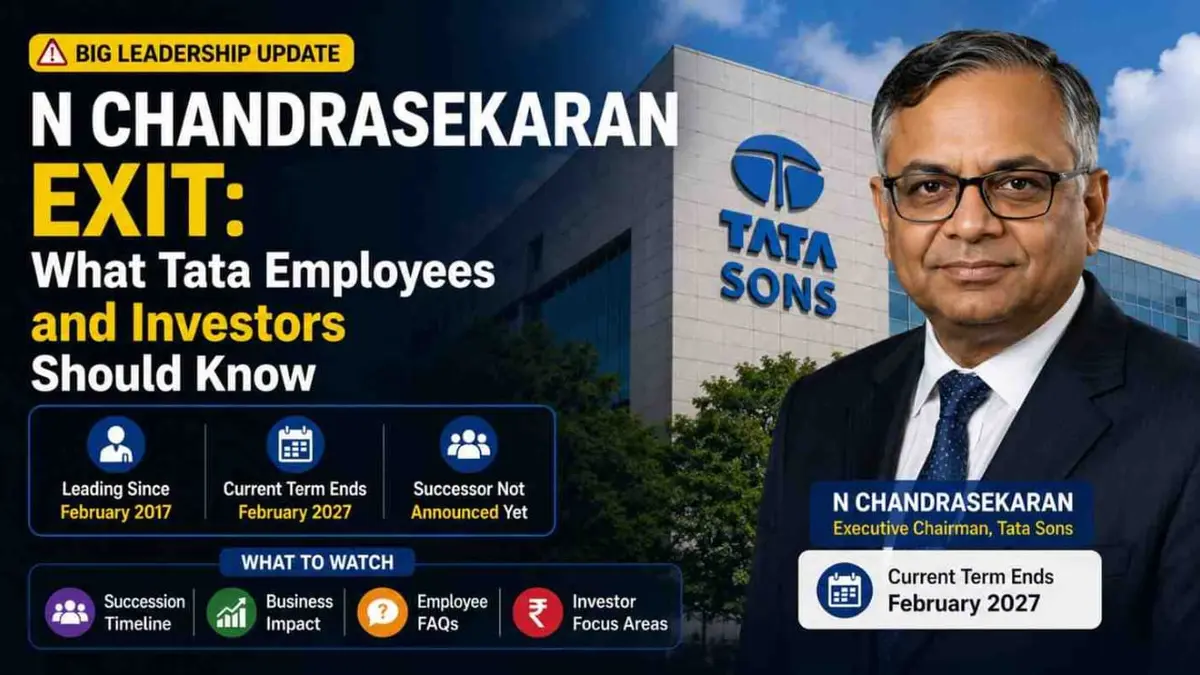

N Chandrasekaran will not seek another term as Executive Chairman of Tata Sons once his current tenure ends on February 20, 2027, bringing a decade-long chapter of leadership at India's largest business conglomerate closer to a close.
The announcement, made ahead of Tata Sons' Annual General Meeting scheduled for August 18, sets off a high-stakes succession process at a group that controls more than 30 companies, including Tata Consultancy Services, Tata Motors, Tata Steel and Tata Power.
Why Chandrasekaran Is Stepping Away
Chandrasekaran took charge as Tata Sons Chairman in February 2017, succeeding Cyrus Mistry, and was reappointed for a second five-year term in 2022. According to his own statement, the Sir Dorabji Tata Trust and Sir Ratan Tata Trust had recommended extending his tenure by another five years, and the proposal had also been backed by the Tata Sons Nomination and Remuneration Committee and the board.
However, that proposal was tabled at a board meeting on February 24 and did not go through, as it lacked unanimous support from directors. Chandrasekaran did not publicly name who opposed the extension, but multiple media reports point to friction with Noel Tata, who took over as Chairman of Tata Trusts in October 2024 following the death of Ratan Tata.
Reports citing sources familiar with the matter suggest the disagreement centred on conditions attached to the reappointment, including an assurance that Tata Sons would remain unlisted. Six months on, with no resolution reached, Chandrasekaran said the continued uncertainty had become difficult to sustain given the scale of ongoing strategic projects across the group.
A Decade of Transformation
Chandrasekaran's tenure saw the Tata Group expand aggressively into new sectors — from reacquiring Air India in 2022 to building out semiconductor manufacturing, electronics assembly, battery production and digital businesses. He also chairs several major Tata operating companies, including Tata Motors, Tata Steel, TCS and Indian Hotels, all of which will eventually need new leadership as well.
Market and Investor Reaction
News of the impending exit rattled investor sentiment. Shares of several Tata Group companies came under pressure following the announcement, with TCS, Tata Steel and Tata Power all trading lower on the day the news broke, reflecting concern over the uncertainty around succession planning at India's most valuable conglomerate.
What Happens Next
Tata Sons has not yet named a successor. The Tata Group is expected to weigh both internal executives and external candidates as it begins a formal search process. Given that Tata Trusts hold roughly 66% of Tata Sons, the trust's leadership — currently headed by Noel Tata — is likely to play a decisive role in shaping who takes over.
Until a successor is named, Chandrasekaran continues to hold his position, and no immediate operational changes are expected at Tata Sons or its group companies.
What This Means for Employees, Investors and Partners
For Tata Group employees, the coming months are likely to bring close attention to internal communications and any signals about leadership continuity across operating companies. Investors and shareholders in listed Tata firms may want to track board announcements and analyst commentary closely, since leadership transitions at this scale can influence strategic direction, capital allocation and stock sentiment in the short term. Business partners and vendors working with Tata companies may also watch for any changes in decision-making processes during the transition window.
Those tracking Tata Group stocks or considering investment decisions during this transition period may find it useful to review broader market trends and portfolio strategies using a dedicated Stock Market and Investment Guide.
Conclusion
Chandrasekaran's decision marks the end of an era defined by aggressive diversification and professional management at Tata Sons. With nearly 18 months left in his term, the group now faces the task of identifying a successor capable of steering its sprawling portfolio through the next phase of growth, all while managing the internal dynamics between Tata Sons' board and Tata Trusts.
> Disclaimer: The content provided on LabhGrow is for educational and informational purposes only. We are not a SEBI-registered investment advisor. Please consult a qualified financial advisor before making any investment or financial decisions. LabhGrow is not responsible for any loss or damage arising from the use of this information.

Head of Content & Lead Writer
Senior financial & news writer specializing in Indian government schemes, market rates, and banking policies.
lakshyabhardwaj.hoc@labhgrow.in
Senior Research Analyst (Fact-Checker)
Dedicated researcher and data verifier ensuring 100% authenticity and fact-checking from primary government and financial feeds.
harshitsharma.sra@labhgrow.in