PPF vs EPF: Big Difference in 2026 – Which One Actually Builds More Wealth?
Overview
Confused between PPF and EPF? Here’s a simple, real-life breakdown that shows which one actually grows your money faster in India.
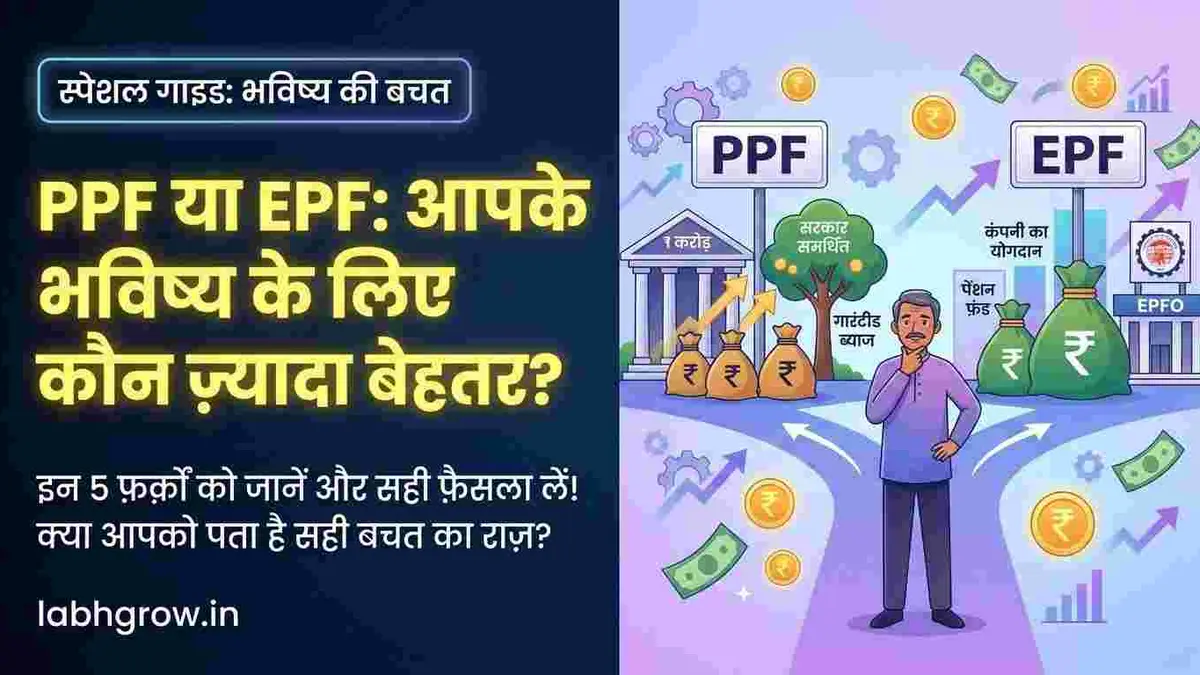

You must have heard this a hundred times—“Start saving early.” But when you actually try to do it, confusion hits. PPF? EPF? FD? SIP? Bhai, itna options de diya hai system ne ki aadmi bas sochta reh jaata hai.
And if you’re a salaried person, chances are EPF is already being deducted from your salary. But then someone tells you, “PPF bhi open kar lo, safe hai.” Now the real question begins—do you really need both? And more importantly, which one actually builds more money for your future?
Let’s break this down in a way that actually makes sense in real life—not textbook style.
The Simple Truth: Both Are Safe, But Work Very Differently
First things first—both PPF (Public Provident Fund) and EPF (Employee Provident Fund) are government-backed. Matlab, risk almost zero. That’s why Indian families love these options. “Safe hai beta” is usually the final decision-maker in most homes.
But here’s the catch—they are built for different types of people.
EPF is for salaried employees. If you work in a company, your employer automatically deducts 12% of your basic salary and contributes another 12%. So technically, you're saving double every month.
PPF, on the other hand, is totally voluntary. You decide how much you want to invest (up to ₹1.5 lakh per year).
Let’s Talk Real Money – Where Do You Actually Earn More?
This is where things get interesting.
EPF currently gives around 8%+ interest (changes slightly every year). PPF gives around 7.1%. On paper, EPF looks better. But that’s not the full story.
Imagine this:
Ravi works in a private company and earns ₹40,000 per month basic salary. Around ₹4,800 goes into EPF from his side, and another ₹4,800 from his employer. So every month, ₹9,600 is invested.
Now compare this with PPF.
Let’s say Ravi also invests ₹5,000 monthly in PPF. Over time, both will grow—but EPF has one hidden advantage: employer contribution. That’s basically free money.
So yes, EPF often ends up creating a bigger corpus if you’re salaried.
But Wait… PPF Has Its Own Power
Now don’t ignore PPF thinking EPF is the king. PPF has one major advantage—flexibility.
You can open a PPF account even if you’re a student, freelancer, or self-employed. No salary needed. No company required.
Also, PPF runs for 15 years. Long-term discipline automatically build ho jaata hai.
And here’s something most people don’t think about—PPF can act as a backup.
Let’s say you switch jobs, go freelance, or take a break. Your EPF contributions may stop. But your PPF? You can continue anytime.
So in a way, PPF gives you independence.
Liquidity – Can You Take Out Money Easily?
Here comes the practical side of life.
In EPF, withdrawing money is possible—but usually linked to conditions like job change, unemployment, or retirement. There are partial withdrawal rules, but it's not fully flexible.
PPF is even stricter in the beginning. You can’t withdraw fully before 15 years. Partial withdrawal is allowed after a few years.
So honestly, both are not meant for short-term needs. If you’re thinking of using this money for quick emergencies, then this isn’t the right place.
Think of both as your “future safety net.”
Tax Benefits – The Sweetest Part
This is where both PPF and EPF shine equally.
Both fall under the EEE category:
- Investment is tax-free
- Interest earned is tax-free
- Final maturity amount is also tax-free
Matlab jo bhi paisa banega, pura ka pura aapka hi hai. No tax tension.
That’s a big reason why these schemes are still popular even in the age of stocks and crypto.
So… Which One Should You Choose?
Honestly, this is not a “PPF vs EPF – choose one” situation.
It’s more like:
- If you are salaried → EPF is already working for you
- If you want extra safe savings → PPF is a great addition
Think of EPF as your default savings engine. PPF is your backup engine.
A lot of financially smart people actually use both.
A Small Reality Check (Most People Ignore This)
Here’s something nobody tells you.
Both PPF and EPF are safe, but they may not beat inflation by a huge margin in the long run. That means your money grows—but not aggressively.
So if your goal is just safety, these are perfect.
But if your goal is wealth creation—like buying a house, early retirement, or financial freedom—you might need to combine these with other options like SIPs or mutual funds.
| Feature | PPF | EPF |
|---|---|---|
| Who can invest | Anyone | Salaried employees |
| Interest rate | ~7.1% | ~8%+ |
| Lock-in period | 15 years | Till retirement/job change |
| Employer contribution | No | Yes |
| Tax benefit | Yes (EEE) | Yes (EEE) |
| Flexibility | High | Limited |
PPF and EPF are both safe government-backed savings schemes in India. EPF usually generates higher returns due to employer contribution, making it ideal for salaried individuals, while PPF offers flexibility and is suitable for anyone looking for long-term, tax-free savings.
You can also read this -
EPF vs PPF: Meaning, Differences, Returns & Which Is Better In 2026
Disclaimer: The information provided on Labhgrow.in is for educational purposes only. We are not affiliated with the Income Tax Department, NSDL (Protean), or UTIITSL. Delivery times and tracking processes are subject to government portal functionality. Please never share your PAN details or OTPs with unauthorized third-party websites.

Head of Content & Lead Writer
Senior financial & news writer specializing in Indian government schemes, market rates, and banking policies.
lakshyabhardwaj.hoc@labhgrow.in
Senior Research Analyst (Fact-Checker)
Dedicated researcher and data verifier ensuring 100% authenticity and fact-checking from primary government and financial feeds.
harshitsharma.sra@labhgrow.in