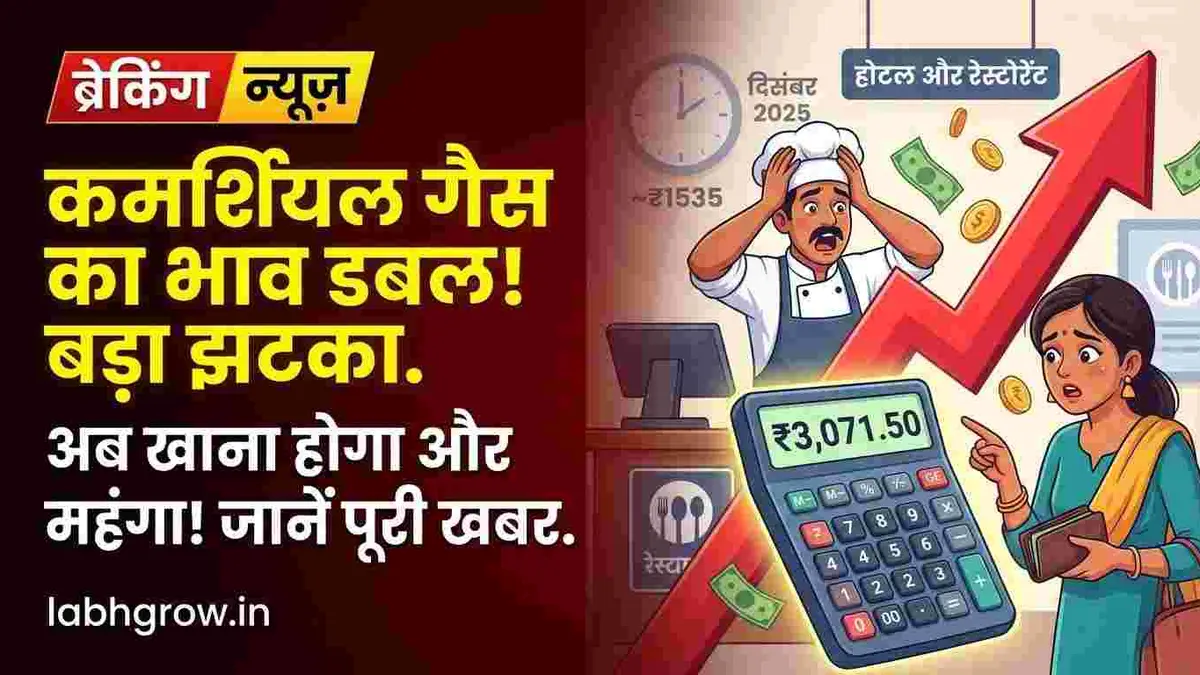

Commercial LPG Price Jumps to ₹3,071.50 — Hotels, Restaurants & Small Businesses Feel the Heat
Commercial LPG Price Doubles to ₹3,071.50 — Why This Matters More Than Most People Think
For many Indians, LPG price news usually becomes important only when the household cylinder gets expensive. But this time, the real story is happening somewhere else — in the commercial LPG market.
The price of commercial LPG cylinders has now reportedly climbed to ₹3,071.50, almost double compared to levels seen around December 2025. At first glance, many people may think, “Ye toh hotels aur restaurants ka issue hai.” But the reality is much bigger. Whenever commercial gas prices rise sharply, the effect slowly reaches tea stalls, restaurants, bakeries, cloud kitchens, and eventually, the common customer.
And honestly, that impact has already started showing.
Across many Indian cities, small food business owners are quietly struggling. A local chai shop owner in Kanpur recently mentioned that his monthly cooking fuel cost has become harder to manage than electricity bills. Earlier, a few extra customers during weekends balanced things out. Now, every refill feels expensive.
This is exactly why the latest LPG price jump matters.
Why Commercial LPG Prices Are Rising So Fast
Several factors are working together behind this sudden increase. Global crude oil prices remain unstable, shipping costs are fluctuating, and currency pressure on the rupee is also affecting imported fuel prices.
India imports a large portion of its LPG needs. So whenever international energy markets become volatile, domestic commercial LPG rates react quickly.
But there’s another angle many people miss.
Commercial cylinders do not receive the same kind of subsidy focus that domestic cylinders sometimes get. That means hotels, eateries, caterers, and food vendors directly absorb most price hikes. And eventually, businesses pass some of that burden to customers.
That’s why your favourite ₹20 plate of chowmein suddenly becomes ₹30 without any major announcement.
Restaurants and Small Businesses Are Feeling the Real Pressure
Big restaurant chains may still manage because they operate at scale. But for smaller businesses, the situation is becoming difficult.
Think about a small dosa stall in Chennai or a family-run dhaba on a highway near Jaipur. Their daily profit margins are already thin. Rising commercial LPG prices directly eat into their earnings.
Many owners now face only three choices:
- Increase food prices
- Reduce portion sizes
- Accept lower profits
Most are trying a mix of all three.
Interestingly, some cloud kitchens and cafes have already started slightly increasing delivery menu prices on food apps. Customers may not notice a ₹10 or ₹15 rise immediately, but over time these small increases become part of daily expenses.
And this doesn’t stop at restaurants.
Commercial LPG is used in bakeries, sweet shops, hostels, roadside food stalls, and even some small manufacturing units. So the impact spreads wider than people expect.
The Middle-Class Effect Nobody Talks About
India’s middle class often gets hit indirectly during fuel inflation cycles.
When petrol rises, transport becomes costly. When commercial LPG rises, food inflation slowly follows. The tricky part is that these increases happen gradually, making them harder to notice initially.
A family ordering food twice every weekend may suddenly start spending ₹500–₹800 extra monthly without realizing where the increase came from.
Even office canteens and school cafeterias may eventually adjust pricing if fuel costs remain elevated for a long time.
For salaried employees already handling EMIs, SIP investments, school fees, and rising grocery costs, another layer of food inflation is definitely not welcome.
Many finance experts believe energy inflation has a psychological effect too. People start becoming more cautious with spending, dining out, and even travel plans.
That slows down small local businesses further.
Could Domestic LPG Prices Rise Too?
This is the question most households are asking right now.
As of now, the sharp increase is mainly in commercial LPG cylinders. Domestic LPG pricing works differently and is sometimes influenced by government policy decisions and subsidy management.
However, historically, when international fuel costs remain elevated for long periods, pressure eventually builds across the entire LPG ecosystem.
That doesn’t automatically mean household cylinder prices will double. But market watchers are closely monitoring the situation.
Many analysts feel the government may try balancing inflation pressure ahead of key economic periods because cooking gas directly affects household sentiment in India.
Still, uncertainty remains.
And uncertainty itself changes consumer behaviour.
Some Businesses Are Looking for Alternatives
Interestingly, rising LPG prices are also pushing innovation.
Some restaurants are shifting partially toward electric cooking equipment for selected operations. A few bakeries are experimenting with energy-efficient ovens. Large kitchens are investing in better fuel management systems to reduce wastage.
But for smaller businesses, such transitions are easier said than done.
A roadside tea seller cannot suddenly replace his setup with expensive electric systems. Initial investment itself becomes a challenge.
This is why many small vendors are hoping for some price stabilization soon.
In conversations with local traders, one common emotion keeps appearing — unpredictability.
Business owners say they can somehow handle high prices temporarily. But constantly changing fuel rates make planning almost impossible.
What Consumers Should Expect Next
For regular consumers, the impact may not come as one big shock. Instead, it may arrive slowly through:
- Slightly expensive restaurant meals
- Increased catering charges
- Higher bakery product prices
- Costlier street food in some cities
- Food delivery price revisions
This gradual inflation pattern is common whenever operational fuel costs rise sharply.
At the same time, Indian consumers are also becoming smarter. Many families are already reducing unnecessary online food orders, using cashback offers more actively, and preferring local eateries over premium dining.
In a way, rising fuel costs quietly reshape spending habits across the economy.
And that’s why this commercial LPG story is bigger than just one cylinder price.
The Bigger Economic Signal
Sometimes, small headlines reveal larger economic realities.
A commercial LPG cylinder touching ₹3,071.50 is not just about restaurants paying more. It reflects pressure in global energy markets, inflation concerns, business uncertainty, and changing consumer behaviour — all happening simultaneously.
For now, small businesses remain the most vulnerable.
The coming months will be important. If fuel prices stabilize globally, pressure may ease. But if international energy costs continue rising, many sectors connected to food and hospitality could feel further stress.
For ordinary Indians, this is one of those updates worth watching closely — because even if the cylinder is “commercial,” the effect eventually reaches almost everyone’s pocket.
| Item | Earlier Approx Cost | Possible New Cost Impact |
|---|---|---|
| Tea at local stall | ₹10 | ₹12–₹15 |
| Basic restaurant meal | ₹120 | ₹140–₹160 |
| Bakery snacks | ₹20 | ₹25 |
| Small catering order | ₹5,000 | ₹5,500+ |
Commercial LPG cylinder prices in India have reportedly risen to ₹3,071.50 since December 2025. The increase is affecting restaurants, tea stalls, bakeries, and small businesses, which may gradually pass higher operating costs to consumers through increased food prices and service charges.
You can also read this -
Disclaimer: The information provided on Labhgrow.in is for educational purposes only. We are not affiliated with the Income Tax Department, NSDL (Protean), or UTIITSL. Delivery times and tracking processes are subject to government portal functionality. Please never share your PAN details or OTPs with unauthorized third-party websites.