India Cash Rules 2026: No Limit on Keeping Cash at Home, But These Tax Rules Can Save You from Trouble
Overview
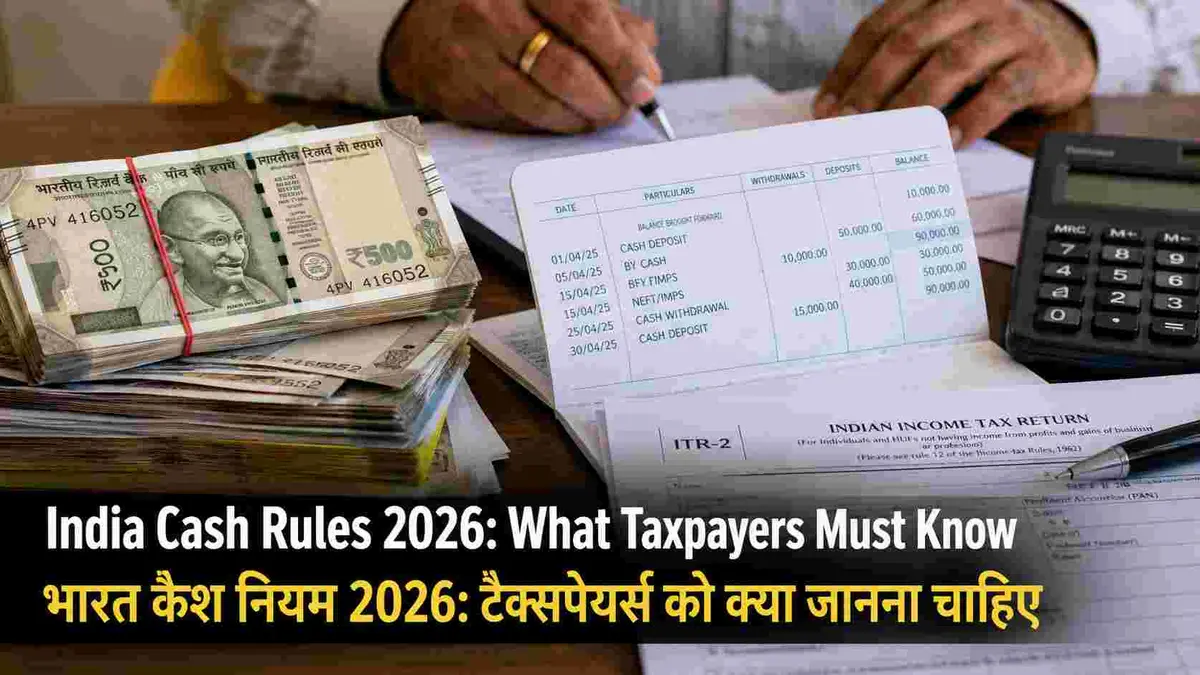
A widespread belief among Indian taxpayers is that keeping a large amount of cash at home is illegal. In reality, no Indian law prescribes a maximum limit on the amount of cash an individual can keep at home. However, that does not mean cash is beyond scrutiny. If tax authorities discover substantial cash during a search or investigation, the individual must be able to explain where the money came from using valid financial records. Besides this, the Income-tax Act contains separate rules governing high-value cash receipts, loans, deposits, business payments and international travel with currency. Understanding these provisions can help...

No Legal Limit on Cash Kept at Home
Contrary to several viral social media claims, there is no legal ceiling on the amount of cash an individual may keep at home in India. Neither the Income-tax Act, 1961 nor the Reserve Bank of India (RBI) specifies a maximum cash holding for individuals.
Whether the cash amounts to ₹1 lakh, ₹10 lakh or more, possession alone does not violate any law.
The crucial requirement is that the money should originate from lawful and explainable sources, such as:
- Salary or professional income
- Business income recorded in books of accounts
- Agricultural income, where applicable
- Bank withdrawals
- Sale of property or investments
- Gifts received in accordance with tax laws
- Inheritance or other legally received funds
If questioned by the Income Tax Department, supporting documents should be available to establish the source.
Why Source of Cash Matters
The absence of a cash holding limit does not prevent tax authorities from examining unexplained money.
During an Income Tax search, survey or investigation, officers may ask the taxpayer to provide documentary evidence showing how the cash was accumulated.
If the explanation is unsatisfactory, the amount may be treated as unexplained income under the Income-tax Act, potentially leading to tax, interest and applicable penalties based on the facts of the case.
For this reason, taxpayers should safely preserve:
- Income Tax Returns (ITRs)
- Bank statements
- Cash withdrawal slips
- Sale deeds
- Gift deeds
- Business books of accounts
- Bills and receipts
Good documentation significantly reduces the risk of future disputes.
Section 269ST: Cash Receipts Above ₹2 Lakh
One of the most important cash-related provisions is Section 269ST of the Income-tax Act.
Under this provision, a person generally cannot receive ₹2 lakh or more in cash:
- From a single person in a day,
- For a single transaction, or
- In respect of one event or occasion from a person.
Certain exceptions apply, including transactions involving Government entities, banks and other notified institutions.
Violating this provision may attract a penalty equal to the amount of the prohibited cash receipt, subject to conditions provided in the law.
Rules for Cash Loans and Deposits
The Income-tax Act also restricts cash-based loans.
Under Sections 269SS and 269T, accepting or repaying loans or deposits of ₹20,000 or more in cash is generally prohibited, except in specified situations permitted by law.
These provisions were introduced to discourage unaccounted cash transactions and promote transparency in financial dealings.
Business Payments Made in Cash
Businesses should also be careful while making cash payments.
Generally, cash expenditure exceeding ₹10,000 per day to a person may not qualify as an allowable business expense under Section 40A(3), although certain exceptions are provided under the Income-tax Rules.
Using digital or banking channels for larger payments helps businesses remain compliant.
Carrying Cash During Foreign Travel
People travelling abroad should note that separate regulations govern the carriage of Indian currency and foreign exchange.
Under the Foreign Exchange Management Act (FEMA) and RBI regulations, travellers must comply with prescribed limits for:
- Indian currency notes
- Foreign currency
- Forex cards
- Traveller's cheques
The permissible limits vary depending on the destination and purpose of travel. Travellers should verify the latest RBI and authorised dealer guidelines before departure.
Why This Matters for Tier-2 and Tier-3 Families
Many households outside major metropolitan cities still rely heavily on cash for property purchases, agriculture-related income, weddings and family savings.
While keeping cash itself is legal, maintaining proper financial records has become increasingly important.
Simple precautions such as retaining bank withdrawal slips, documenting gifts and reporting income correctly can help families respond confidently if questions ever arise from tax authorities.
Quick Takeaways
| Topic | Rule |
|---|---|
| Cash kept at home | No legal upper limit |
| Source of cash | Must be explainable with documents |
| Cash receipt | ₹2 lakh or more generally restricted under Section 269ST |
| Cash loans/deposits | ₹20,000 or more generally prohibited under Sections 269SS and 269T |
| Business cash payments | Large payments may affect tax deduction eligibility |
| Foreign travel | Separate RBI and FEMA rules apply |
Helpful Tip
Before undertaking high-value financial transactions, taxpayers may also estimate their tax liability using an Income Tax Calculator. This can help ensure that reported income remains consistent with major cash transactions and reduce the likelihood of future compliance issues.
Conclusion
India does not impose any legal restriction on the amount of cash a person can keep at home. The real legal requirement is transparency. If the money comes from legitimate sources and proper records are maintained, merely possessing cash does not violate tax laws.
At the same time, taxpayers should remain aware of separate restrictions on large cash receipts, loans, deposits, business payments and foreign travel with currency. Understanding these provisions can help individuals and families avoid unnecessary notices, penalties and compliance issues while managing their finances responsibly.
For More Information -
Disclaimer: The information provided on Labhgrow.in is for educational purposes only. We are not affiliated with the Income Tax Department, NSDL (Protean), or UTIITSL. Delivery times and tracking processes are subject to government portal functionality. Please never share your PAN details or OTPs with unauthorized third-party websites.

Head of Content & Lead Writer
Senior financial & news writer specializing in Indian government schemes, market rates, and banking policies.
lakshyabhardwaj.hoc@labhgrow.in
Senior Research Analyst (Fact-Checker)
Dedicated researcher and data verifier ensuring 100% authenticity and fact-checking from primary government and financial feeds.
harshitsharma.sra@labhgrow.in