RBI Keeps Repo Rate Unchanged at 5.25% — What This Latest Update Means for Your EMI, Loans & Savings
Overview
RBI keeps repo rate unchanged at 5.25%. Find out how this latest update affects your home loan EMI, car loan, savings and inflation outlook.

Sometimes, the biggest financial relief doesn’t come from a salary hike or bonus. It comes quietly — from a decision taken inside a meeting room in Mumbai. And this time, the news is exactly that kind.
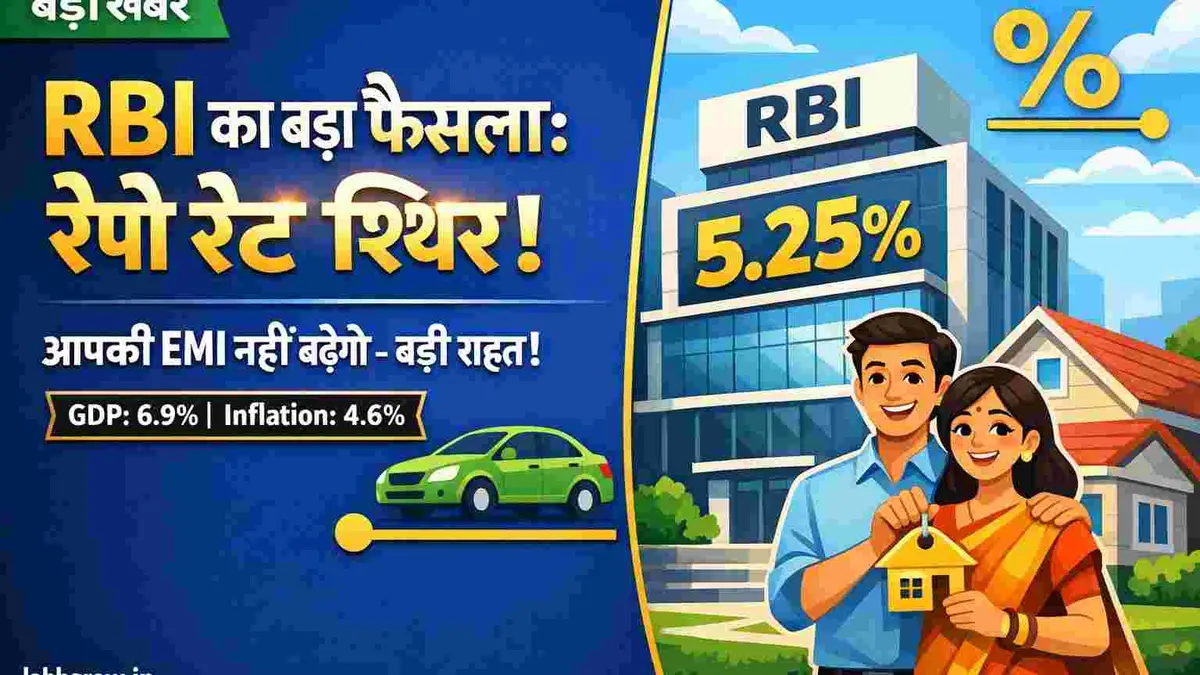
The Reserve Bank of India has decided to keep the repo rate unchanged at 5.25%. At first glance, it may sound like just another technical update. But if you have a home loan, car loan, or even planning one — this decision directly connects to your monthly budget. Yes, that EMI you pay every month… this news is about that.
The announcement came after the latest monetary policy meeting chaired by Governor Sanjay Malhotra. Along with keeping rates steady, the central bank also projected GDP growth at 6.9% and retail inflation at 4.6% for the current financial year. In simple terms — growth is expected to remain strong, and inflation is under watch but manageable.
But what does all this mean for you? Let’s break it down in real-life terms.
Why RBI Didn’t Change the Repo Rate This Time
Think of repo rate as the “base price” at which banks borrow money. When RBI increases it, loans become expensive. When RBI cuts it, loans get cheaper. This time, RBI chose the middle path — no change.
Why? Because the economy is currently walking a tightrope. On one side, growth is looking good. On the other side, inflation still needs monitoring. If RBI had increased rates, loans would become costly. If they had cut rates, inflation could rise again. So they decided to hold steady — a wait-and-watch approach.
This is like driving on a highway with moderate traffic. You don’t accelerate too much, but you also don’t slow down unnecessarily. RBI is doing exactly that.
The Biggest Relief: No Immediate EMI Shock
Let’s take a simple example. Imagine you took a home loan of ₹40 lakh at floating interest rate. Over the last few years, many borrowers saw their EMIs increase because rates were rising.
This time, since repo rate is unchanged, banks are unlikely to increase lending rates immediately. That means your EMI stays roughly the same — no sudden jump.
For a salaried person managing rent, school fees, grocery bills, and SIP investments, even a small EMI hike hurts. So, this stability itself feels like relief.
It’s not a reduction, but at least it’s not an increase. And sometimes, that’s good enough.
What About New Loan Buyers?
If you're planning to take a home loan, car loan, or personal loan, this decision creates a stable environment. Interest rates are not rising — so you can plan better.
Imagine you're planning to buy a car in the next 2–3 months. With repo rate unchanged, banks will likely continue offering similar interest rates. This helps you calculate affordability without worrying about sudden changes.
However, don’t expect rates to fall immediately. RBI is clearly signaling caution. They want inflation to stay under control before considering rate cuts.
So for borrowers, the message is simple:
Good time for planning, but don’t wait endlessly expecting huge rate cuts.
Inflation and Growth — Why These Numbers Matter
RBI projected GDP growth at 6.9%. That’s actually a strong signal. It means the economy is expected to expand steadily. Businesses may invest more, jobs may grow, and demand may stay healthy.
At the same time, retail inflation is estimated at 4.6%. This is slightly above the ideal target of 4%, but still within manageable range.
For a common person, this translates into something practical:
Prices may rise moderately, but not aggressively.
So your grocery bill may increase slowly, not suddenly. Fuel prices may fluctuate, but not spike drastically. This balance is what RBI is aiming for.
What This Means for Savings and FD Investors
Whenever repo rate stays unchanged, deposit rates also tend to remain stable. That means FD interest rates may not increase sharply.
If you were waiting for higher FD rates, you may not see big jumps soon. However, current FD rates are already decent compared to previous years.
For conservative investors — retirees, parents saving for children’s education — stability is actually good. You can lock your FD without worrying about sudden downward changes.
Should You Prepay Your Loan Now?
Many borrowers ask this question. When rates are stable, should you prepay?
If you have extra cash and high-interest loan, partial prepayment is always a good idea. It reduces total interest burden. But don’t empty your emergency fund just for prepayment.
A balanced approach works best. Continue your SIPs, maintain emergency savings, and prepay only surplus amount.
Remember — liquidity matters.
The Emotional Side of This Decision
Finance is not just numbers. It’s emotions too.
When EMI increases repeatedly, people feel pressure. They cut spending, delay travel plans, postpone purchases. A stable rate creates confidence.
A salaried employee feels safer. A small business owner plans expansion. A family considers buying a house.
That’s why this “no change” decision actually changes sentiment — in a positive way.
What Could Happen Next?
RBI is watching two things closely — inflation and global conditions.
If inflation falls further, rate cuts may happen later. That could reduce EMIs. But if inflation rises again, RBI may hold rates longer.
So for now, stability is the keyword.
Quick Snapshot
| Factor | Latest Update | Impact |
|---|---|---|
| Repo Rate | 5.25% | No EMI change |
| GDP Growth | 6.9% | Positive economic outlook |
| Inflation | 4.6% | Moderate price rise |
| Loan Rates | Stable | Planning easier |
| FD Rates | Stable | No major jump |
The Bottom Line
This RBI decision may not make headlines like a big rate cut, but it quietly protects your monthly budget. No sudden EMI shock, stable loan rates, and controlled inflation — all these together create a sense of financial balance.
For borrowers, it’s breathing space.
For investors, it’s stability.
For the economy, it’s cautious optimism.
Sometimes, the best financial news is simply — nothing changed.
And this time, that “nothing changed” might actually be good news for your wallet.
RBI has kept the repo rate unchanged at 5.25%, meaning no immediate increase in loan EMIs. The central bank expects GDP growth at 6.9% and inflation at 4.6%. For borrowers, this means stable interest rates, easier financial planning, and no sudden rise in home or car loan repayments.
You can also read this -
Disclaimer: The information provided on Labhgrow.in is for educational purposes only. We are not affiliated with the Income Tax Department, NSDL (Protean), or UTIITSL. Delivery times and tracking processes are subject to government portal functionality. Please never share your PAN details or OTPs with unauthorized third-party websites.

Head of Content & Lead Writer
Senior financial & news writer specializing in Indian government schemes, market rates, and banking policies.
lakshyabhardwaj.hoc@labhgrow.in
Senior Research Analyst (Fact-Checker)
Dedicated researcher and data verifier ensuring 100% authenticity and fact-checking from primary government and financial feeds.
harshitsharma.sra@labhgrow.in