UPI Breaks All Records! ₹29.53 Lakh Crore Transactions in One Month — What It Means for You
Overview
UPI crosses ₹29.53 lakh crore in monthly transactions. Discover why this matters, what’s changing, and how it affects your daily payments.

It’s 9:30 in the morning. A small tea stall near a metro station. A college student orders chai, checks his pocket… no cash. But there’s no tension. He simply scans the QR code, pays ₹12, and walks away. The vendor doesn’t even look surprised — just hears the familiar “payment received” sound.
This tiny moment is happening millions of times across India every single day.
And now, it has led to something huge.
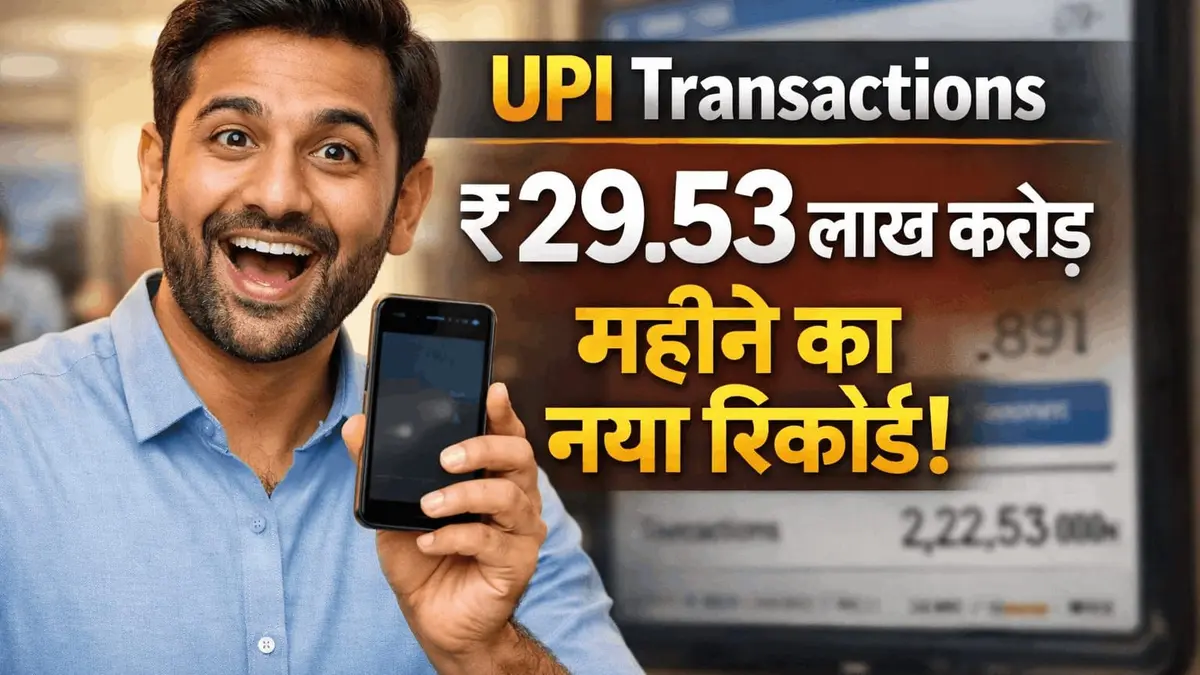
India’s Unified Payments Interface (UPI) has just created a massive record — ₹29.53 lakh crore worth of transactions in a single month. Yes, you read that right. Not in a year. Not in six months. Just one month.
This isn’t just a number. It’s a signal. A sign that India’s payment habits are changing faster than anyone expected.
From “Do You Have Change?” to “Scan Kar Do”
Not very long ago, paying someone ₹27 was awkward. Either you rounded it off, or searched desperately for coins. Shopkeepers would say “kal de dena.” Customers would say “chhutta nahi hai.”
Now? Even the smallest payments are digital.
Rickshaw drivers, fruit vendors, roadside momo stalls — everyone has a QR code. And that’s exactly why UPI is exploding.
This ₹29.53 lakh crore figure didn’t come from big corporations alone. It came from everyday Indians — paying for groceries, splitting restaurant bills, sending money home, paying school fees, or transferring rent.
Think about it. Earlier, someone earning ₹25,000 per month might withdraw cash and use it for everything. Today, that same person might use UPI 40–50 times in a month.
Multiply that by crores of users — and you get this record.
What’s Driving This Massive Growth?
The interesting part is — there’s no single reason. It’s a mix of convenience, habit, and trust.
First, smartphones are everywhere. Even budget phones now support smooth payment apps. Internet is cheaper than ever. And UPI apps are simple enough for almost anyone to use.
Second, merchants prefer digital. No counting cash. No fake note risk. No change problem. Money comes directly to bank account.
Third, people now trust digital payments. During the early days, many were hesitant. “Paise atak gaye toh?” “Refund kab milega?” But after years of smooth transactions, confidence has grown.
Even older users who once avoided apps are now comfortable. You’ll often see parents asking their kids, “QR scan kar do.”
Why This Record Matters for You
You might think — “UPI record bana toh bana, mujhe kya?” But actually, it affects you more than you realize.
When UPI grows this fast, banks and payment companies invest more in improving services. That means faster payments, fewer failures, and new features.
For example, autopay for subscriptions, credit on UPI, international UPI usage — all these innovations come because usage is high.
Also, competition increases. Multiple apps try to offer cashback, rewards, and better user experience. That means more benefits for users.
Most importantly, digital footprint builds. Your regular digital payments can indirectly help in credit access. Some lenders already look at transaction history to offer small credit lines.
Small Businesses Are the Biggest Winners
While salaried users benefit from convenience, small businesses are seeing a silent revolution.
Take a small grocery store owner. Earlier, daily cash handling meant time spent counting, depositing, and managing change. Now, payments come directly into bank account.
There’s also transparency. Monthly inflow becomes visible. This helps when applying for business loans.
Even street vendors are benefiting. A pani puri seller who earlier dealt only in cash now receives hundreds of digital payments daily. That’s real financial inclusion.
And here’s the interesting part — many customers actually prefer shops that accept UPI. So merchants who adopted early gained more customers.
Is Cash Becoming Irrelevant?
Not completely. Cash is still widely used, especially in rural areas and for certain types of payments.
But the trend is clear. Digital is growing faster than cash.
Younger users barely carry cash. Even for small amounts like ₹10–₹20, they prefer UPI. That behavioral shift is powerful.
Also, during emergencies, digital payments help. Imagine needing medicine late at night with no ATM nearby. UPI solves that instantly.
Any Concerns with This Growth?
Whenever something grows this fast, concerns naturally follow.
Security is one. While UPI itself is secure, scams are increasing because usage is high. Fake payment requests, phishing links, and fraud calls are common.
But the rule remains simple — never approve a “collect request” unless you are expecting it. And never share OTP or PIN.
Another concern is dependency on internet. If network is down, payments may fail. However, offline payment features are being developed to reduce this issue.
The Bigger Picture: India’s Digital Economy
This ₹29.53 lakh crore milestone isn’t just about payments. It reflects India’s broader digital transformation.
Digital payments reduce cash handling costs, improve tax transparency, and support formal economy growth. Government schemes, subsidies, and benefits can be transferred more efficiently.
Also, India’s UPI model is being adopted globally. Some countries are already integrating it for cross-border payments. This means in future, Indians may pay abroad using the same UPI apps.
That’s a huge shift from the days when international payments required cards or forex.
What Could Happen Next?
If this growth continues, we may soon see monthly transactions crossing ₹35 lakh crore or even ₹40 lakh crore.
Credit cards on UPI may expand. EMI payments via UPI could become common. Small ticket loans may be offered instantly based on transaction history.
And most importantly, more people will move from cash to digital — not because they’re forced, but because it’s simply easier.
The tea stall vendor at the metro station probably doesn’t track monthly transaction data. But he knows one thing — more customers pay digitally now than ever before.
And that’s the real story behind this record.
It’s not about numbers. It’s about how India pays.
| Payment Method | Earlier Trend | Current Trend |
|---|---|---|
| Cash | Dominant | Declining for small payments |
| Debit Card | Common in malls | Less used for small spends |
| UPI | Limited | Dominant for daily payments |
| Wallets | Popular earlier | Shifted to UPI |
UPI has recorded ₹29.53 lakh crore in monthly transactions, showing rapid growth in digital payments across India. This surge reflects increased usage by everyday users for small and large payments, improved trust in digital platforms, and wider merchant adoption, making UPI the most preferred payment method for daily financial transactions.
You can also read this -
Disclaimer: The information provided on Labhgrow.in is for educational purposes only. We are not affiliated with the Income Tax Department, NSDL (Protean), or UTIITSL. Delivery times and tracking processes are subject to government portal functionality. Please never share your PAN details or OTPs with unauthorized third-party websites.

Head of Content & Lead Writer
Senior financial & news writer specializing in Indian government schemes, market rates, and banking policies.
lakshyabhardwaj.hoc@labhgrow.in
Senior Research Analyst (Fact-Checker)
Dedicated researcher and data verifier ensuring 100% authenticity and fact-checking from primary government and financial feeds.
harshitsharma.sra@labhgrow.in