Loan Basics Every Beginner Should Know Before Taking Their First EMI
Overview
Planning to take a loan? From EMI to interest rate, these simple basics can save you from costly mistakes. A must-read for every beginner.
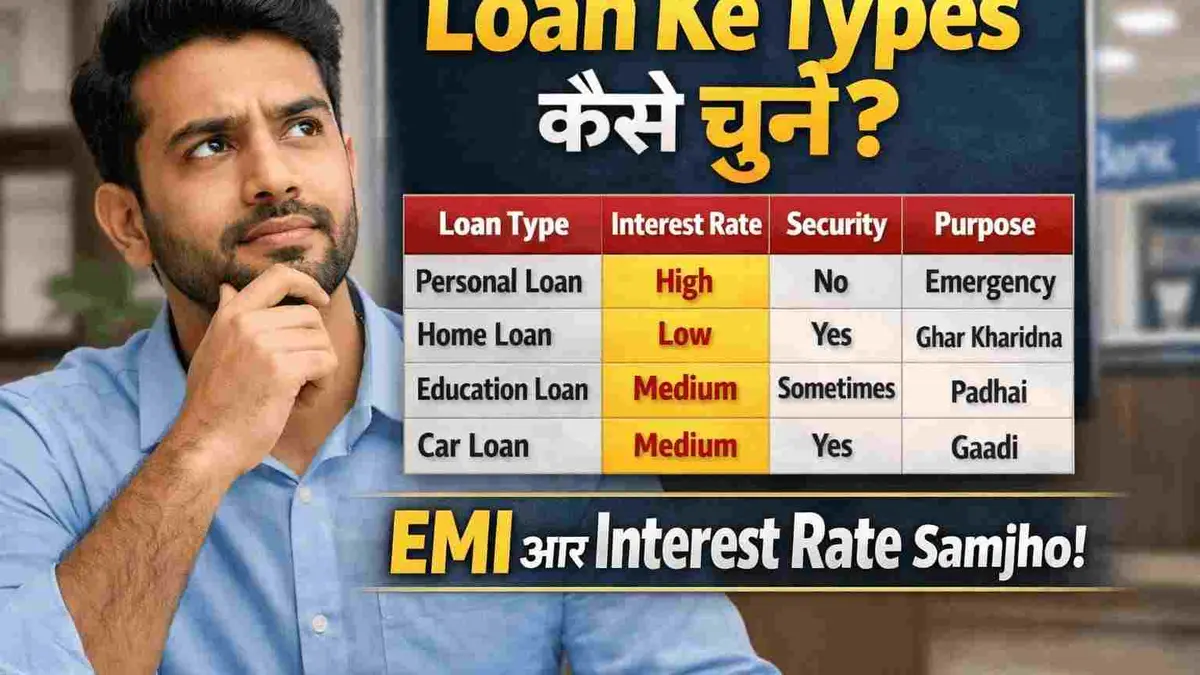

It usually starts casually. Someone at work says, “Bhai, I took a personal loan — process was instant.” Another friend posts a picture of a new bike. Suddenly, you start thinking… maybe I should also take a loan. After all, banks are offering pre-approved loans, apps are sending notifications, and everything feels easy.
But here’s the catch — taking a loan is easy. Living with it every month is not.
In India, lakhs of first-time borrowers jump into loans without fully understanding what they’re signing up for. And later, they realise that EMI is not just a number — it becomes a monthly commitment that quietly affects your savings, lifestyle, and even future plans.
Before you take your first loan, there are a few basics that can save you from unnecessary stress. Nothing complicated. Just simple things most people overlook.
The “Low EMI” Trap — It’s Not Always Cheap
Banks and loan apps love to highlight one thing — “Low EMI”. And honestly, it looks attractive. A ₹5,000 EMI doesn’t sound scary. But what many beginners don’t realise is that EMI depends on tenure.
Longer tenure = smaller EMI
But also = more total interest paid.
Let’s say you take a ₹2 lakh personal loan. If you choose 2 years, EMI might be higher, but you finish quickly. If you stretch it to 5 years, EMI looks comfortable, but you end up paying much more overall.
This is where most beginners make their first mistake. They focus on monthly comfort and ignore total cost.
A smarter approach? Balance is key. Choose an EMI that doesn’t hurt your monthly budget, but also doesn’t drag the loan unnecessarily.
Interest Rate — The Silent Game Changer
When someone says “loan at 10% interest,” it sounds simple. But in reality, there are different types of interest calculations — reducing balance, flat rate, floating, fixed.
For example, two loans both showing “12%” might not cost the same.
Some lenders use flat rate calculations, which means interest is calculated on the full loan amount for the entire tenure. That increases the real cost.
Banks usually offer reducing balance interest, which is more borrower-friendly. As you repay principal, interest reduces.
This is why comparing only EMI is risky. Always compare total repayment amount.
It’s like buying a phone — you don’t just see monthly installment; you see final price.
Pre-Approved Loan Doesn’t Mean Free Money
Many beginners think pre-approved loans are special offers. In reality, they are just quick approvals based on your credit profile.
You’ll see messages like:
“Congratulations! You are eligible for ₹3,00,000 instantly.”
Feels good, right? But eligibility doesn’t mean you should take it.
Think of it like a credit card limit. Just because you can spend ₹1 lakh doesn’t mean you should.
A loan should always be taken for a purpose — education, emergency, asset purchase — not just because it’s available.
Otherwise, EMI becomes a burden without any real benefit.
Your Salary vs Your EMI — The 30% Rule
A simple rule many financial planners follow: total EMI should not exceed 30–35% of your monthly income.
So if you earn ₹30,000 per month, your safe EMI range is around ₹9,000 to ₹10,000.
Why? Because life has other expenses — rent, groceries, travel, mobile recharge, family needs.
Imagine committing ₹15,000 EMI on ₹30,000 salary. Suddenly, one unexpected expense — medical bill or travel — and your budget collapses.
Loans should support your life, not control it.
Credit Score — The Hidden Factor Most Beginners Ignore
Many first-time borrowers don’t even know their credit score. But this single number decides your interest rate.
Higher score → lower interest
Lower score → expensive loan
If your credit score is good, banks trust you more. If it’s low, they either charge higher interest or reject the application.
Here’s the interesting part — even missing one EMI can hurt your score.
That’s why discipline matters. Once you start a loan, consistency is everything.
Think of your credit score like a reputation. It takes time to build, but one mistake can damage it.
Processing Fees — The Small Charge That Adds Up
When you take a loan, the amount you receive is often slightly less than sanctioned amount. That’s because lenders deduct processing fees.
Usually, it ranges between 1% to 3%.
For example, if you take ₹1 lakh loan and processing fee is 2%, you may receive ₹98,000 but repay EMI based on ₹1 lakh.
This is something beginners don’t notice initially. It’s not a huge amount, but it still increases effective cost.
Always check:
- Processing fee
- Foreclosure charges
- Late payment penalty
These small things matter in the long run.
Personal Loan vs Credit Card EMI — Not the Same
Many people confuse these two. But they behave differently.
Credit card EMI usually has higher interest. It looks easy because it converts instantly. But cost is often more.
Personal loans usually offer better interest rates, especially from banks.
So if you need larger amount, personal loan is usually smarter than converting credit card outstanding into EMI.
But again, only if you really need it.
A Real-Life Example
Rohit, a 24-year-old from Pune, took a ₹1.5 lakh personal loan for a bike. EMI was ₹6,200 — manageable. But he didn’t consider rent increase and fuel costs.
After six months, he struggled with monthly cash flow. He started using credit card to manage expenses. Soon, he had both EMI and credit card dues.
Nothing extreme happened — but financial stress became constant.
This is common. Not because loans are bad, but because planning was missing.
When Taking a Loan Actually Makes Sense
Loans are not always bad. In fact, they can be useful.
Good loan examples:
- Education loan
- Home loan
- Business loan
- Emergency medical loan
These either create value or solve genuine needs.
Risky loan examples:
- Expensive gadgets
- Vacation loans
- Lifestyle upgrades beyond budget
Difference is simple — one builds your future, the other only upgrades momentary lifestyle.
Quick Comparison Table
| Factor | What to Check | Why It Matters |
|---|---|---|
| Interest Rate | Fixed vs Floating | Affects total repayment |
| Tenure | Short vs Long | Impacts EMI & total cost |
| Processing Fee | 1–3% usually | Hidden cost |
| EMI Amount | Within budget | Avoids financial stress |
| Credit Score | 700+ ideal | Better rates |
| Total Repayment | Final amount | Real cost |
The Bottom Line
Loans are tools. Used wisely, they help. Used casually, they create pressure.
Before taking your first loan, pause for a moment. Ask yourself:
Do I really need this?
Can I comfortably pay EMI for next 1–3 years?
What if my expenses increase?
These small questions can save you from big regrets.
In today’s instant loan era, patience has become rare. But smart borrowers still take time, read details, and choose carefully.
Because at the end of the day, financial peace matters more than instant approval.
Before taking your first loan, understand EMI, interest rate, tenure, and total repayment. Choose an EMI within 30% of your income and compare lenders carefully. A loan should solve a problem, not create financial stress. Smart planning before borrowing can save you from costly mistakes later.
Disclaimer: The information provided on Labhgrow.in is for educational purposes only. We are not affiliated with the Income Tax Department, NSDL (Protean), or UTIITSL. Delivery times and tracking processes are subject to government portal functionality. Please never share your PAN details or OTPs with unauthorized third-party websites.

Head of Content & Lead Writer
Senior financial & news writer specializing in Indian government schemes, market rates, and banking policies.
lakshyabhardwaj.hoc@labhgrow.in
Senior Research Analyst (Fact-Checker)
Dedicated researcher and data verifier ensuring 100% authenticity and fact-checking from primary government and financial feeds.
harshitsharma.sra@labhgrow.in