Farmer ID for Fertilizer: The New Rule Every Farmer Should Know Before Buying Urea
Overview
Farmers across India are hearing about the new Farmer ID rule linked with fertilizer purchases. Here’s what it means, who needs it, and why delaying it could create problems later.
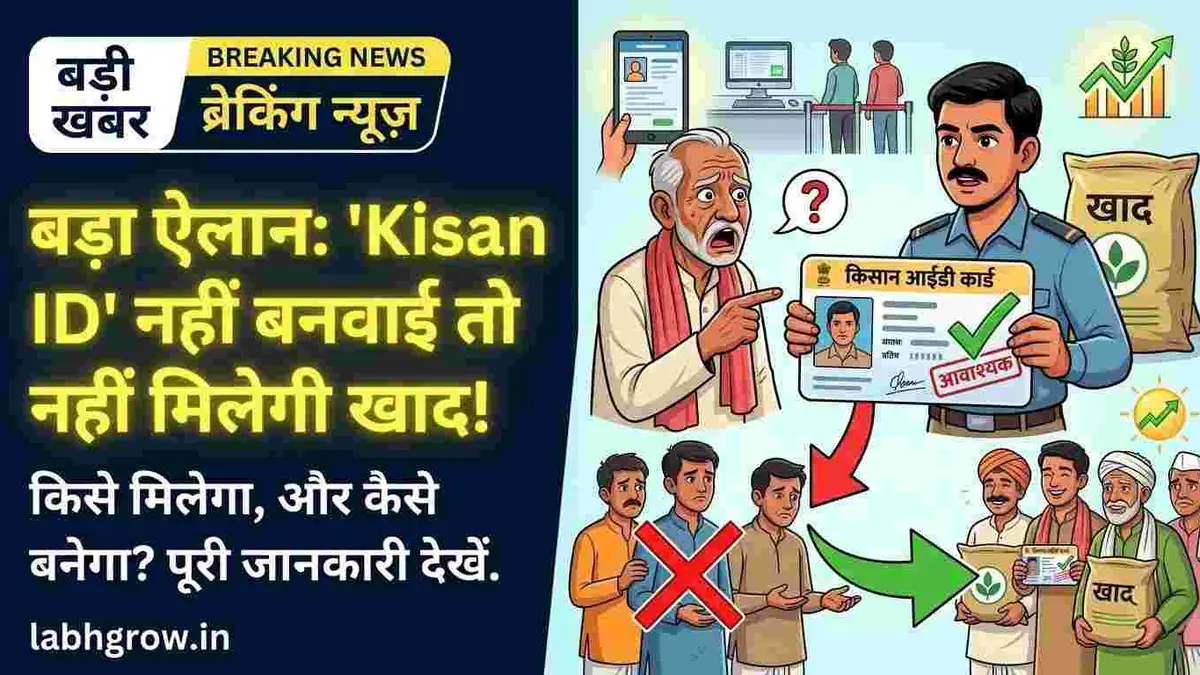

Farmer ID for Fertilizer: Why Farmers Across India Are Suddenly Talking About It
For many farmers, buying fertilizer has always been a routine thing. You visit the local shop, ask for urea or DAP, make the payment, and return home. Simple.
But now, in many states, a new term is quietly entering the conversation — Farmer ID.
At first, many people ignored it. Some thought it was just another सरकारी formality. Others assumed it was linked only to PM-Kisan or land records. But over the last few months, fertilizer dealers, agriculture officers, and even village-level workers have started mentioning the same thing again and again: “Farmer ID banwa lijiye.”
And honestly, this is not something farmers should postpone anymore.
Because slowly, India’s agriculture system is becoming more digital. Subsidies, crop details, land records, insurance, and now even fertilizer distribution are being connected through centralized databases. The idea, according to officials, is to stop fake beneficiaries and make sure subsidies reach actual farmers.
But for ordinary farmers, the bigger question is simple:
“If I don’t make Farmer ID now, will I face problems later while buying fertilizer?”
That’s exactly why this topic has become so important.
So, What Exactly Is Farmer ID?
Think of Farmer ID as a digital identity for farmers. Just like Aadhaar identifies citizens, Farmer ID is meant to identify genuine farmers and connect their farming-related records in one place.
This can include:
- Land ownership details
- Crop information
- Government scheme eligibility
- Subsidy tracking
- Fertilizer purchase records
In several states, governments are trying to create a unified farmer database. Some states already have their own versions, while others are integrating data with central agricultural platforms.
Now here’s where fertilizer enters the picture.
India spends thousands of crores every year on fertilizer subsidies. Urea is heavily subsidized, which means farmers get it at a much lower price than the actual market cost. But authorities have long claimed that leakages, duplicate purchases, and misuse happen in the system.
So the government’s long-term direction is becoming clear — fertilizer sales may increasingly be linked with verified farmer records.
That’s why Farmer ID is suddenly being discussed so seriously.
Why This Matters More Than People Think
A farmer from Uttar Pradesh recently shared how the fertilizer dealer in his nearby town asked for updated land-linked documents during purchase. Nothing major happened, but it created confusion because many villagers had never heard about Farmer ID before.
This is exactly how big policy changes usually begin in India. First, it starts quietly in a few districts. Then local verification increases. After that, it becomes standard practice.
We’ve already seen similar things happen with:
- FASTag
- Aadhaar-bank linking
- KYC updates
- Digital ration cards
Initially, people ignored them. Later, they rushed because services started getting affected.
The same possibility exists here too.
Right now, in many places, fertilizer is still available normally. But experts believe that over time, digital verification for agricultural subsidies could become stricter. If that happens, farmers without updated records may face delays, confusion, or extra verification steps during peak sowing seasons.
And any farmer knows one thing very clearly — timing matters in farming.
If fertilizer gets delayed by even a few days during sowing, the impact can directly affect crop growth and profits.
The Bigger Goal Behind This System
To be fair, there is logic behind the government’s push.
For years, officials have argued that agricultural benefits often don’t reach the right people. In some cases:
- Fake beneficiaries enter records
- Subsidized fertilizers are diverted
- Middlemen exploit loopholes
- Duplicate land entries create confusion
A centralized Farmer ID system can potentially reduce these issues.
Imagine a future where a farmer’s:
- land records,
- crop insurance,
- PM-Kisan installments,
- soil health details,
- and fertilizer purchases
are all connected digitally.
That could make many processes smoother.
For example, if a farmer already has verified crop data in the system, future subsidy distribution could become faster and more transparent.
Of course, India is a huge country, and implementation is never perfectly smooth. Internet issues, document mismatches, and land disputes can still create headaches. But the direction of digital agriculture is becoming stronger every year.
What Documents May Be Needed?
Requirements can vary slightly from state to state, but generally farmers may need:
- Aadhaar card
- Mobile number linked with Aadhaar
- Land ownership records
- Bank account details
- Crop-related information
Some states also allow registration through:
- CSC centers
- Agriculture offices
- Online portals
- Local village camps
This is why many experts are advising farmers not to wait until the last moment.
Because when a rule suddenly becomes mandatory, queues become longer, servers slow down, and local offices get crowded. We’ve all seen that happen before.
Small Farmers Are the Most Worried
Interestingly, the biggest concern is not among large landowners. It’s among small and marginal farmers.
Why?
Because documentation issues are more common there.
In many villages:
- land is divided informally within families,
- records are outdated,
- names in Aadhaar and land documents don’t match,
- or inherited land has never been fully transferred legally.
For such families, even a small digital verification issue can become stressful.
Take the example of two brothers farming the same ancestral land. One name exists in official records, the other doesn’t. If fertilizer tracking becomes more data-based in future, situations like these could create confusion.
That’s why local awareness is becoming very important now.
Could Farmer ID Become Necessary for Other Schemes Too?
Possibly yes.
Agriculture experts believe Farmer ID may gradually become a central layer connecting multiple schemes in the future.
This could include:
- PM-Kisan
- Crop insurance
- Subsidy benefits
- Loan support
- Seed distribution
- Soil testing programs
In simple words, Farmer ID may become the “main profile” through which farmer-related services are verified.
And honestly, this matches the broader digital direction India is already following in banking, taxation, and welfare systems.
Should Farmers Apply Now or Wait?
If you ask most agriculture officers or digital service operators, their advice is straightforward:
Don’t wait for strict enforcement.
Even if fertilizer purchases are not fully restricted everywhere today, getting Farmer ID ready early can prevent last-minute problems later.
It’s similar to updating KYC in banks. People usually ignore it until transactions stop working. Then panic starts.
For farmers, the risk is bigger because farming seasons don’t wait.
A missed deadline in agriculture cannot be recovered easily.
One Important Thing Farmers Should Remember
There’s also another side to this conversation.
Many rumors spread quickly on WhatsApp and YouTube whenever a new agriculture rule appears. Some videos claim fertilizer will completely stop without Farmer ID immediately everywhere in India. Others spread fear unnecessarily.
Farmers should avoid panic.
Rules and implementation often differ by state and district. The best approach is:
- verify updates from official agriculture departments,
- talk to trusted local officers,
- and complete documentation calmly instead of rushing due to rumors.
That practical approach works best.
Final Thoughts
Farmer ID may look like just another digital document today, but it could soon become an important part of India’s agricultural system.
And whether people like it or not, farming in India is steadily moving toward digital verification, linked subsidies, and centralized records.
For farmers, the smartest move right now is simple:
keep documents updated, understand local rules, and complete Farmer ID registration before it becomes urgent.
Because when sowing season arrives, nobody wants to stand in a queue worrying about paperwork while the field waits.
| Topic | What Farmers Should Know |
|---|---|
| Farmer ID Purpose | Digital identity for farmers |
| Linked Areas | Subsidies, fertilizer, schemes, crop records |
| Common Documents | Aadhaar, land papers, mobile number |
| Possible Benefit | Faster verification and subsidy tracking |
| Risk of Delay | Future purchase or verification issues |
Farmer ID is becoming an important digital record for Indian farmers and may gradually be linked with fertilizer purchases, subsidies, and government schemes. Experts advise farmers to complete registration early to avoid future verification problems during sowing seasons.
You can also read this -
PM-Kisan Update: Farmer ID Now Mandatory for Buying Fertilizers, Here’s What You Need to Know
Disclaimer: The information provided on Labhgrow.in is for educational purposes only. We are not affiliated with the Income Tax Department, NSDL (Protean), or UTIITSL. Delivery times and tracking processes are subject to government portal functionality. Please never share your PAN details or OTPs with unauthorized third-party websites.

Head of Content & Lead Writer
Senior financial & news writer specializing in Indian government schemes, market rates, and banking policies.
lakshyabhardwaj.hoc@labhgrow.in
Senior Research Analyst (Fact-Checker)
Dedicated researcher and data verifier ensuring 100% authenticity and fact-checking from primary government and financial feeds.
harshitsharma.sra@labhgrow.in