Big Update: Farmer ID Now Mandatory for All Government Schemes – Registration Drive Ends April 15
Overview
Government has made Farmer ID compulsory for all scheme benefits. Know why this change matters, how to register before April 15, and what farmers might lose if they delay.
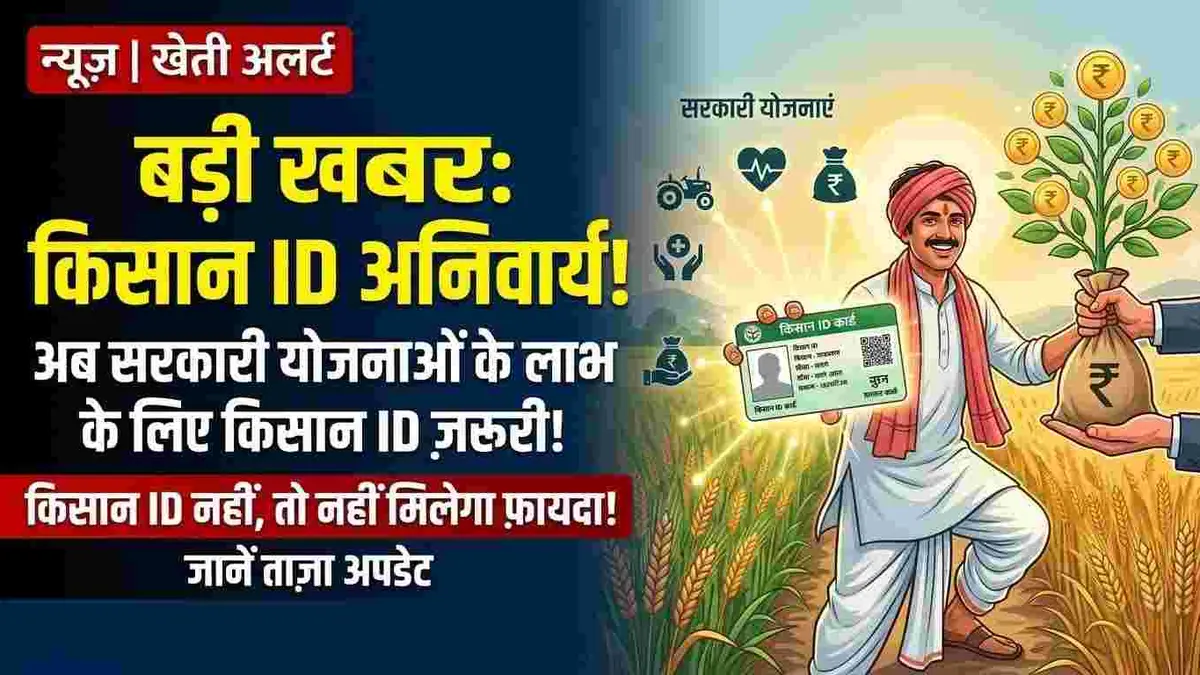

There’s a new rule quietly rolling out across villages and farming communities in India—and honestly, many people are still not fully aware of it.
Imagine this: you’ve been receiving benefits like PM-KISAN installments, crop insurance, fertilizer subsidies… everything going smoothly. Then suddenly, one day, the payment stops. No alert, no warning. You go to the local office and they tell you, “Farmer ID nahi banaya kya?”
That’s exactly the situation the government is trying to avoid—by making Farmer ID mandatory for all scheme benefits.
And here’s the catch: special registration camps are being organized to ensure 100% farmer registration by April 15.
So, what exactly is this Farmer ID—and why now?
Think of Farmer ID like Aadhaar, but specifically for agriculture. It’s a unique identification system that connects a farmer’s land records, crops, bank details, and scheme benefits into one centralized database.
Till now, many schemes were running on separate systems. One farmer could be registered in multiple places with slight variations in name or land details. That created confusion—and yes, sometimes even fraud or duplicate benefits.
Now, with Farmer ID, the government wants to streamline everything. One farmer = one verified identity = direct benefits.
It sounds technical, but the idea is simple: fewer errors, faster payments, and more transparency.
Why this sudden urgency before April 15?
This is where it gets interesting.
The government isn’t just introducing Farmer ID—they’re pushing for complete coverage, meaning every eligible farmer should be registered.
To achieve this, camps are being set up at village levels—panchayat offices, local agriculture centers, even temporary setups near markets. Officials are literally going door-to-door in some areas.
Why such urgency?
Because upcoming scheme cycles (especially financial transfers) may be linked strictly to Farmer ID. In simple words:
👉 No Farmer ID = Possible delay or stoppage of benefits
That includes schemes like income support, crop insurance claims, and possibly even future subsidies.
Real-life example: Why this matters more than you think
Let’s say Ramesh, a small farmer from Uttar Pradesh, receives ₹6,000 yearly under PM-KISAN. It’s not a huge amount, but it helps with seeds and basic expenses.
Now, if his Farmer ID isn’t registered or linked properly, his next installment could get stuck.
And the tricky part? He may not even realize the reason immediately.
This is exactly what the government wants to prevent—last-minute confusion and complaints.
What happens at these registration camps?
If you’re imagining long queues and complicated forms—honestly, it’s not that bad (at least in most places).
The process is fairly straightforward:
- Basic identity verification (Aadhaar or similar)
- Land record details
- Bank account linking
- Mobile number for updates
In many camps, officials are helping farmers fill out forms digitally. Some states are even using tablets and mobile apps to speed things up.
For people who are not tech-savvy (which is quite common in rural areas), this camp system is actually helpful.
But here’s where things can get tricky
While the idea is good, implementation always has its challenges.
Some farmers are facing issues like:
- Land records not updated properly
- Name mismatch between Aadhaar and land documents
- Joint family land ownership confusion
And you know how it goes in India—“chhota sa mismatch, bada problem.”
So if you’re planning to register, it’s better to double-check your documents beforehand.
Is this good news or just another compliance burden?
Honestly, it’s a bit of both.
On one hand, Farmer ID can solve many long-standing issues:
- Faster subsidy transfers
- Reduced fraud
- Better targeting of benefits
- More accurate farmer database
On the other hand, for farmers who are not aware or don’t have proper documentation, this could feel like extra pressure.
But looking at the bigger picture, this move is similar to what happened with Aadhaar in banking.
Initially, there was confusion. But today, things like direct bank transfers, LPG subsidies, and online verification are much smoother.
Farmer ID could bring similar efficiency to agriculture.
What should farmers do right now?
If you or someone in your family is involved in farming, this is not something to ignore.
Don’t wait till the last day thinking “baad mein dekh lenge.”
Because once the deadline passes, the rush—and possible delays—will only increase.
Instead:
- Visit the nearest registration camp
- Carry basic documents
- Get the process done early
Even if everything is not perfect, at least your application will be in the system.
The bigger picture: Where this is heading
If you look closely, this is not just about one ID.
It’s part of a larger push towards digitizing Indian agriculture—something that could eventually connect farmers to:
- Direct market access
- Crop planning insights
- Insurance automation
- Credit and loans based on verified data
In the future, your Farmer ID might work like a financial profile—helping banks, insurers, and government schemes understand your farming activity instantly.
Sounds ambitious? Yes.
But also quite possible.
Final thought
This update may not feel like breaking news in cities, but in rural India, it’s a big shift.
The kind of change that quietly affects millions.
So if you know someone who depends on farming income—maybe your relatives in the village or even your own family—just give them a quick heads-up.
Sometimes, one small step (like registering for an ID) can make sure bigger benefits keep coming without interruption.
| Aspect | Before Farmer ID | After Farmer ID |
|---|---|---|
| Scheme Access | Multiple registrations | Single unified ID |
| Payment Speed | Sometimes delayed | Faster direct transfer |
| Errors | High due to mismatches | Reduced |
| Transparency | Limited | Improved |
Farmer ID is now mandatory for receiving government scheme benefits in India. Farmers must register at special camps before April 15 to avoid delays or stoppage of payments like PM-KISAN, subsidies, and insurance claims.
You can also read this -
Disclaimer: The information provided on Labhgrow.in is for educational purposes only. We are not affiliated with the Income Tax Department, NSDL (Protean), or UTIITSL. Delivery times and tracking processes are subject to government portal functionality. Please never share your PAN details or OTPs with unauthorized third-party websites.

Head of Content & Lead Writer
Senior financial & news writer specializing in Indian government schemes, market rates, and banking policies.
lakshyabhardwaj.hoc@labhgrow.in
Senior Research Analyst (Fact-Checker)
Dedicated researcher and data verifier ensuring 100% authenticity and fact-checking from primary government and financial feeds.
harshitsharma.sra@labhgrow.in