Credit Card Masterclass Part 2: Decoding Your Bill, CIBIL Score & The 30% Secret Rule
Introduction: The "Black Box" of Banking Welcome back to the Labhgrow Credit Card Masterclass.
In Part 1, we learned that a Credit Card is a tool, not free money. We discussed the dangerous "Minimum Amount Due" trap. But knowing what a card is isn't enough. You need to know how it works under the hood.
Have you ever paid your bill on time but still saw your CIBIL score drop? Have you ever been charged a "Late Fee" even though you paid on the due date? Have you noticed mysterious taxes added to your bill?
Most users treat their Credit Card statement like a Terms & Conditions page—they scroll past it and just pay the total. This is a mistake. In Part 2, we are going to decode the technical jargon, explain the "30% Rule" that banks love, and reveal the hidden charges that eat into your wallet.
Section 1: The Anatomy of Your Statement (Decoding Terms)
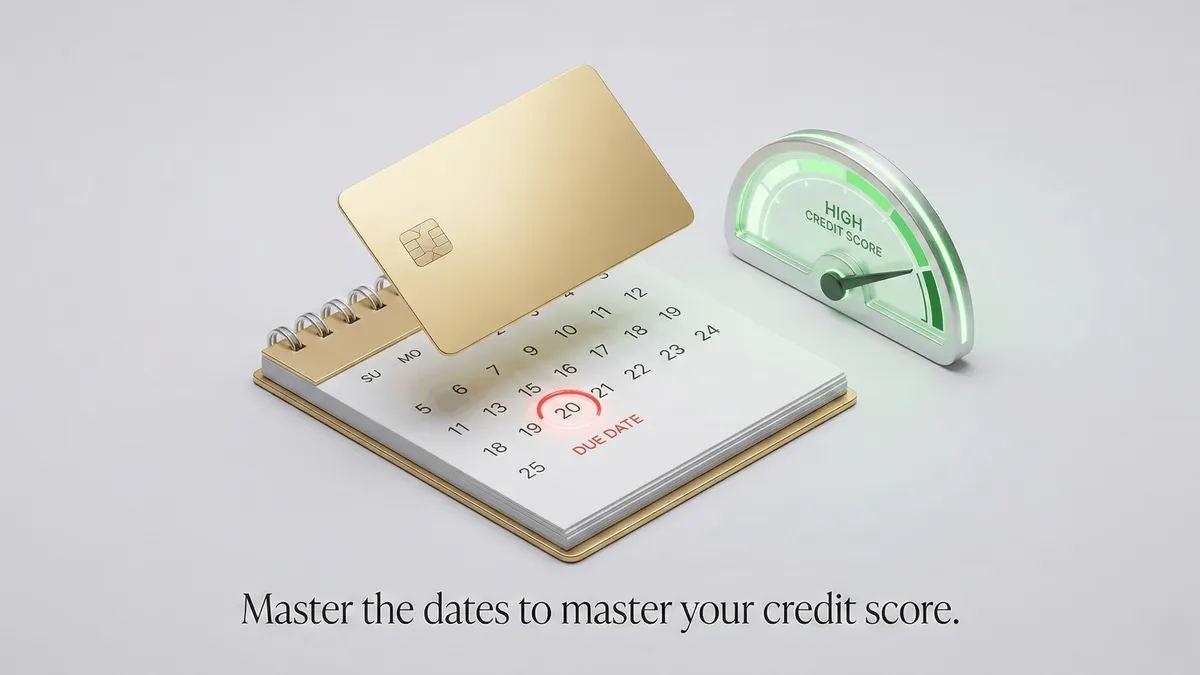
When your monthly statement arrives via email, it looks confusing. Let’s break down the 4 most important dates and numbers.
1. Statement Date (Billing Date) This is the date your bill is generated.
- Example: If your Statement Date is the 20th of every month, the bank calculates all your spending from last month's 21st to this month's 20th.
- Why it matters: Any purchase you make after this date will be added to the next month’s bill, giving you more time to pay.
2. Payment Due Date This is the deadline to pay the bill to avoid interest and penalties.
- The Gap: Usually, the Due Date is 20 to 25 days after the Statement Date.
- Warning: Never wait until the last minute. If you pay via NEFT or Cheque on the Due Date, it might clear the next day, and you will be charged a late fee. Always pay 3 days early.
3. Total Credit Limit vs. Available Credit Limit
- Total Limit: The maximum amount the bank allows you to spend (e.g., ₹1 Lakh).
- Available Limit: The amount left after your spending.
- Hidden Trap: If you cross your Total Limit (even by ₹1), the bank charges an "Over-limit Fee" (usually ₹500 + GST). Never max out your card.
Section 2: Mastering the "Billing Cycle" (The 50-Day Trick)
Smart users don't just spend; they time their spending. You can get anywhere between 20 days to 50 days of interest-free credit depending on when you swipe your card.
Let’s look at an example:
- Statement Date: 10th of every month.
- Due Date: 30th of every month.
Case A: Bad Timing You buy a Laptop on the 9th.
- Since the bill generates on the 10th, this purchase is included immediately.
- You have to pay by the 30th.
- Interest-Free Period: Only 21 Days.
Case B: Perfect Timing You wait for 2 days and buy the Laptop on the 11th.
- The bill for the 10th is already generated. This new purchase will go into next month's bill (10th of next month).
- You have to pay by the 30th of next month.
- Interest-Free Period: Approx 50 Days.
Strategy: For big-ticket items (TV, Fridge, Phones), always buy 1 or 2 days AFTER your Statement Date. You get almost two months to arrange the funds without paying a single rupee in interest.
Section 3: The Holy Grail – Your CIBIL Score
Your Credit Card is the single most powerful tool to build (or destroy) your CIBIL Score. In India, a CIBIL Score ranges from 300 to 900.
- 750+: Excellent (Easy Loan Approvals, Low Interest Rates).
- 650-750: Average.
- Below 650: Poor (Loan Rejections).
How Your Card Affects CIBIL:
1. Payment History (35% Impact) If you miss a single Due Date, your score can drop by 50-80 points instantly. Banks report defaults to CIBIL every month. Even a delay of 1 day is recorded.
2. Credit Utilization Ratio (30% Impact) – The Secret Rule This is what most people don't know. Just because your limit is ₹1 Lakh, doesn't mean you should spend ₹90,000.
- Utilization Ratio = (Total Spent / Total Limit) * 100.
- The Rule: Keep your utilization below 30%.
Example:
- Limit: ₹1 Lakh.
- Ideal Spending: Less than ₹30,000 per month.
- Why? If you constantly use 80-90% of your limit, banks view you as "Credit Hungry" or "Desperate for Money." This lowers your CIBIL score, even if you pay the full bill on time.
Solution: If your expenses are high, ask the bank to increase your Credit Limit. This automatically lowers your Utilization Ratio.
Section 4: Hidden Charges Nobody Tells You
Banks make money when you make mistakes. Here are the charges hidden in the fine print:
1. Goods & Services Tax (GST) Remember, GST is applicable on all services.
- Annual Fees? +18% GST.
- Late Fees? +18% GST.
- Interest Charges? +18% GST.
- EMI Processing Fees? +18% GST.
- Note: GST is NOT charged on the items you buy (like shoes/food), only on bank fees.
2. Foreign Currency Markup Fee Going to Dubai or Thailand? If you swipe your standard Indian Credit Card abroad, the bank charges a Forex Markup Fee of usually 3.5% + GST.
- Solution: Get a specific "Travel Credit Card" or "Zero Forex Card" (like Niyo) before traveling internationally.
3. Fuel Surcharge When you buy petrol/diesel, an extra "Surcharge" (1%) is added.
- The Good News: Most premium cards offer a "Fuel Surcharge Waiver." Check if your card has this benefit; otherwise, use UPI or Debit Card at petrol pumps.
4. Rent Payment Charges Apps like CRED or Paytm allow you to pay rent via Credit Card.
- The Trap: Banks have started charging an extra 1% fee on rent payments. Combined with the app's platform fee, you might end up paying 2-3% extra just to pay rent. Avoid this unless necessary.
Section 5: How to Read Your Statement (Practical Guide)
Don't just look at the "Total Amount." Every month, spend 2 minutes checking these 3 things:
Check for "Unknown Transactions": Sometimes scammers make small transactions (₹100 or ₹500) to test your card. If you spot something you didn't buy, report it immediately.
Check for "Annual Fees": Sometimes banks charge the renewal fee silently. If you were promised a "Free" card, call customer care to reverse it.
Check Reward Points: Did you get points for that big purchase? Sometimes technical glitches happen. Keep an eye on your rewards balance.
Conclusion: You Are Now "Technically" Smart
Congratulations! You have graduated from a Beginner to an Intermediate user. You now understand:
- How to time your purchases (Billing Cycle).
- How to protect your CIBIL score (30% Rule).
- How to avoid hidden fees (Forex, Rent, GST).
But wait... we still haven't discussed the Fun Part. Why do people love credit cards? Free Flights, Hotel Stays, Cashback, and Lounge Access. How do people travel for free using "Credit Card Points"?
Coming Up in Part 3: The Art of Reward Points – How to choose the right card (Cashback vs. Miles) and maximize your returns.
We will analyze which card type fits your lifestyle in the next blog!
Disclaimer: The information provided in this series is for educational purposes only. Labhgrow.in does not promote any specific bank. Fees and charges mentioned (like GST, Forex) are subject to change as per RBI and Government regulations. Please read your card's Most Important Terms and Conditions (MITC) document carefully.