Maharashtra’s ₹36,585 Crore Farm Loan Relief: What’s Changing and Why Farmers Are Calling It a Big Turning Point
Overview
Maharashtra's reported ₹36,585 crore farm loan relief initiative has become a major talking point in India's rural economy. The move aims to ease debt burdens, improve financial stability for farming households, and strengthen access to formal banking. Experts believe the long-term impact will depend on implementation and beneficiary coverage.
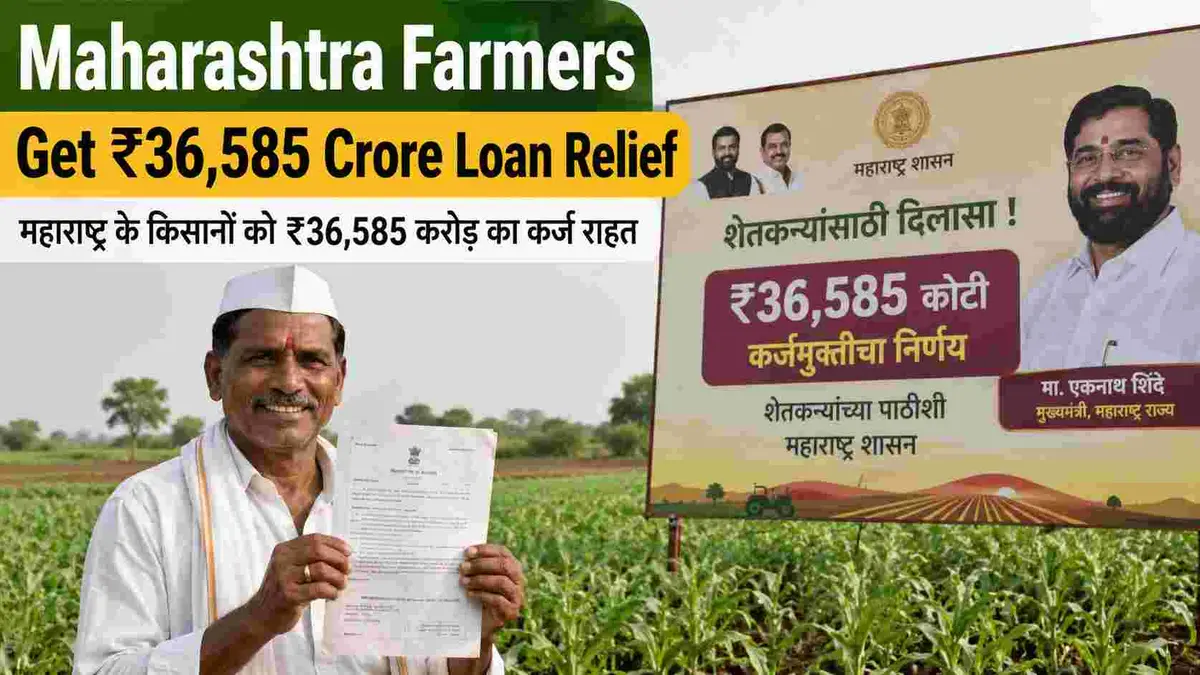

Maharashtra Farmers Get ₹36,585 Crore Loan Relief: Why This Update Is Being Watched Across India
For millions of farming families, debt is not just a financial issue—it affects every part of daily life.
A delayed monsoon, lower crop prices, rising fertilizer costs, or an unexpected family expense can quickly turn a manageable loan into a long-term burden. That is why the recent announcement related to Maharashtra farmers and a massive ₹36,585 crore loan relief package has become one of the most talked-about developments in the rural economy.
Across villages and farming communities, people are asking the same question: Will this finally provide meaningful relief to farmers who have been struggling under debt pressure for years?
The answer is more complex than a simple yes or no. But one thing is certain—this is a development that could influence thousands of families and potentially reshape agricultural lending in one of India's largest farming states.
Why Farm Debt Remains a Major Challenge
To understand why this announcement matters, it helps to look at the reality faced by many farmers.
Unlike salaried employees who receive a predictable monthly income, farmers often depend on seasonal earnings. A crop failure or sudden market fluctuation can reduce annual income dramatically.
Imagine a farmer who takes a loan before the sowing season. The money is used for seeds, fertilizers, irrigation, labor, and equipment maintenance. Everything looks manageable at the beginning.
But if rainfall is below expectations or market prices crash at harvest time, repaying that loan becomes difficult.
This situation has repeated itself across different regions of Maharashtra over the years. As a result, farm debt has remained a sensitive economic and social issue.
That is why any announcement involving thousands of crores in loan relief immediately attracts nationwide attention.
What Does the ₹36,585 Crore Relief Actually Mean?
The reported loan relief figure of ₹36,585 crore represents a substantial intervention aimed at easing financial pressure on farmers.
While the exact implementation details and beneficiary criteria remain important, the broader objective is clear: reduce the debt burden and improve financial stability in rural areas.
For many farmers, debt relief can create breathing space.
Instead of worrying about overdue payments and accumulating interest, families can focus on improving farm productivity, investing in better equipment, or planning the next crop cycle.
In practical terms, this could mean:
- Reduced financial stress for farming households
- Improved ability to access formal banking services
- Better chances of obtaining fresh agricultural credit
- Increased spending capacity in rural markets
- More confidence during future farming seasons
These benefits may sound simple, but their impact can be significant when applied across thousands of villages.
Why This Matters Beyond Farmers
One common misconception is that farm loan relief only affects farmers.
In reality, its impact often spreads through the wider economy.
When a farming family gains financial relief, spending patterns usually improve. Local shops, seed suppliers, transport operators, equipment dealers, and service providers can all benefit.
Think about a village market.
If several farmers receive debt relief, some may invest in irrigation systems, tractors, pumps, or farm improvements. Others may spend on education, healthcare, or household necessities.
This money circulates through the local economy.
Economists often describe agriculture as a sector that supports multiple layers of economic activity. When farmers experience financial stability, rural demand tends to improve as well.
That is one reason policymakers closely monitor agricultural debt and rural credit systems.
The Banking Angle: What Financial Institutions May See
Banks also play an important role in this story.
Agricultural lending forms a significant part of rural banking operations. When loans become difficult to recover, both borrowers and lenders face challenges.
Debt relief measures can help improve relationships between farmers and financial institutions.
Many farmers who were previously struggling may become eligible for fresh credit facilities. This can encourage greater participation in formal banking rather than dependence on informal borrowing sources that often charge much higher interest rates.
For rural banks and cooperative institutions, improved loan performance can strengthen confidence in agricultural lending.
In the long run, better access to formal finance may prove just as valuable as the immediate relief itself.
A Relief Measure Is Helpful, But It Is Not the Complete Solution
Whenever large loan relief announcements are made, experts often point out an important reality.
Debt relief can provide immediate support, but sustainable agricultural growth requires broader reforms as well.
Farmers continue to face challenges such as:
- Weather uncertainty
- Water availability issues
- Rising input costs
- Market price volatility
- Storage and logistics limitations
- Access to modern technology
Many agricultural experts believe that long-term improvements in irrigation, crop insurance, market access, and productivity are equally important.
In simple terms, loan relief can help farmers recover from financial pressure, but stronger agricultural systems help prevent that pressure from returning.
That distinction is important when evaluating any major relief package.
Why This Update Is Creating So Much Interest
There is another reason this development is drawing attention.
Agriculture remains the primary source of livelihood for a large section of India's population. Any policy affecting farmers often has social, political, and economic implications.
A large-scale relief measure sends a strong message about the importance of rural financial stability.
It also raises expectations.
Farmers want clarity regarding eligibility, implementation timelines, and the actual benefits they may receive. Financial analysts are watching to understand the broader economic impact. Rural communities are eager to know how quickly relief can reach the ground level.
This combination of financial significance and public interest explains why discussions around the ₹36,585 crore figure have spread far beyond Maharashtra.
What Farmers and Rural Families Are Hoping For
For many families, the announcement represents more than numbers.
It represents the possibility of starting a new farming season without overwhelming debt concerns.
A farmer who spends less time worrying about repayment pressure can focus more on crop planning. Parents may feel more confident about educational expenses. Households may regain some financial stability after years of uncertainty.
These expectations highlight why loan relief programs often generate strong emotional responses in farming communities.
Behind every large figure announced in government statements are real people trying to build a better future.
The Bottom Line
The ₹36,585 crore loan relief linked to Maharashtra farmers is one of the most significant rural finance developments attracting attention right now.
Its true impact will depend on implementation, eligibility criteria, and how effectively benefits reach intended beneficiaries. However, the announcement has already sparked hope among farming communities and renewed discussion about the future of agricultural finance in India.
For farmers, this could mean reduced debt pressure and greater financial confidence. For rural economies, it may support stronger spending and investment. And for policymakers, it serves as another reminder that agriculture remains central to India's economic story.
As more details emerge, millions of people—from farmers and bankers to policymakers and ordinary citizens—will be watching closely.
| Key Point | Details |
|---|---|
| Relief Amount | ₹36,585 Crore |
| Beneficiaries | Maharashtra farmers |
| Main Objective | Reduce debt burden |
| Potential Impact | Better rural liquidity and financial stability |
| Long-Term Need | Irrigation, insurance, market reforms, technology |
Maharashtra farmers are expected to benefit from a massive ₹36,585 crore loan relief initiative aimed at reducing debt pressure and improving rural financial stability. The move could help farmers access fresh credit, improve household finances, and support economic activity across villages and agricultural communities.
For More Information -
Disclaimer: The information provided on Labhgrow.in is for educational purposes only. We are not affiliated with the Income Tax Department, NSDL (Protean), or UTIITSL. Delivery times and tracking processes are subject to government portal functionality. Please never share your PAN details or OTPs with unauthorized third-party websites.

Head of Content & Lead Writer
Senior financial & news writer specializing in Indian government schemes, market rates, and banking policies.
lakshyabhardwaj.hoc@labhgrow.in
Senior Research Analyst (Fact-Checker)
Dedicated researcher and data verifier ensuring 100% authenticity and fact-checking from primary government and financial feeds.
harshitsharma.sra@labhgrow.in