UP Yatri Suraksha Yojana: Big Financial Protection for Passengers You Should Know About
Overview
Travelling in Uttar Pradesh? This passenger protection scheme offers financial assistance during accidents and emergencies. Here's what every traveller should know.

UP Yatri Suraksha Yojana: The Passenger Safety Benefit Many Travellers Still Don't Know About
Imagine you're travelling from Lucknow to Varanasi for a family function. Everything is going smoothly until an unexpected accident disrupts the journey. In such situations, most people worry about medical expenses, treatment costs, and financial stress that follows. What many passengers don't realize is that certain government-backed safety initiatives are designed to provide financial support during emergencies.
One such initiative that has been gaining attention is the UP Yatri Suraksha Yojana. While many people focus on ticket prices, train schedules, or travel convenience, very few actually check what protection they receive as passengers. And that's where this scheme becomes important.
In recent years, passenger safety has become a major priority across India. State governments and transport authorities have started focusing not only on infrastructure but also on financial security for travellers. The idea is simple: if a passenger faces an unfortunate accident during an authorized journey, there should be some form of support available for the affected individual or family.
For an average Indian household, even a small medical emergency can disturb the monthly budget. Whether someone is paying home loan EMIs, school fees, SIP investments, or simply managing household expenses, sudden medical costs can become a serious burden. That's why travel-related financial protection matters more than many people think.
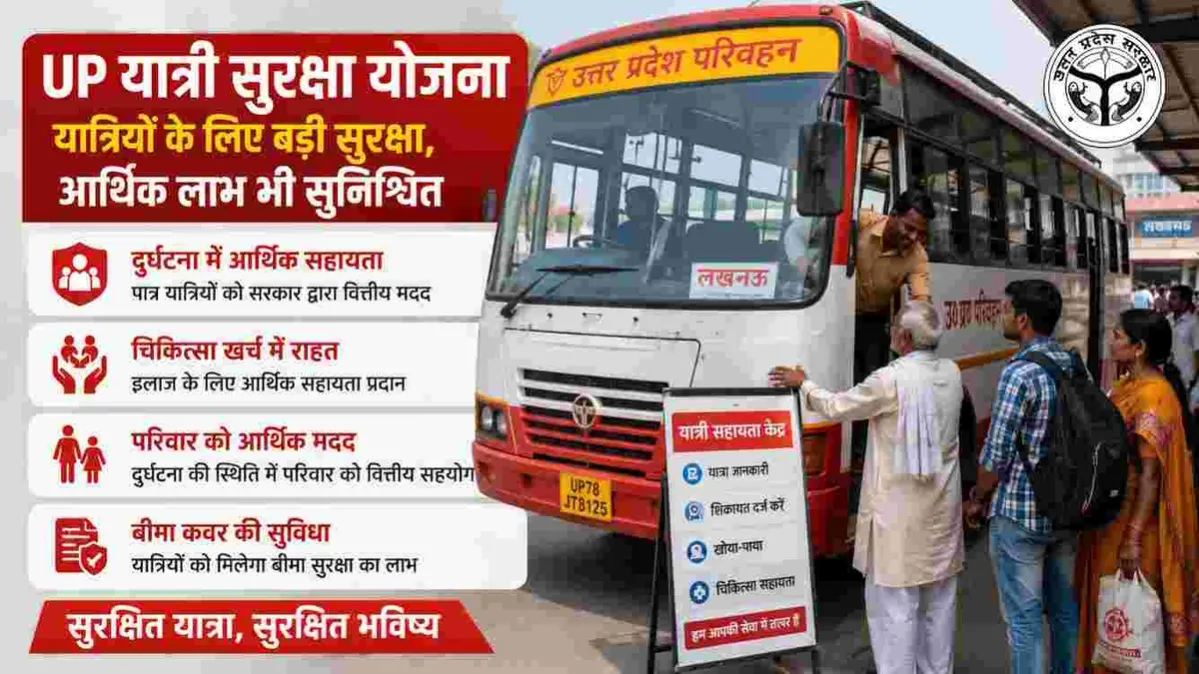
The UP Yatri Suraksha Yojana has been introduced with the objective of providing assistance to eligible passengers in case of accidents occurring during travel. While exact benefits can vary depending on transport authorities, insurance arrangements, and applicable rules, the overall purpose remains passenger welfare and financial relief.
Think about a daily commuter who travels hundreds of kilometres every month for work. Such individuals often assume that accidents happen to others, not to them. But real life doesn't always work that way. A single unexpected incident can lead to hospitalization, loss of income, and additional expenses. In these situations, financial assistance can make a meaningful difference.
Another important aspect is awareness. In India, several welfare schemes exist on paper, but beneficiaries often remain unaware of them. A surprising number of passengers purchase tickets without reading the benefits attached to their travel. Sometimes, protection coverage is automatically linked to travel systems, yet passengers never check eligibility details.
This is why experts often advise travellers to keep their tickets, travel documents, and identity proof safely preserved. In the event of an accident claim, documentation becomes extremely important. Missing records can delay verification and benefit processing.
Let's understand the broader significance through a simple example.
Suppose Rajesh, a private employee from Kanpur, earns ₹35,000 per month and supports his family. While travelling for work, he faces an unfortunate travel-related accident and requires medical treatment. The immediate concern is not only health recovery but also hospital bills and temporary loss of income. If financial assistance is available through a passenger safety scheme, it can help reduce pressure on the family during a difficult period.
This is exactly the kind of situation such passenger protection initiatives aim to address.
The growing popularity of passenger safety programs also reflects a changing mindset. Earlier, travel insurance and accident coverage were topics mostly discussed by frequent flyers or corporate travellers. Today, even ordinary bus and train passengers are becoming more aware of financial protection.
Another reason this topic is trending is the increasing focus on social security. Indians are now paying greater attention to insurance, emergency funds, health coverage, and financial planning. Whether it's opening a SIP, buying health insurance, or checking travel benefits, people want better financial preparedness.
For passengers, the practical takeaway is simple. Before beginning a journey, spend a few minutes understanding what protections are attached to your ticket or transport service. Many travellers spend hours comparing fares but never check safety benefits.
The UP Yatri Suraksha Yojana also highlights an important principle: safety is not just about preventing accidents; it is also about reducing the financial impact when accidents occur.
Families often underestimate this aspect until they face an emergency themselves. A hospital admission lasting just a few days can result in expenses running into thousands of rupees. For households operating on fixed monthly budgets, such costs can create long-term financial strain.
Passenger welfare initiatives therefore act as an additional layer of support. They may not replace comprehensive health insurance, but they can provide valuable assistance when needed.
Financial planners frequently recommend a combination of emergency savings, health insurance, life insurance, and awareness of government welfare schemes. Passenger protection benefits fit into this broader financial safety net.
As awareness spreads through social media, news reports, and online discussions, more people are starting to ask questions about eligibility, compensation, claim procedures, and coverage conditions. This growing curiosity is a positive sign because informed travellers are generally better protected travellers.
At the same time, it is important not to make assumptions. Every scheme has specific rules, eligibility conditions, documentation requirements, and claim procedures. Passengers should always verify the latest official guidelines through the relevant transport authority or government source before relying on any benefit.
The bigger message behind the UP Yatri Suraksha Yojana is reassuring: travel safety is no longer limited to physical infrastructure. Financial protection is becoming part of the conversation as well.
For millions of Indians who travel daily for education, employment, business, or family commitments, this shift is welcome. After all, a journey should not become a financial crisis because of an unexpected accident.
And perhaps that's the biggest takeaway from this initiative—sometimes the most valuable travel benefit isn't a discount on the ticket, but the peace of mind that support may be available when it's needed most.
| Aspect | Why It Matters |
|---|---|
| Passenger Protection | Provides financial support during eligible incidents |
| Accident Assistance | Helps reduce immediate financial burden |
| Documentation | Essential for claim verification |
| Awareness | Ensures eligible passengers can access benefits |
| Financial Security | Supports families during emergencies |
UP Yatri Suraksha Yojana is a passenger welfare initiative aimed at providing financial assistance and protection to eligible travellers in case of travel-related accidents or emergencies. The scheme focuses on reducing the financial burden on passengers and their families during difficult situations.
Disclaimer: The information provided on Labhgrow.in is for educational purposes only. We are not affiliated with the Income Tax Department, NSDL (Protean), or UTIITSL. Delivery times and tracking processes are subject to government portal functionality. Please never share your PAN details or OTPs with unauthorized third-party websites.

Head of Content & Lead Writer
Senior financial & news writer specializing in Indian government schemes, market rates, and banking policies.
lakshyabhardwaj.hoc@labhgrow.in
Senior Research Analyst (Fact-Checker)
Dedicated researcher and data verifier ensuring 100% authenticity and fact-checking from primary government and financial feeds.
harshitsharma.sra@labhgrow.in