e-Shram Card 2026: Check Your Government Benefits Now
Overview
e-Shram Card 2026 guide: check eligibility, registration steps, ₹2 lakh insurance and PM-SYM pension benefits linked to your e-Shram account today.
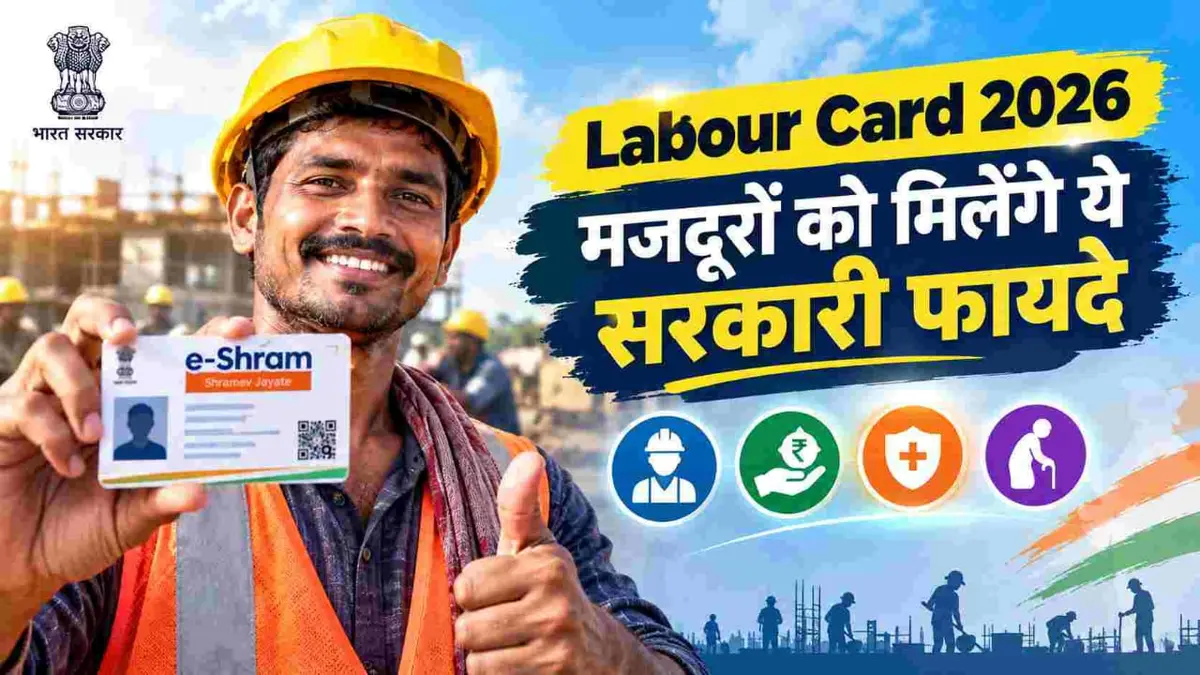

If you work as a daily-wage labourer, domestic help, street vendor, driver, or in any job outside the formal PF or ESI system, the e-Shram Card is probably the single most useful document you don't have yet. Millions of unorganised workers across India are already registered, and the Labour Ministry keeps adding more welfare schemes to the platform every year.
Here's what the e-Shram Card actually does in 2026, who qualifies, and how the registration process works.
What Is the e-Shram Card
e-Shram is the central government's national database for unorganised workers, built by the Ministry of Labour and Employment. Every worker who registers gets a lifetime 12-digit Universal Account Number (UAN), which acts as their identity across various social-security and welfare schemes.
The portal isn't a scheme by itself. Think of it as a gateway — the government uses this database to identify eligible workers and connect them to insurance, pension, and relief programmes without requiring separate paperwork for each one.
Quick Fact: Over 30 crore workers have already registered on the e-Shram portal, making it one of the largest worker databases in the world. Yet a large share of them still haven't claimed the downstream benefits they're entitled to.
Who Is Eligible for e-Shram Registration in 2026
Eligibility is straightforward, but a few conditions rule people out. You can register if:
- You are between 16 and 59 years of age
- You work in the unorganised sector — construction, agriculture, domestic work, street vending, weaving, fishing, gig and platform work (delivery or ride-hailing), MGNREGA labour, ASHA and anganwadi work, and 30-plus other listed occupations
- You are not a member of EPFO (Employees' Provident Fund Organisation) or ESIC (Employees' State Insurance Corporation)
- You do not file income tax
If you already have an active EPFO or ESIC account, or you're a taxpayer, you fall outside the scheme's scope by design — e-Shram is meant specifically for workers who don't have formal social-security cover elsewhere.
Documents Required for e-Shram Card
The process is deliberately light on paperwork. You need:
- Aadhaar number
- Aadhaar-linked mobile number (for OTP-based registration)
- Bank account details (for direct benefit transfer)
No income certificate, caste certificate, employer letter, or photograph upload is needed — the registration relies entirely on Aadhaar-based verification.
Step-by-Step: How to Register on e-Shram
Step 1: Visit the official portal. Go to eshram.gov.in — this is the only official website for registration. Avoid third-party apps or websites claiming to offer e-Shram registration for a fee.
Step 2: Enter your Aadhaar-linked mobile number. You'll receive an OTP for verification. If your mobile number isn't linked to Aadhaar, you can register through biometric verification at the nearest Common Service Centre (CSC).
Step 3: Verify your Aadhaar details. The system pulls your basic details from UIDAI records once the OTP is confirmed.
Step 4: Fill in personal and occupational details. This includes your address, education, occupation category, and bank account information.
Step 5: Submit and download your e-Shram card. Once submitted, your UAN is generated instantly, and you can download the card as a PDF directly from the portal.
Workers without Aadhaar-linked mobile numbers can complete the entire process at a CSC, where operators use fingerprint-based biometric authentication instead of OTP.
What Benefits Does e-Shram Card Give You
Accident insurance cover. Every registered worker is automatically covered under the Pradhan Mantri Suraksha Bima Yojana (PMSBY) — ₹2 lakh in case of accidental death or permanent disability, and ₹1 lakh for partial disability. This cover renews annually, so keeping your linked bank account active for the nominal premium auto-debit matters.
Pension through PM-SYM. The e-Shram database is also used to enrol eligible workers into the Pradhan Mantri Shram Yogi Maan-dhan (PM-SYM) scheme, which pays a monthly pension of ₹3,000 after the age of 60. This isn't automatic — workers need to separately enrol and contribute a small monthly amount based on their entry age.
Scheme discovery. Because your UAN links to your occupation, location, and demographic details, the government can identify which of its many welfare schemes you're eligible for — from state labour welfare funds to health and housing schemes — without you having to apply to each one individually.
Disaster relief DBT. During cyclones, floods, heatwaves, or crop failures, e-Shram-registered workers in the affected areas can receive direct benefit transfers automatically, without filing a fresh application. This has already been used during several state-level relief operations.
Important: The e-Shram Card itself does not pay any regular monthly amount. A one-time ₹1,000 COVID-19 relief transfer in 2021 led to widespread confusion, and some apps still wrongly claim an ongoing "e-Shram bhatta." As of 2026, there is no such automatic monthly payment — benefits only flow through the specific schemes you're linked to and enrolled in.
Why This Matters for Unorganised Workers
For workers without a payslip, provident fund account, or formal employer, e-Shram is often the only official record proving they exist within the workforce. That record is what makes them visible to targeted welfare delivery — whether it's accident compensation after a workplace injury, pension security in old age, or emergency relief after a natural disaster.
States like Uttar Pradesh, Bihar, and West Bengal have among the highest number of registrations, reflecting how central this database has become to India's informal labour force.
Key Takeaways
- e-Shram is a free, lifetime registration for unorganised workers aged 16–59
- Aadhaar and an Aadhaar-linked mobile number are the main requirements
- Registered workers get ₹2 lakh accident insurance under PMSBY automatically
- PM-SYM offers a separate ₹3,000/month pension after age 60 — but needs enrolment
- There is no automatic monthly cash payment from e-Shram itself
- Register only through eshram.gov.in or a nearby CSC
Conclusion:
The e-Shram Card won't make anyone rich, and it doesn't drop money into your account every month. What it does is quieter but arguably more valuable — it gives unorganised workers a permanent identity within India's social-security system and a single doorway to insurance, pension, and relief schemes that would otherwise require separate applications. If you or someone you know works outside the formal PF/ESI system and hasn't registered yet, it takes only a few minutes at eshram.gov.in.
For More Information -
https://www.sarkaridarapan.com/sarkari-yojana/e-shram-card-2026
The information provided regarding this Government Scheme on LabhGrow is based on publicly available official notifications, websites, and press releases at the time of publishing, and is intended solely for general informational and educational purposes to help readers understand eligibility criteria, benefits, and application processes. Scheme names, eligibility conditions, benefit amounts, application procedures, and deadlines are subject to change or discontinuation by the respective Central Government authority at any time without prior notice, and LabhGrow does not guarantee that the details mentioned remain current, complete, or officially updated at the time of reading. LabhGrow is an independent educational information platform and is not affiliated with, endorsed by, or representing any government department, ministry, or scheme. Readers are strongly advised to verify all scheme-related details from the official government website or nearest government office before applying or making any decision. LabhGrow shall not be held responsible for any loss, rejection of application, or inconvenience arising from outdated or inaccurate scheme information.

Head of Content & Lead Writer
Senior financial & news writer specializing in Indian government schemes, market rates, and banking policies.
lakshyabhardwaj.hoc@labhgrow.in
Senior Research Analyst (Fact-Checker)
Dedicated researcher and data verifier ensuring 100% authenticity and fact-checking from primary government and financial feeds.
harshitsharma.sra@labhgrow.in