Why Sugar Prices Are Rising in India Right Now
Overview
Sugar prices in India have jumped sharply in 2026. Here's why sugar prices are rising, what the government is doing, and when relief may come.
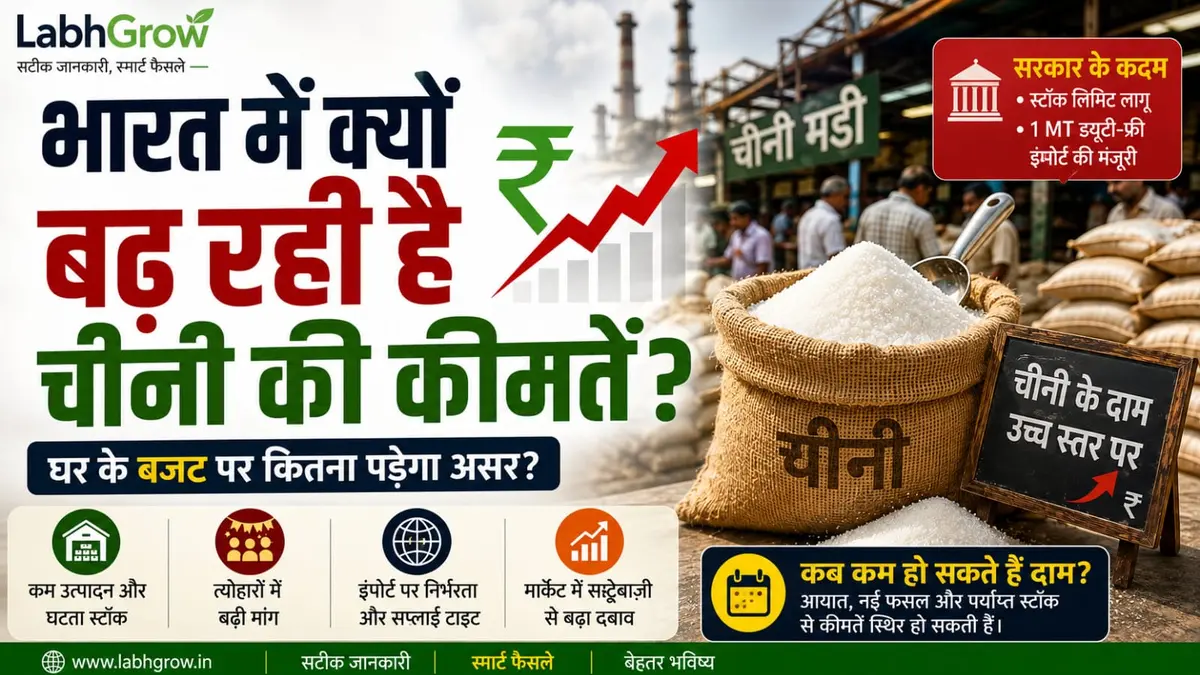

Sugar has quietly become one of the more expensive items in Indian kitchens this year. Over the past month alone, retail sugar rates have climbed sharply, and shoppers picking up a kilo at their local kirana store have noticed the difference in their monthly grocery bills. The average retail price of sugar rose 13 per cent year-on-year to ₹52.30 per kg on August 18, up from ₹46.34 per kg a year earlier, according to Consumer Affairs Ministry data. In some city markets, rates have gone even higher. Wholesale prices have already fed through to retail markets, where sugar has touched ₹58-60 per kg in certain locations.
The question on everyone's mind is simple: why is sugar suddenly this expensive, and how long will it stay this way?
What's Really Driving the Price Rise
The short answer is a mix of tighter production, festival-season buying, and market anxiety about supply. Here's how each factor is playing out.
1. Lower sugar output this season
India's sugarcane crop has taken a hit this year. Sugar production in the current season is expected to be around 306 lakh metric tonnes, down from an initial estimate of around 343 lakh metric tonnes made by sugarcane-growing states. The shortfall isn't a mystery — crop disease, including Red Rot and Top Borer infestations, along with waterlogging caused by heavy rainfall, has hurt yields. Separately, patchy rains and dry spells in other stretches have also stressed the water-hungry sugarcane crop, adding to supply concerns.
Industry estimates for how much sugar will actually be available when the new season starts are also on the lower side. Opening stocks for the 2026-27 sugar season, which begins October 1, are pegged at around 4 to 4.2 million tonnes by industry bodies, while some analysts expect the figure to be lower, closer to 3.2 to 3.5 million tonnes.
2. Festival demand is kicking in early
Sugar consumption in India always rises between August and November, and this year is no different. Festive demand typically spikes around Ganesh Chaturthi, Dussehra and Diwali, as sweet shops, bakeries and households stock up. Bulk buyers such as biscuit and confectionery makers tend to build up inventories ahead of the festive season, which pushes up demand right when supply is tightest.
3. Speculation and hoarding concerns
When supply looks uncertain, some traders and bulk buyers tend to stock up more than they need — which only makes shortages worse and prices climb faster. The government has pointed to this as one reason behind the sharp jump in rates over such a short period.
Quick Snapshot: Sugar Price Trend in 2026
- Retail sugar price (Aug 18, 2026): ₹52.30/kg — up 13% year-on-year
- Some markets reporting: ₹58-60/kg
- Price rise over the past month: around 10%
- New sugar season begins: October 1, 2026
- Government stock limit window: August 1 – November 30, 2026
What the Government Has Done So Far
Authorities have moved in stages as prices kept climbing, tightening the rules each time the situation didn't ease.
- Stock limits on dealers: A stock limit of 400 tonnes has been imposed on sugar dealers across the country from August 1 until November 30, 2026.
- Tighter limits for bulk consumers: Starting September 1, bulk buyers consuming more than 10 metric tonnes of sugar a month must now hold no more than 15 days of stock, down from the earlier 30-day limit set in July.
- Duty-free imports allowed: The government has permitted duty-free imports of raw sugar to help ease supply pressure ahead of the festive season.
- Export restrictions: Sugar exports have been banned until September 30, 2026, to keep more sugar within the domestic market.
- Monitoring for hoarding: Joint teams of Central and State government officials are conducting physical verification of stocks at sugar mills to check for hoarding and artificial shortages. Authorities are also cross-checking sales data using GST returns to ensure bulk buyers are complying.
Interestingly, the government has also pushed back on one common theory. Officials have rejected claims that ethanol diversion is behind the price rise, noting that the share of sugar diverted for ethanol production has actually declined in recent years.
Step-by-Step: How to Manage Rising Sugar Costs at Home
If you run a household budget, a sweet shop, or a small food business, here's a practical way to handle the price swing without panic-buying or overspending.
1. Check your actual monthly usage first. Before stocking up, calculate how much sugar your household or business genuinely consumes in a month. Overbuying at high prices locks in the cost rather than saving you money.
2. Buy in moderate batches, not bulk. With prices expected to stay elevated for a few months, spreading purchases across smaller batches reduces the risk of buying right before any price correction.
3. Compare loose vs. branded sugar pricing. Branded, packaged sugar often carries a premium; loose sugar from a trusted local source can be more economical during a price spike.
4. Track official price data. The Consumer Affairs Ministry publishes daily retail price data for essential commodities — checking this helps you avoid overpaying compared to the regional average.
5. For businesses, review recipes and portions. Bakeries, sweet shops and beverage makers can look at ingredient ratios to manage costs without drastically raising prices for customers.
6. Watch for the new crushing season. Prices typically ease once fresh supply enters the market, so timing large purchases closer to October-November can help.
Who Feels the Impact Most
- Households: Higher grocery bills, especially during a season when sugar-based sweets and snacks are already in higher demand.
- Sweet shops and bakeries: Thinner margins unless they pass on costs to customers, which risks reducing footfall during their busiest season.
- Beverage and confectionery manufacturers: Higher input costs that can eventually show up in product pricing on store shelves.
- Sugarcane farmers and mills: Higher sugar prices can actually improve margins for mills if procurement costs don't rise at the same pace, which is part of why sugar company stocks have rallied recently. However, higher prices for mills don't necessarily translate into a benefit for consumers.
When Might Prices Ease?
Most industry voices expect the pressure to continue for a few more months. Prices are expected to remain elevated for at least the next three months as supplies stay tight and festive demand builds. Relief is likely to come in stages — first as duty-free imports arrive, and later as the new crushing season begins. Industry bodies have even proposed starting the 2026-27 crushing season 10 to 15 days early to bring fresh supply into the market sooner and ease the festive price crunch.
That said, an early crushing start isn't free of trade-offs — starting early can affect sucrose recovery rates from the cane, which could offset some of the supply gains.
Key Takeaways
- Sugar prices in India have risen sharply due to a combination of lower production, festive demand and hoarding concerns.
- The government has responded with stock limits, duty-free imports, and an export ban running through November 2026.
- Prices are expected to stay high for the next few months, with relief likely once the new sugar season begins in October.
- Households and small businesses can manage the impact by buying in moderation and tracking official price trends rather than bulk-buying out of anxiety.
Conclusion
The current spike in sugar prices isn't the result of a single cause — it's a combination of a weaker cane harvest, rising festive demand, and market nervousness about supply. The government's response, from stock limits to duty-free imports, is aimed at buying time until fresh supply arrives with the new crushing season in October. Until then, households and businesses are likely to feel the pinch, though the measures in place suggest prices are unlikely to spiral much further from current levels.
For More Information -
> Disclaimer: The content provided on LabhGrow is for educational and informational purposes only. We are not a SEBI-registered investment advisor. Please consult a qualified financial advisor before making any investment or financial decisions. LabhGrow is not responsible for any loss or damage arising from the use of this information.

Head of Content & Lead Writer
Senior financial & news writer specializing in Indian government schemes, market rates, and banking policies.
lakshyabhardwaj.hoc@labhgrow.in
Senior Research Analyst (Fact-Checker)
Dedicated researcher and data verifier ensuring 100% authenticity and fact-checking from primary government and financial feeds.
harshitsharma.sra@labhgrow.in