Smart Money Habits Young Indians Must Build Now
Overview
Learn practical money habits young Indians can start today—budgeting, emergency funds and early SIPs—to build lasting financial security.
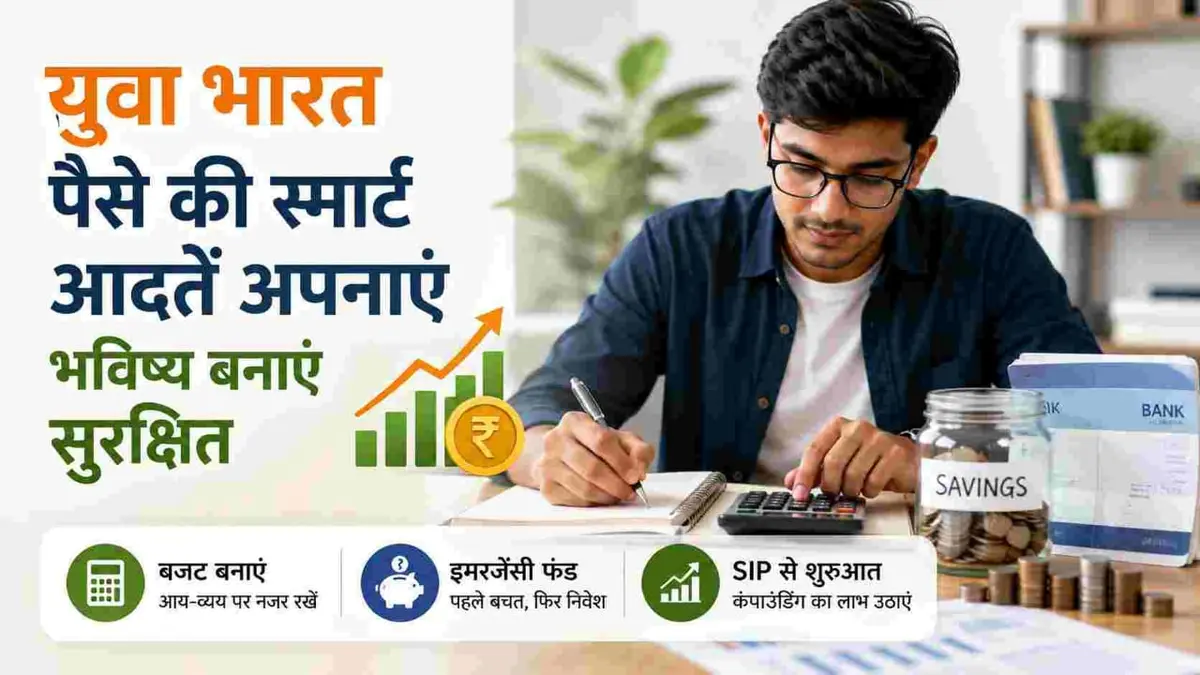

Most young Indians start earning long before anyone teaches them how to manage that money. School and college rarely cover budgeting, saving or investing, so the first salary often becomes a lesson in trial and error. The good news is that building wealth doesn't require a finance degree or a large income. It requires a few consistent habits, started early and followed patiently.
Here's a practical, age-appropriate guide to help students, first-time earners and young professionals put their money to work instead of letting it slip away.
Why Financial Habits Matter More Than Income
A common assumption is that wealth creation begins once income increases. In reality, habits matter more than the number on a payslip. Someone earning a modest salary who saves consistently and invests early will often build more wealth over two decades than someone earning significantly more but saving irregularly. This is because of two forces working together: discipline and time. Discipline decides how much money actually gets saved each month, and time allows that money to grow through compounding. Neither works well without the other.
Start With a Simple Budget
Budgeting sounds tedious, but it doesn't need to be complicated. The goal is simply to know where money comes from and where it goes.
A practical starting point is the 50-30-20 approach:
- 50% for needs — rent, groceries, transport, bills, insurance
- 30% for wants — dining out, entertainment, shopping, subscriptions
- 20% for savings and investments — emergency fund, SIPs, long-term goals
This isn't a rigid rule. Someone living with family may need less for essentials and can push more toward savings. Someone paying high rent in a metro city may need to adjust the ratio. What matters is tracking expenses for at least one full month before assuming where the money is going. Most people are surprised by how much smaller spending habits — food delivery, impulse purchases, unused subscriptions — add up over 30 days.
A simple spreadsheet, a notebook, or any budgeting app works. The tool matters far less than the consistency of using it.
Build an Emergency Fund Before Investing
It's tempting to jump straight into investing after the first salary, but an emergency fund should usually come first. This is money set aside purely for unplanned situations — a medical expense, sudden job loss, or urgent travel — and it should be easily accessible, not locked into investments that could lose value if withdrawn early.
A reasonable target is three to six months of essential expenses, kept in a savings account or a liquid instrument that can be accessed quickly. This fund acts as a financial buffer. Without it, an emergency often forces people to break investments early, borrow at high interest, or rely on credit cards — all of which set back long-term goals.
Building this fund doesn't have to happen overnight. Setting aside a fixed amount every month, even a small one, steadily builds the cushion over 6 to 12 months.
Start Investing Early, Even With Small Amounts
Once a basic emergency fund is in place, the next habit is starting to invest — and starting early matters more than starting big. This is where the concept of compounding becomes important. Money invested early has more time to grow, and the returns generated also start earning their own returns.
Systematic Investment Plans, or SIPs, are one of the most beginner-friendly ways to start. Instead of investing a lump sum, a fixed amount is invested at regular intervals, usually monthly, into mutual funds. This approach has a few practical advantages for young investors:
- It doesn't require a large amount to begin
- It builds a habit of regular saving
- It reduces the impact of market ups and downs through rupee-cost averaging
- It works well with a salary cycle
Someone who begins investing in their early twenties, even with a modest monthly amount, generally builds a noticeably larger corpus by retirement compared to someone who starts a decade later with a bigger amount — purely because of the extra years of compounding. Readers who want to see how small monthly investments can grow over time can use a SIP calculator to plan realistic goals based on their own numbers.
Common Money Mistakes Young Earners Should Avoid
A few patterns tend to repeat among first-time earners, and avoiding them early saves years of financial stress later:
- Lifestyle inflation — increasing spending every time income rises, instead of increasing savings
- Ignoring insurance — skipping health insurance because employer cover feels sufficient, without checking its limits
- Investing without a goal — putting money into instruments without understanding the purpose or time horizon
- Relying on credit cards for lifestyle spending — using credit as an extension of income rather than a short-term convenience
- Delaying because "the amount is too small" — waiting for a bigger salary to start saving, instead of starting with whatever is available now
None of these mistakes are unusual, and most people make at least one of them early in their financial life. What matters is correcting the habit as soon as it's noticed, rather than letting it continue for years.
An Age-Wise Approach to Money Management
Financial priorities naturally shift with life stage, and it helps to think of money management in phases rather than a single fixed formula:
Students and early earners (late teens to early 20s): Focus on learning to track expenses, opening a savings account, and starting even a small SIP to build the habit early.
Early career (mid-20s): Prioritise building the emergency fund, taking basic health and term insurance, and increasing SIP contributions as income grows.
Established career (late 20s to 30s): Diversify investments across asset classes, plan for medium-term goals like a home or higher education, and review insurance cover as responsibilities increase.
This isn't a strict timeline — it's a direction. The specific numbers will vary by income, city and family responsibilities, but the sequence of building habits, then a safety net, then long-term investments tends to hold across most situations.
Key Takeaways
- Financial habits matter more than income level when it comes to long-term wealth
- Track expenses for at least a month before setting a budget
- Build an emergency fund of three to six months' expenses before investing
- Start SIPs early, even with small amounts, to benefit from compounding
- Avoid lifestyle inflation and unplanned credit card spending
- Adjust financial priorities as career and responsibilities grow
Conclusion
Building wealth as a young earner isn't about finding one big financial move — it's about repeating small, consistent habits long enough for them to compound. A clear budget, a ready emergency fund and an early SIP habit together do more for long-term financial security than any single high-return investment started late. The earlier these habits are built, the less effort they take to maintain later.
For More Information -
Smart Investment Habits Every Young Indian Should Adopt for Financial Success
> Disclaimer: The content provided on LabhGrow is for educational and informational purposes only. We are not a SEBI-registered investment advisor. Please consult a qualified financial advisor before making any investment or financial decisions. LabhGrow is not responsible for any loss or damage arising from the use of this information.

Head of Content & Lead Writer
Senior financial & news writer specializing in Indian government schemes, market rates, and banking policies.
lakshyabhardwaj.hoc@labhgrow.in
Senior Research Analyst (Fact-Checker)
Dedicated researcher and data verifier ensuring 100% authenticity and fact-checking from primary government and financial feeds.
harshitsharma.sra@labhgrow.in