BOI Mudra Loan Chhattisgarh: Eligibility & Process
Overview
Chhattisgarh entrepreneurs can get collateral-free Bank of India Mudra loans under Shishu, Kishore and Tarun. Check eligibility, documents and EMI details.
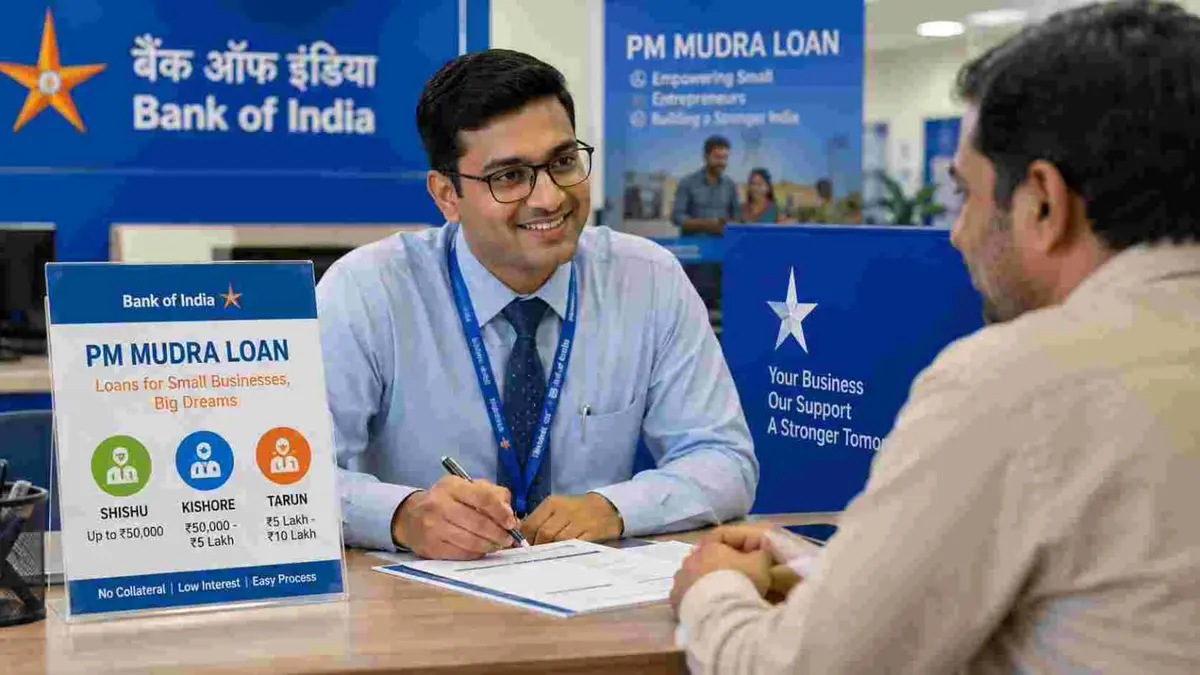

For thousands of small entrepreneurs across Chhattisgarh, arranging capital without pledging property or gold has always been the toughest part of starting a business. That is exactly the gap the Pradhan Mantri Mudra Yojana (PMMY) was designed to fill, and Bank of India is one of the public sector lenders actively disbursing these loans through its branch network in the state.
Whether you run a small kirana store in Raipur, a tailoring unit in Bilaspur, a poultry or dairy set-up near Durg, or a service business in Bastar, the Mudra loan framework at Bank of India is built to give you working capital or term loan support without collateral, as long as your enterprise fits the scheme's non-corporate, non-farm criteria.
What Is the Bank of India Mudra Loan
Bank of India's Mudra loan is offered under the central government's PMMY scheme, which supports income-generating micro and small enterprises in manufacturing, trading, and services. The loan is covered under the Credit Guarantee Fund for Micro Units, which allows banks to lend without requiring third-party collateral, making it accessible to first-time borrowers who do not have assets to pledge.
The scheme also extends to certain allied agricultural activities such as dairy and beekeeping, which is relevant for many rural and semi-urban applicants in Chhattisgarh who run mixed farm-and-trade livelihoods.
The Three (Now Four) Loan Categories
Bank of India structures its Mudra lending into tiers based on the size of funding a business needs:
- Shishu: Loans up to ₹50,000, meant for very early-stage or first-time micro-enterprises such as street vendors, small shopkeepers, and artisans.
- Kishore: Loans from ₹50,001 up to ₹5 lakh, suited to businesses that are already running and need funds for moderate expansion, such as buying equipment or increasing stock.
- Tarun: Loans from ₹5 lakh up to ₹10 lakh, aimed at established small businesses looking for larger growth capital.
- Tarun Plus: A newer category introduced through the Union Budget 2024-25, raising the loan ceiling to ₹20 lakh for entrepreneurs who have already taken and successfully repaid a Tarun loan.
For most first-time Chhattisgarh applicants, Shishu or Kishore will be the relevant category, depending on how established the business already is.
Who Can Apply
Eligibility under the PMMY framework, which Bank of India follows, is kept deliberately simple:
- Applicants should generally be between 18 and 65 years of age.
- The business must be a non-corporate, non-farm activity involved in manufacturing, trading, or services (allied agricultural work like dairy and beekeeping also qualifies).
- The applicant should have a viable business plan, whether for a new venture or an existing one seeking expansion or working capital.
- For higher-value loans in the Tarun and Tarun Plus categories, lenders are increasingly expecting Udyam registration as part of standard MSME compliance.
For Shishu loans, banks generally focus more on the strength of the business idea than on a long credit history, which is useful for applicants in Chhattisgarh who may not yet have an established credit score.
Documents You Will Typically Need
While exact requirements can vary slightly by branch, applicants should be ready with:
- Proof of identity: Aadhaar, PAN, Voter ID, Passport, or Driving Licence
- Proof of residence: recent utility bill, Aadhaar, or Voter ID
- Passport-size photographs
- Proof of business existence or business plan, where applicable
- Category-specific documents such as quotations for machinery, or existing business registration for Kishore and Tarun applications
Keeping these documents ready before visiting your nearest Bank of India branch can meaningfully speed up processing.
How to Apply in Chhattisgarh
There are two practical routes for Chhattisgarh entrepreneurs:
1. Branch visit: Visit your nearest Bank of India branch with the required documents and ask specifically for a PMMY Mudra loan application under the relevant category. Branch staff can guide you on the current documentation checklist for your district.
2. Digital route: Applications can also be initiated through the Udyamimitra portal or the JanSamarth portal, which route the request to participating banks including Bank of India, and allow you to track status online.
Since branch-level processes and locally required documents can differ slightly across districts such as Raipur, Bilaspur, Durg, Bastar, and Korba, it's worth confirming the nearest active Mudra loan branch and its current checklist through Bank of India's official branch locator or customer care before you apply.
Tips to Improve Approval Chances
- Keep a clear, simple write-up of what the loan will be used for, and how it will generate income.
- Make sure your KYC documents are updated and consistent across ID and address proof.
- For Kishore and Tarun categories, a reasonable credit score works in your favour, though it is not treated as strictly for Shishu loans.
- Avoid applying for a higher category than your business currently justifies; a mismatched request is one of the more common reasons for delay or rejection.
- If you already hold a Mudra Card or working capital limit, using it responsibly builds a repayment track record that helps with future top-ups, including a possible move to Tarun Plus later.
Planning Your Repayment
Before taking a Mudra loan, it helps to work out the monthly instalment you can comfortably manage based on the loan amount, tenure, and interest rate offered by your branch. Using an EMI calculator before applying lets you compare categories and loan amounts realistically, so you don't end up committing to a repayment burden your business cash flow can't support.
Conclusion
For entrepreneurs across Chhattisgarh, the Bank of India Mudra loan remains one of the more accessible ways to fund a small business without collateral. The key is matching your funding need to the right category, keeping documentation ready, and confirming the latest branch-level process before you apply, since these details can shift from one financial year to the next.
For More Information -
Apply for Pradhan Mantri Mudra Yojana online - BOI
Disclaimer: The information provided on Labhgrow.in is for educational purposes only. We are not affiliated with the Income Tax Department, NSDL (Protean), or UTIITSL. Delivery times and tracking processes are subject to government portal functionality. Please never share your PAN details or OTPs with unauthorized third-party websites.

Head of Content & Lead Writer
Senior financial & news writer specializing in Indian government schemes, market rates, and banking policies.
lakshyabhardwaj.hoc@labhgrow.in
Senior Research Analyst (Fact-Checker)
Dedicated researcher and data verifier ensuring 100% authenticity and fact-checking from primary government and financial feeds.
harshitsharma.sra@labhgrow.inFrequently Asked Questions
Related News & Articles

Best Zero-Balance Student Savings Account Guide 2026
Sep 3, 2026

RBI Repo Rate 2026: Effect on EMI, FD and Loans
Jul 23, 2026
India Post Payments Bank: How Doorstep Banking Is Transforming Financial Access in Rural India
Jul 2, 2026

IPPB Launches Zero Balance Account for Women SHGs — Big Banking Relief for Rural Women
May 6, 2026