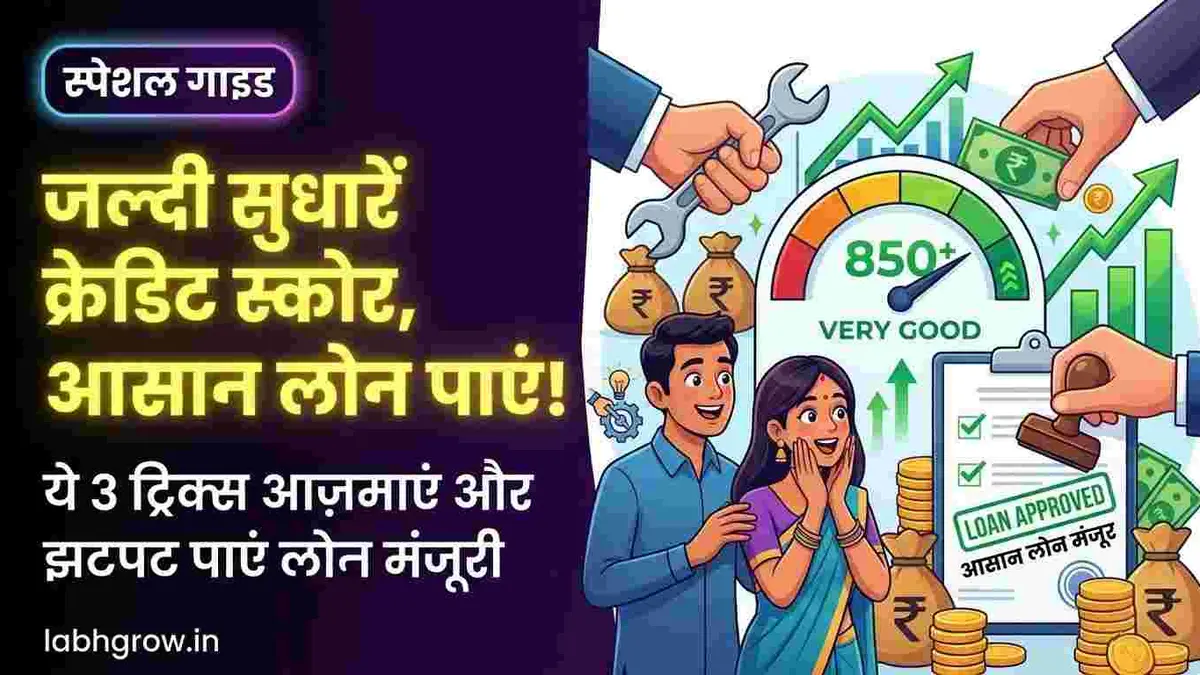
Credit Score Low? These Smart Tricks Can Help You Get Loans Easily in 2026
Credit Score Low? These Smart Changes Can Make Getting a Loan Much Easier in India
A few years ago, most people in India barely cared about their credit score. Salary aa rahi hai, EMI chal rahi hai, bank account active hai — bas enough lagta tha. But now, things have changed quietly.
Today, one small three-digit number can decide whether your home loan gets approved, your bike loan interest becomes expensive, or your credit card application gets rejected within seconds.
And the surprising part? Many people only realize the importance of a credit score after facing rejection.
Just last month, a private employee from Noida shared on social media how his personal loan got rejected despite earning ₹55,000 per month. The reason was simple — delayed credit card payments from two years ago. He didn’t even remember them.
That’s how serious banks and NBFCs have become in 2026.
But the good news is this: improving your credit score is not as difficult as most people think. In fact, many Indians are seeing visible improvement within a few months simply by changing a few financial habits.
Let’s understand what actually works.
Why Banks Suddenly Care So Much About Credit Scores
Earlier, banks mostly checked salary slips and job stability. Now, digital lending has changed the game.
Whether you apply for a loan through a banking app, fintech platform, or even while buying a phone on EMI, your credit profile gets checked instantly.
Banks want one thing — confidence that you will repay money on time.
Your credit score becomes that “trust signal.”
Usually:
- 750+ score is considered very good
- 700–750 is decent
- Below 650 starts creating problems
Many users don’t know that even one missed EMI can impact the score badly if ignored for months.
And yes, “minimum payment done tha” doesn’t always save you completely. Interest keeps building, and lenders notice that pattern too.
The Biggest Mistake Most Indians Make
One common mindset hurts credit scores more than anything else.
People think:
“Loan toh abhi lena nahi hai… later dekh lenge.”
That “later” becomes a problem when suddenly:
- Medical emergency happens
- Home loan needed
- Business loan required
- Car purchase opportunity comes
Then banks pull up old financial behavior from years back.
A Delhi-based businessman recently mentioned how his home loan interest became higher than expected because of frequent credit card utilization. He was earning well, but almost every month his cards stayed near the limit.
This is something many people ignore.
Using 90% of your credit limit regularly tells lenders you may be financially stressed.
Experts usually suggest keeping usage below 30%.
So if your credit card limit is ₹1 lakh, try not to cross ₹30,000–₹35,000 frequently.
Simple change. Big impact.
Paying On Time Matters More Than Big Income
A lot of salaried employees assume higher salary automatically means easy loan approval.
Not always.
Banks often trust a disciplined ₹25,000 salary earner more than someone earning ₹1 lakh but missing payments.
Payment history plays a huge role in your score calculation.
Even a small forgotten EMI from an old BNPL app or shopping card can quietly damage your profile.
This is becoming common after the rise of instant shopping credit apps.
Many users take small credit for headphones, phones, or fashion purchases and then forget about due dates.
One delayed payment becomes another. Then penalties start. Then credit score drops.
The easiest fix?
Set auto-pay wherever possible.
Or at least keep payment reminders 4–5 days before the due date.
Sounds basic, but it works surprisingly well.
Closing Old Credit Cards Too Early Can Backfire
This part shocks many people.
Suppose you have an old credit card that you barely use anymore. Most people immediately close it thinking it will improve finances.
But sometimes, old cards actually help your credit history.
Banks like to see long-term responsible usage.
If your oldest card is 6–7 years old and has a clean repayment record, it strengthens your profile.
Closing it suddenly can reduce your overall available credit limit and shorten credit history length.
Both can slightly hurt your score.
Of course, if the card has very high annual charges and no benefit, closing may still make sense. But blindly shutting every old account isn’t always smart.
Loan Rejections Can Also Damage Your Profile
Here’s another thing people rarely discuss.
Applying for too many loans within a short period can reduce your score temporarily.
Imagine this situation:
You apply for:
- Personal loan
- Two credit cards
- Bike loan
- Consumer durable EMI
…all within one month.
Every lender checks your credit report. Too many checks signal “credit hungry behavior.”
Banks become cautious.
This is why financial advisors often suggest spacing applications properly instead of panic-applying everywhere after one rejection.
Sometimes people worsen the situation themselves unknowingly.
Small Loans Can Actually Help Build Credit
This sounds strange, but responsible borrowing can improve your score.
For example:
- Small secured credit card
- Low-value consumer loan
- Simple EMI product with timely repayment
If managed properly, these create positive repayment history.
Many first-time earners in India now intentionally use one small credit card for fuel, groceries, or mobile bills and pay it fully every month.
Within a year, their score becomes much stronger.
That future home loan application suddenly looks safer to banks.
But there’s one important point — don’t borrow unnecessarily just to “increase score.” Use only manageable amounts.
Errors in Credit Reports Are More Common Than People Think
This is something people discover very late.
Sometimes:
- Closed loans still show active
- Paid dues appear unpaid
- Wrong late payment entries appear
- Someone else’s account gets linked accidentally
And because many Indians never check their credit reports, these errors continue for years.
You can check your report periodically through official credit bureaus.
If something looks wrong, raise a dispute quickly.
Many users have seen score improvement after correcting simple reporting mistakes.
The “Fast Improvement” Myth
Search online and you’ll find dramatic claims:
“Boost your score by 200 points instantly!”
Reality is different.
Credit scores improve gradually through consistent behavior.
Usually, meaningful improvement may take:
- 3–6 months for moderate issues
- Longer for serious defaults
But the positive side is this — lenders notice recent discipline too.
If someone had financial trouble earlier but has maintained clean repayment for the last year, many banks still consider applications positively.
So don’t assume a bad score is permanent.
Financial recovery is possible.
And honestly, in today’s economy where layoffs, medical emergencies, and rising expenses affect families regularly, banks also understand that temporary struggles happen.
What matters more is whether your recent behavior shows responsibility.
A Quiet Financial Habit That Can Change Your Future
Many Indians spend hours comparing loan interest rates but ignore the thing that controls those rates — their credit profile.
A better score can quietly save lakhs over time.
Lower interest.
Faster approvals.
Better credit card offers.
Higher loan eligibility.
All from consistent small habits.
And maybe that’s the biggest lesson here.
Improving your credit score isn’t really about impressing banks.
It’s about creating financial flexibility before life suddenly demands it.
Because when opportunity or emergency arrives, the last thing anyone wants is hearing:
“Sorry sir, your loan application has been declined.”
| Credit Score Range | What It Usually Means | Loan Chances |
|---|---|---|
| 750+ | Strong profile | Very high |
| 700–749 | Good score | Mostly approved |
| 650–699 | Average profile | Depends on bank |
| Below 650 | Risky category | Higher rejection chances |
Improving your credit score in India mainly depends on paying EMIs on time, keeping credit card usage low, avoiding multiple loan applications, and checking credit reports regularly. Even small financial habits can gradually improve your CIBIL score and increase loan approval chances.
You can also read this -
How to Get A Personal Loan With Low CIBIL Score | Bajaj Markets
Disclaimer: The information provided on Labhgrow.in is for educational purposes only. We are not affiliated with the Income Tax Department, NSDL (Protean), or UTIITSL. Delivery times and tracking processes are subject to government portal functionality. Please never share your PAN details or OTPs with unauthorized third-party websites.