Ayodhya Donation Case: Faizabad Bar Association's Rare Resolution Sparks Debate on Legal Ethics and Right to Defence
વિહંગાવલોકન (Overview)
A resolution passed by the Faizabad Bar Association in connection with the alleged Ram Janmabhoomi donation theft case has drawn widespread attention across Uttar Pradesh's legal community. While the association reportedly decided that its members should not represent the accused and warned of disciplinary action for violations, legal experts have pointed out that every accused person is constitutionally entitled to legal representation. With eight accused already in judicial custody and the investigation still underway, the development has reignited discussion over the balance between public sentiment, professional ethics, and the justice system.
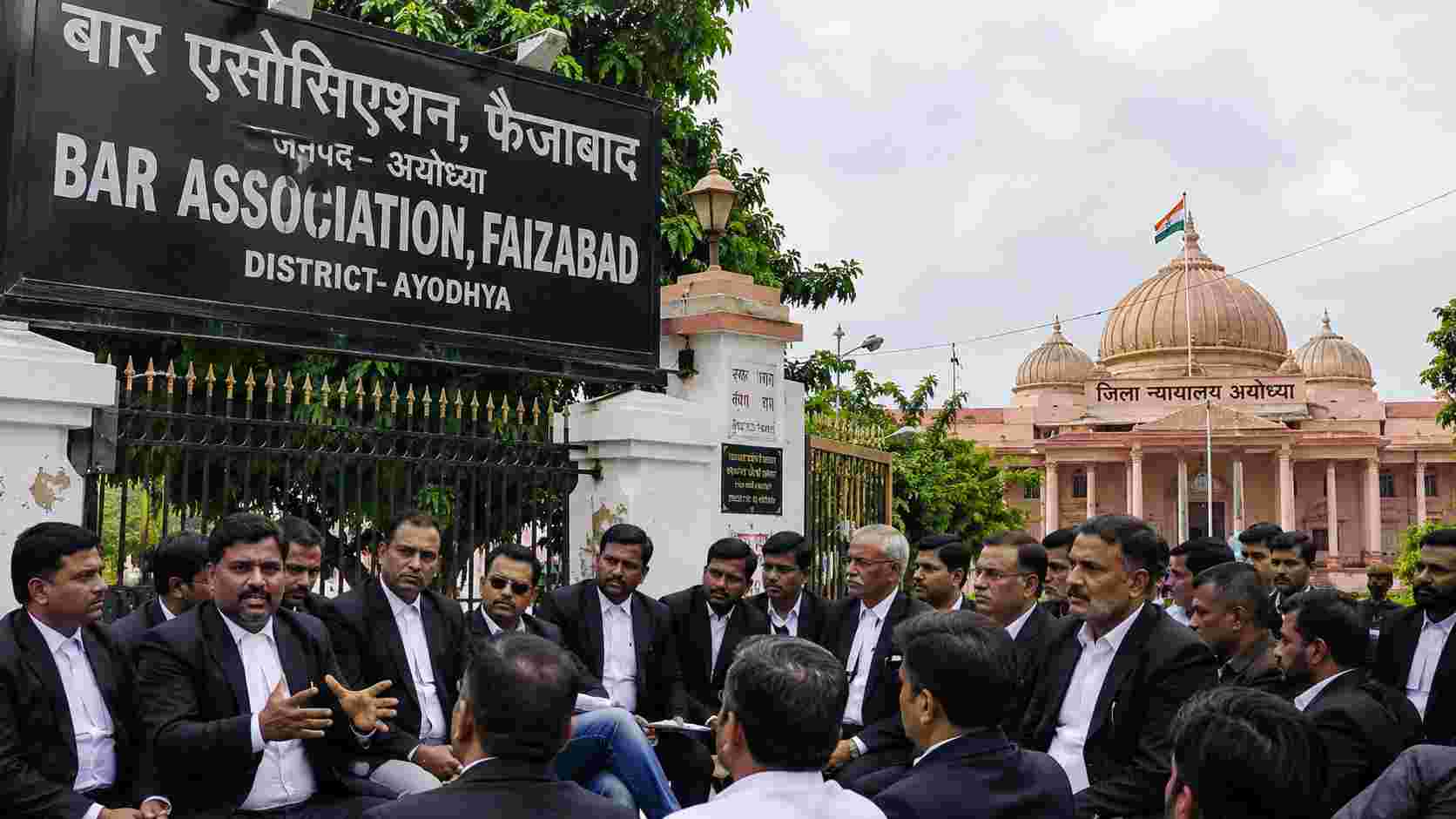

The alleged theft of donations linked to the Ram Janmabhoomi complex has taken an unusual legal turn after the Faizabad Bar Association reportedly resolved that its members would not represent the accused in court.
The decision, taken during a general body meeting, has attracted significant public attention because it goes beyond the ongoing criminal investigation and raises broader questions about legal ethics and the constitutional right of an accused person to receive legal assistance.
At present, the case remains under investigation, and the allegations against the accused have yet to be tested during trial.
Bar Association passes resolution
According to reports, the Faizabad Bar Association adopted a resolution stating that its members should refrain from appearing on behalf of the accused in the alleged donation theft case.
Reports also indicate that the association announced a warning of a ₹5 lakh penalty for any member who violates the resolution. However, the implementation and legal enforceability of such an internal decision remain matters governed by the association's own rules and applicable legal provisions.
The resolution has generated considerable discussion within legal circles due to its uncommon nature.
Eight accused sent to judicial custody
Investigating agencies have arrested eight individuals in connection with the alleged theft.
All eight accused have reportedly been produced before the court and sent to judicial custody while the investigation continues. Authorities have not yet announced the completion of the investigation, and additional findings may emerge as the probe progresses.
As with any criminal case, the arrests do not amount to a finding of guilt. The charges against the accused will ultimately be determined through the judicial process based on evidence presented before the court.
Why the decision has become a legal talking point
The Bar Association's resolution has sparked debate because India's legal system guarantees every accused person the opportunity to defend themselves in court.
Legal experts have noted that the constitutional framework and criminal justice system recognize access to legal representation as a fundamental safeguard for ensuring a fair trial.
While bar associations may express collective opinions or adopt internal resolutions, such decisions cannot override constitutional protections available to individuals facing criminal prosecution.
If an accused person is unable to engage a lawyer privately, courts also have mechanisms for providing legal aid through the appropriate legal services authorities.
Public sentiment versus legal principles
The alleged theft involves donations connected with one of India's most prominent religious sites, making the matter highly sensitive from a public perspective.
Strong public emotions surrounding such cases often influence discussions outside the courtroom. However, legal experts stress that judicial proceedings are expected to be guided by evidence, statutory provisions, and due process rather than public opinion.
This distinction remains an important principle of the criminal justice system.
Investigation still underway
Officials have not declared the investigation complete, and authorities continue to examine the circumstances surrounding the alleged theft.
Since the inquiry is ongoing:
- Further evidence may still be collected.
- Additional procedural steps may follow if required.
- Courts will evaluate the evidence independently during trial.
- No final judicial conclusion has been reached regarding the guilt or innocence of the accused.
Readers should therefore distinguish between allegations, arrests, and a final conviction.
Why this case matters beyond Ayodhya
The development has become significant not only because of the alleged offence but also because it has prompted discussion within the legal fraternity across Uttar Pradesh.
Key issues emerging from the case include:
- Professional responsibilities of advocates.
- The autonomy of bar associations.
- Constitutional guarantees of legal representation.
- The balance between public sentiment and judicial fairness.
- The importance of due process in criminal trials.
These issues frequently arise in high-profile criminal matters and are likely to remain part of the broader legal conversation as the case progresses.
What happens next?
The investigation will continue under the supervision of the competent authorities.
The next stages may include:
- Completion of the police investigation.
- Filing of the final report or charge sheet, if applicable.
- Court proceedings based on the available evidence.
- Examination of witnesses and documentary material.
- Judicial determination after trial.
Until then, the allegations remain subject to judicial scrutiny.
Conclusion
The Faizabad Bar Association's reported resolution has added an unusual legal dimension to the alleged Ram Janmabhoomi donation theft case. While the decision reflects strong local sentiment, constitutional principles continue to ensure that every accused person is entitled to legal representation and a fair trial. With eight accused currently in judicial custody and the investigation still ongoing, the final outcome will depend on evidence examined through the judicial process rather than public opinion alone.
For More Information -
Disclaimer: The information provided on Labhgrow.in is for educational purposes only. We are not affiliated with the Income Tax Department, NSDL (Protean), or UTIITSL. Delivery times and tracking processes are subject to government portal functionality. Please never share your PAN details or OTPs with unauthorized third-party websites.

કન્ટેન્ટ હેડ અને મુખ્ય લેખક
ભારતીય સરકારી યોજનાઓ, બજાર ભાવ અને બેંકિંગ નીતિઓના નિષ્ણાત વરિષ્ઠ નાણાકીય અને સમાચાર લેખક.
lakshyabhardwaj.hoc@labhgrow.in
સીનિયર રિસર્ચ એનાલિસ્ટ (તથ્ય ચકાસણી)
સરકારી અને નાણાકીય સ્ત્રોતોમાંથી 100% સચોટતા અને તથ્યોની ચકાસણી કરતા સમર્પિત સંશોધક.
harshitsharma.sra@labhgrow.in