UP Bal Shramik Vidya Yojana Expanded Across All 75 Districts: What the 2026 Rollout Means for Eligible Children
વિહંગાવલોકન (Overview)
The Uttar Pradesh government has directed the expansion of the Bal Shramik Vidya Yojana to all 75 districts. Know the latest 2026 update, eligibility, monthly financial assistance, incentives, documents required, and how the scheme benefits child labourers and vulnerable children.
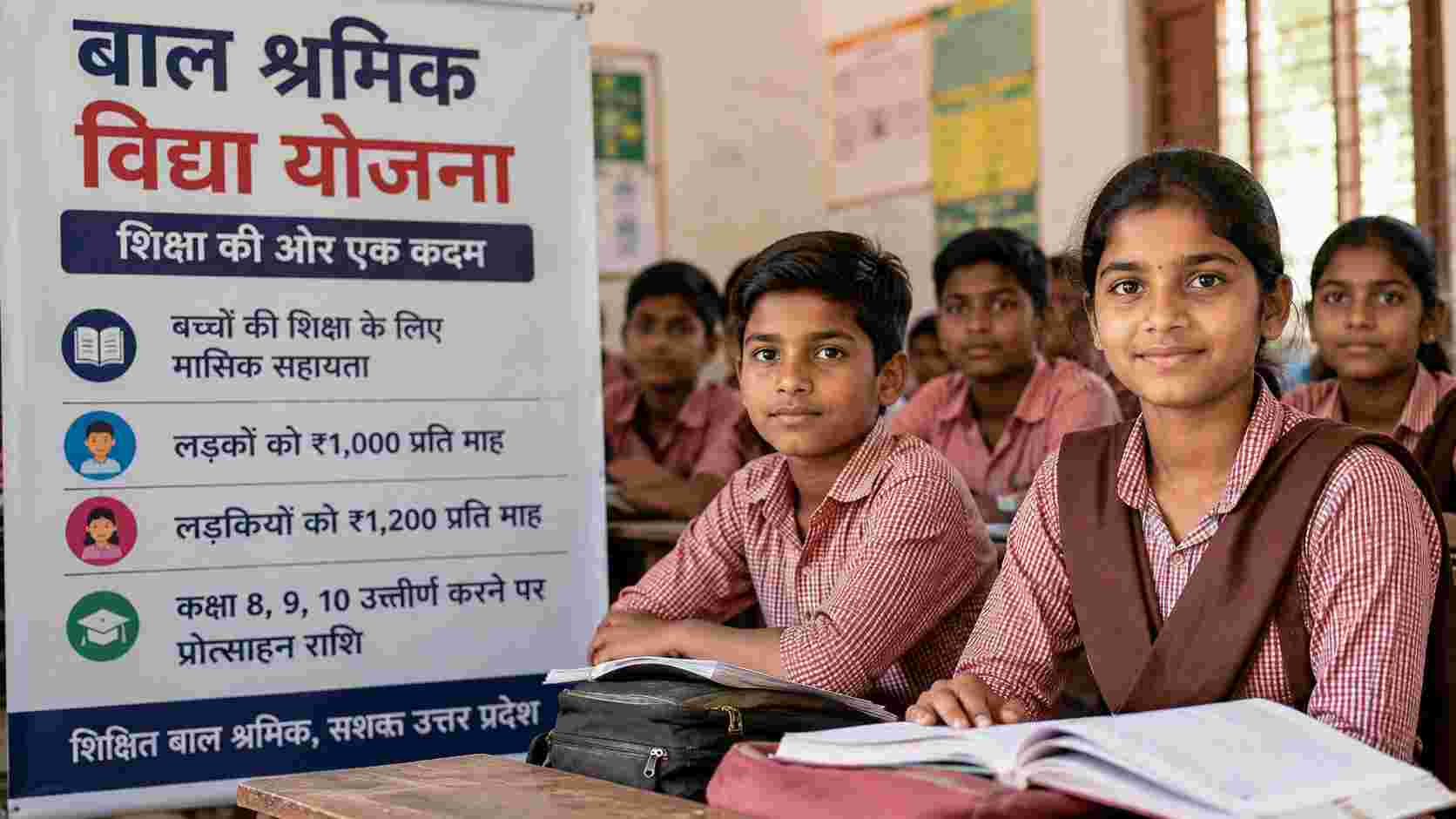

UP Government Expands Bal Shramik Vidya Yojana Statewide
In a significant step towards improving access to education for vulnerable children, the Uttar Pradesh government has directed officials to expand the Bal Shramik Vidya Yojana to all 75 districts of the state.
The announcement came during a review meeting of the Labour and Employment Department, where Chief Minister Yogi Adityanath instructed authorities to ensure that no child is deprived of education because of economic hardship. The scheme, which had been operating in selected districts, will now gradually be implemented across the entire state.
This expansion is expected to increase the number of eligible children who can receive financial support to remain in school instead of entering child labour.
What is the Bal Shramik Vidya Yojana?
Launched in 2020, the Bal Shramik Vidya Yojana is a welfare initiative of the Uttar Pradesh government designed to rehabilitate children involved in child labour or those vulnerable to it by connecting them with formal education.
The scheme targets children between 8 and 18 years of age who are working, have dropped out of school, or belong to families facing severe economic hardship that puts them at risk of child labour.
Financial Assistance Available Under the Scheme
Eligible beneficiaries receive monthly financial assistance directly to support their education.
| Category | Monthly Assistance |
|---|---|
| Boys | ₹1,000 per month |
| Girls | ₹1,200 per month |
In addition to the monthly support, students receive a ₹6,000 incentive after successfully passing Class 8, Class 9, and Class 10, encouraging them to continue their education.
What's New in the 2026 Expansion?
Until now, the scheme was operational in a limited number of districts. The latest directive aims to extend its reach across all 75 districts of Uttar Pradesh, making education support accessible to a much larger number of eligible children.
Officials have also been instructed to:
- Conduct special drives in child labour-prone areas.
- Identify out-of-school children.
- Enrol eligible children into formal schools.
- Strengthen rehabilitation efforts.
- Prepare skill development plans for rehabilitated children in collaboration with private organisations.
While the statewide rollout has been announced, district-level implementation schedules may vary as local authorities complete identification and enrolment activities.
Who Can Benefit?
Although district authorities conduct verification before approving beneficiaries, the scheme generally covers:
- Children aged 8 to 18 years.
- Children engaged in child labour.
- Children vulnerable to child labour because of poor financial conditions.
- School dropouts identified during government surveys.
- Children from families with little or no stable source of income.
Final eligibility is determined after field verification by the Labour Department.
Documents That May Be Required
Applicants or their guardians may be asked to provide:
- Aadhaar Card
- Residence proof
- Age proof or birth certificate
- School admission or enrolment certificate
- Bank account details
- Passport-size photographs
- Any additional documents requested by the district Labour Department
Requirements may differ slightly between districts based on local implementation guidelines.
How Does the Selection Process Work?
Instead of a fully open online registration system, beneficiaries are generally identified through:
Surveys conducted by Labour Department officials.
Identification of child labourers and vulnerable children.
Verification of eligibility.
School enrolment.
Approval of financial assistance.
Children found eligible receive financial support through Direct Benefit Transfer (DBT) after completion of verification.
District-Wise Rollout Status
Following the Chief Minister's directive, every district in Uttar Pradesh has been instructed to implement the scheme.
| Rollout Stage | Current Status |
|---|---|
| Statewide Expansion | Announced |
| Total Districts Covered | 75 |
| Implementation | To be carried out by district authorities |
| Beneficiary Identification | Ongoing through local Labour Department drives |
Residents should check with their respective District Labour Office for local implementation updates as enrolment activities begin.
Why This Expansion Matters
Child labour often prevents children from completing their education, limiting future employment opportunities.
By expanding the Bal Shramik Vidya Yojana statewide, the government aims to:
- Increase school enrolment.
- Reduce child labour.
- Support economically weaker families.
- Encourage girls' education through higher monthly assistance.
- Improve long-term educational outcomes.
The initiative also aligns with broader efforts to strengthen rehabilitation and skill development for vulnerable children.
Conclusion
The expansion of the UP Bal Shramik Vidya Yojana to all 75 districts marks an important step in extending educational support to children affected by or vulnerable to child labour. While the statewide rollout has been officially directed, implementation will take place district by district through local authorities. Families who believe their children may be eligible should stay in touch with their District Labour Office for verification and enrolment updates.
For More Information -
Disclaimer: The information provided on Labhgrow.in is for educational purposes only. We are not affiliated with the Income Tax Department, NSDL (Protean), or UTIITSL. Delivery times and tracking processes are subject to government portal functionality. Please never share your PAN details or OTPs with unauthorized third-party websites.

કન્ટેન્ટ હેડ અને મુખ્ય લેખક
ભારતીય સરકારી યોજનાઓ, બજાર ભાવ અને બેંકિંગ નીતિઓના નિષ્ણાત વરિષ્ઠ નાણાકીય અને સમાચાર લેખક.
lakshyabhardwaj.hoc@labhgrow.in
સીનિયર રિસર્ચ એનાલિસ્ટ (તથ્ય ચકાસણી)
સરકારી અને નાણાકીય સ્ત્રોતોમાંથી 100% સચોટતા અને તથ્યોની ચકાસણી કરતા સમર્પિત સંશોધક.
harshitsharma.sra@labhgrow.in