Indian Car Owners: E20 Petrol Myths Fact-Checked Before Your Next Fuel Fill
అవలోకనం (Overview)
The Central Government has issued a clarification to counter several viral claims surrounding E20 petrol, stating that using the fuel does not invalidate a vehicle's warranty or motor insurance when used as recommended. It also dismissed the widely circulated claim that producing one litre of ethanol requires 10,000 litres of water, saying modern ethanol plants consume significantly less water through efficient recycling and advanced production processes. According to the government, the E20 ethanol-blending programme is aimed at reducing India's dependence on imported crude oil, lowering vehicular emissions, and strengthening the rural economy by creating additional demand for agricultural feedstocks used...
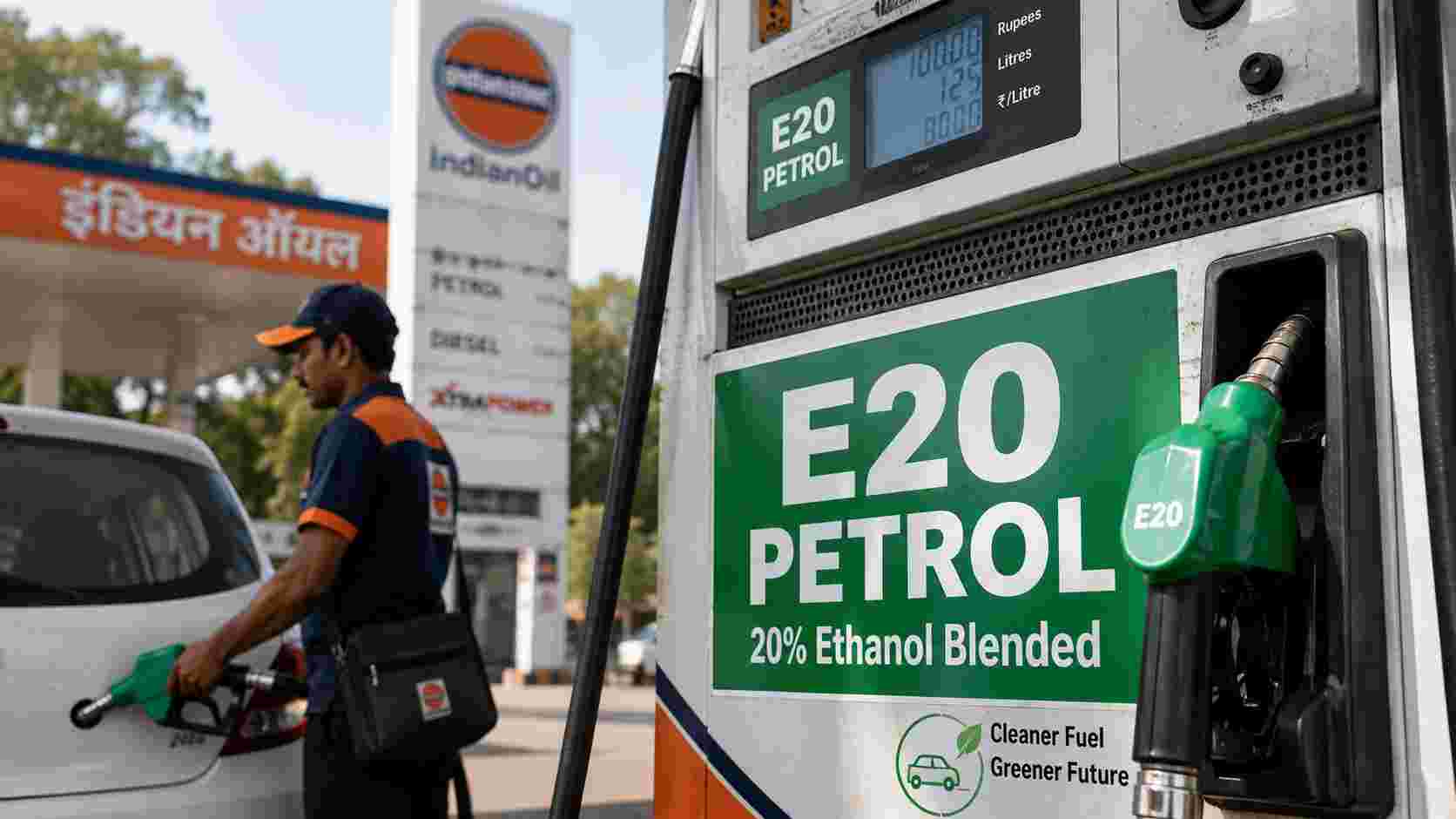

Indian Car Owners: E20 Petrol Myths Fact-Checked Before Your Next Fuel Fill
If you've recently visited a petrol pump, chances are you've heard conflicting claims about E20 petrol. Social media posts have questioned everything from engine safety to insurance validity, leaving many car owners unsure about what to believe.
To address the confusion, the Ministry of Petroleum and Natural Gas has issued a comprehensive 10-point clarification rejecting several viral claims surrounding India's E20 ethanol-blended petrol programme. According to the ministry, the initiative is supported by scientific testing, international experience and established regulatory standards.
What Is E20 Petrol?
E20 is petrol blended with up to 20% ethanol, a renewable fuel produced primarily from sugarcane, maize and other approved agricultural feedstocks. The government has been expanding ethanol blending as part of its strategy to:
- Reduce India's dependence on imported crude oil
- Lower vehicle emissions
- Improve energy security
- Create additional income opportunities for farmers through ethanol production
Government Rejects Viral Claims About Warranty and Insurance
One of the most widely shared claims online suggested that using E20 petrol could invalidate vehicle warranty or motor insurance.
The government has categorically rejected this claim, stating that using approved E20 fuel does not automatically void vehicle warranty or insurance coverage. The clarification follows similar statements issued earlier by the Press Information Bureau (PIB) Fact Check.
However, vehicle owners are still advised to follow their manufacturer's recommendations regarding fuel compatibility and maintenance schedules.
Does E20 Petrol Damage Engines?
The ministry says there is no scientific evidence supporting the claim that E20 petrol damages compatible vehicle engines.
It cited testing conducted by the Automotive Research Association of India (ARAI), which evaluated passenger vehicles and two-wheelers over thousands of kilometres. According to the government, the trials did not find any significant adverse effects on engine performance or drivability in compatible vehicles.
What About Mileage?
This is one area where the government acknowledges a small difference.
Because ethanol contains slightly less energy than conventional petrol, some drivers may notice a marginal reduction in fuel economy when using E20 fuel.
The ministry describes the impact as minor rather than dramatic and says claims of severe mileage loss are misleading. Actual mileage can vary depending on driving style, traffic conditions, engine condition and vehicle design.
Government Rejects 10,000-Litre Water Consumption Claim
Another viral allegation claimed that producing ethanol requires around 10,000 litres of water for every litre produced.
The government has dismissed this figure as inaccurate.
According to the clarification, modern ethanol plants recycle water extensively, use efficient production methods and operate with systems designed to minimise freshwater consumption. Many facilities also use zero-liquid-discharge technology to reduce environmental impact.
Why Is India Promoting E20 Petrol?
Officials say the programme serves multiple national objectives:
- Lower dependence on imported crude oil
- Improve India's energy security
- Reduce greenhouse gas emissions
- Support domestic agriculture and ethanol producers
- Strengthen rural incomes through additional demand for approved feedstocks
State-Wise Vehicle Compatibility: What Owners Should Check
Instead of relying on state location, compatibility depends on your vehicle model and manufacturing year.
Before regularly using E20 petrol, check:
| What to Verify | Why It Matters |
|---|---|
| Owner's manual | Confirms approved fuel type |
| Manufacturer's website | Lists E20-compatible models |
| Dealer or service centre | Can verify your exact variant |
| Fuel cap/manual labels | Some vehicles carry compatibility markings |
Many newer vehicles launched in recent years are designed or certified for E20 compatibility, while older models may have different recommendations depending on the manufacturer.
What This Means for Car Owners
For most drivers, the government's clarification provides reassurance that many viral claims circulating online are not supported by official evidence.
At the same time, experts recommend that owners continue to:
- Use fuel recommended by the manufacturer.
- Service vehicles at scheduled intervals.
- Consult authorised service centres if unsure about compatibility.
- Rely on official government and manufacturer guidance rather than unverified social media posts.
Conclusion
The government's latest clarification aims to separate verified information from misinformation surrounding E20 petrol. Officials maintain that E20 is scientifically evaluated and does not automatically affect vehicle warranty or insurance, while also acknowledging that a slight reduction in mileage may occur due to ethanol's lower energy content.
For vehicle owners, the safest approach is to verify whether their specific model is E20-compatible and continue following the manufacturer's maintenance recommendations. As India's ethanol blending programme expands, informed decisions based on official guidance remain the best way to avoid unnecessary confusion.
For More Information -
E20 Petrol in India: Myths vs Facts – What Every Car Owner Should Know
Disclaimer: The information provided on Labhgrow.in is for educational purposes only. We are not affiliated with the Income Tax Department, NSDL (Protean), or UTIITSL. Delivery times and tracking processes are subject to government portal functionality. Please never share your PAN details or OTPs with unauthorized third-party websites.

కంటెంట్ హెడ్ & ప్రధాన రచయిత
భారతీయ ప్రభుత్వ పథకాలు, మార్కెట్ రేట్లు మరియు బ్యాంకింగ్ విధానాలలో నిపుణులైన సీనియర్ రచయిత.
lakshyabhardwaj.hoc@labhgrow.in
సీనియర్ రీసెర్చ్ అనలిస్ట్ (ఫాక్ట్ చెకర్)
ప్రభుత్వ మరియు అధికారిక వనరుల నుండి 100% ఖచ్చితత్వాన్ని పరిశోధించి ధృవీకరించే నిపుణుడు.
harshitsharma.sra@labhgrow.in