Why Indian Gold Buyers Are Exchanging Old Jewellery Instead of Making Fresh Purchases
கண்ணோட்டம் (Overview)
India’s gold market is witnessing a major shift in consumer behaviour. As gold prices remain elevated, a growing number of buyers are choosing to exchange old jewellery rather than purchase new pieces with fresh cash. Jewellery retailers across the country report a sharp rise in exchange-led transactions, with old gold exchanges now contributing a significant share of overall sales. The trend is particularly visible in Tier-2 and Tier-3 cities, where families are becoming more value-conscious while still maintaining their traditional preference for gold.
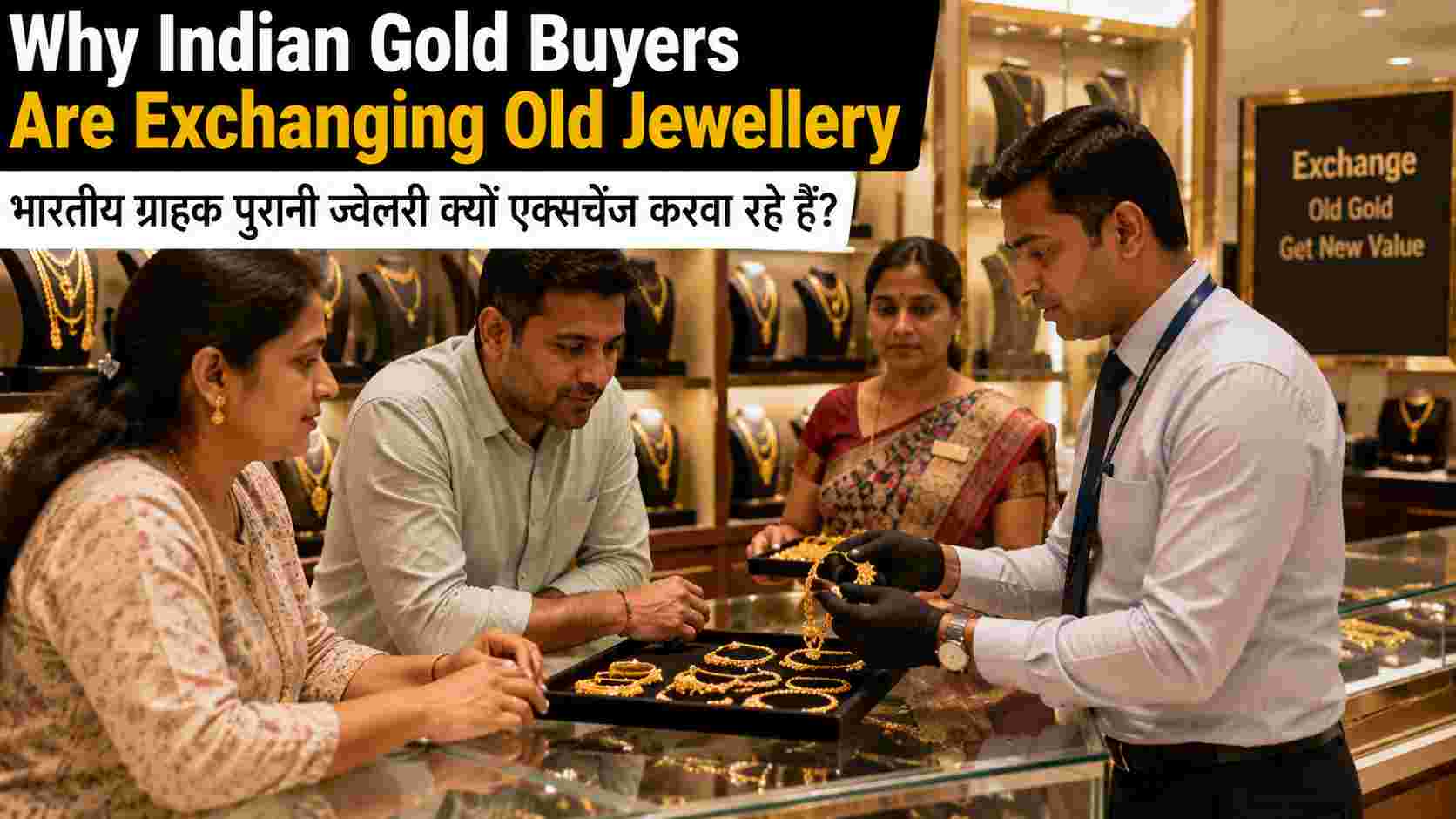

India's long-standing love for gold remains as strong as ever, but the way people are buying jewellery is changing rapidly.
With gold prices hovering near record levels, many consumers are avoiding large cash purchases and instead using old jewellery as a source of value when buying new ornaments. Across organised jewellery chains, exchange transactions have become one of the biggest drivers of sales, reflecting a significant shift in household buying behaviour.
Rising Gold Prices Are Reshaping Consumer Decisions
For decades, Indian families have viewed gold as both an ornament and a store of wealth. However, the sharp rise in gold prices over the past year has made fresh purchases more expensive for many households.
Instead of allocating large amounts of cash for new jewellery, buyers are increasingly bringing old ornaments, unused pieces, inherited jewellery, or outdated designs to jewellers and exchanging them for newer products. This allows them to pay only the difference in value, making the purchase more affordable.
Industry reports indicate that old gold exchange transactions have increased by nearly 60% compared to the previous year, highlighting how strongly consumers are responding to higher prices.
Exchange-Led Sales Now Form a Major Part of Jewellery Business
Several leading jewellery retailers have reported that exchange-based purchases now account for a substantial portion of their sales.
According to industry executives quoted in recent reports:
- Some major jewellery chains are seeing exchange-led sales contribute nearly 40% to 45% of total business.
- Certain retailers have reported exchange programmes accounting for as much as 65% of sales during peak periods.
- In some markets, exchange transactions have become more common than completely fresh purchases.
The trend is helping retailers maintain demand despite higher bullion prices, while also giving consumers a cost-effective way to acquire new jewellery.
Tier-2 and Tier-3 Cities Are Driving the Trend
One of the most interesting aspects of this shift is that it is not limited to metro cities.
Jewellers across smaller cities and emerging urban centres are witnessing strong demand for exchange programmes. Families that traditionally bought new jewellery during weddings, festivals, and special occasions are now increasingly choosing to redesign existing gold holdings instead of purchasing entirely new gold.
In many households, old jewellery stored in lockers is being viewed as a usable financial asset rather than something that remains untouched for years.
This change reflects growing price awareness among consumers while preserving the cultural importance of gold ownership.
Why Families Prefer Exchanging Old Jewellery
Several factors are contributing to the growing popularity of gold exchanges:
Lower Additional Spending
When customers exchange old gold, only the value difference, making charges, taxes, and design-related costs need to be paid. This significantly reduces immediate spending requirements.
Jewellery Upgrades
Many families use exchange programmes to replace outdated designs with contemporary styles without making a completely new investment.
Better Value Utilisation
Unused jewellery that would otherwise remain in storage can be converted into pieces that match current preferences and needs.
Wedding and Family Purchases
Even though wedding-related gold demand remains relatively resilient, exchange transactions help families manage budgets more effectively during expensive celebrations.
What This Means for India's Gold Market
The growing exchange culture could have broader implications for the gold industry.
When old jewellery enters the market through exchange programmes, it can be refined and recycled, reducing dependence on newly imported gold. Industry experts say this recycling cycle is becoming increasingly important as consumers seek value-oriented purchasing options.
The trend also highlights a shift in consumer mindset. Rather than simply accumulating more gold, buyers are focusing on maximizing the value of gold already owned by their families.
Impact on Consumers
For gold buyers, the rise of exchange-led purchases offers several advantages:
- Lower upfront expenditure
- Opportunity to upgrade old jewellery designs
- Better use of idle household gold
- Reduced impact of rising market prices
- Flexibility during weddings and festive shopping
Consumers planning jewellery purchases should still compare exchange policies, purity assessments, making charges, and applicable deductions before proceeding with any transaction.
Those tracking market movements may also benefit from monitoring daily gold rates before making exchange decisions.
Key Takeaways
- Rising gold prices are encouraging Indians to exchange old jewellery instead of making fresh purchases.
- Old gold exchange transactions have reportedly increased by nearly 60% year-on-year.
- Exchange-led purchases now contribute a large share of organised jewellery sales.
- Tier-2 and Tier-3 cities are emerging as important drivers of this trend.
- Families are increasingly treating old gold as an asset that can be upgraded rather than simply stored away.
Conclusion
India's relationship with gold is evolving rather than weakening. While high prices have made fresh purchases more challenging, consumers are finding practical alternatives through old gold exchange programmes. The growing popularity of exchanging jewellery reflects a more value-conscious approach to buying gold, especially among families in smaller cities and towns. As prices remain elevated, exchange-led purchases are likely to remain a key feature of the Indian jewellery market in the months ahead.
For More Information -
Disclaimer: The information provided on Labhgrow.in is for educational purposes only. We are not affiliated with the Income Tax Department, NSDL (Protean), or UTIITSL. Delivery times and tracking processes are subject to government portal functionality. Please never share your PAN details or OTPs with unauthorized third-party websites.

உள்ளடக்கத் தலைவர் & முதன்மை எழுத்தாளர்
இந்திய அரசு திட்டங்கள் மற்றும் சந்தை நிலவரங்களில் நிபுணத்துவம் பெற்ற முதன்மை எழுத்தாளர்.
lakshyabhardwaj.hoc@labhgrow.in
மூத்த ஆராய்ச்சி ஆய்வாளர் (உண்மை சரிபார்ப்பாளர்)
அரசு மற்றும் அதிகாரப்பூர்வ ஆதாரங்களில் இருந்து தகவல்களை ஆய்வு செய்து சரிபார்க்கும் உண்மை ஆய்வாளர்.
harshitsharma.sra@labhgrow.in