BP, Allergy & Antibiotic Users Get Relief as NPPA Brings 39 Medicines Under Price Control
கண்ணோட்டம் (Overview)
The Central Government has fixed retail prices for 39 new drug formulations through the National Pharmaceutical Pricing Authority (NPPA). The latest notification covers commonly prescribed medicines for bacterial infections, allergies and hypertension, with the objective of improving affordability and preventing excessive pricing. Patients are expected to benefit as the revised retail prices become available across pharmacies.
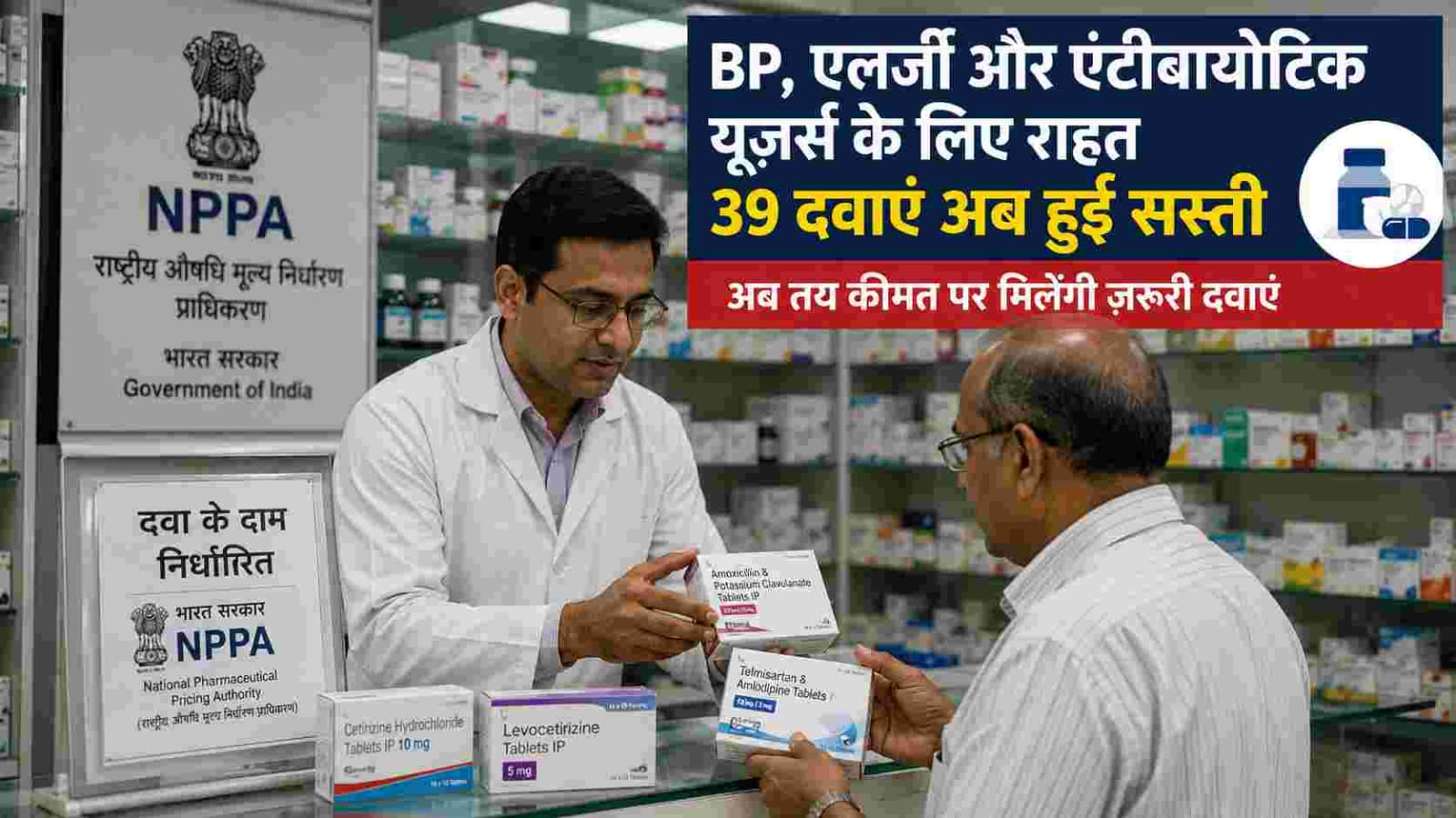

Patients purchasing medicines for high blood pressure, allergies and common bacterial infections may soon see more regulated prices at pharmacies. The National Pharmaceutical Pricing Authority (NPPA) has notified retail prices for 39 new drug formulations under the provisions of the Drugs (Prices Control) Order (DPCO), 2013, a move aimed at making essential medicines more affordable across India.
The latest notification is part of the government's ongoing effort to keep the prices of important medicines within reach while ensuring their continued availability in the market.
What has the NPPA announced?
The NPPA has fixed retail prices for 39 newly approved formulations that fall under the price control framework of DPCO 2013. Manufacturers introducing these formulations must sell them at or below the notified retail price, along with applicable taxes wherever permitted under the rules.
The authority periodically issues such notifications to regulate the prices of medicines that are considered important for public health.
Which medicines are covered?
The latest list includes medicines used for treating:
- Bacterial infections
- Allergic conditions
- High blood pressure (Hypertension)
Among the formulations mentioned are combinations containing:
- Amoxicillin + Clavulanate (widely prescribed antibiotic)
- Cetirizine (anti-allergy medicine)
- Certain blood pressure drug combinations used for hypertension management.
The notification specifies retail prices for formulations rather than all brands. Individual brands using the same formulation must comply with the notified pricing rules where applicable.
Why does the government regulate medicine prices?
Medicine expenses remain a significant part of healthcare costs for many Indian households. Price regulation helps ensure that patients have access to essential treatments without facing unreasonable retail pricing.
Under DPCO 2013, the NPPA has the authority to fix ceiling or retail prices of medicines covered by the relevant provisions. According to official information, thousands of drug formulations are already under various forms of price regulation in India.
What does this mean for patients?
For consumers, the latest notification could provide several benefits:
- Better price transparency at pharmacies.
- Reduced chances of overcharging on covered formulations.
- Improved affordability for patients requiring long-term treatment.
- More predictable medicine costs for chronic conditions such as hypertension.
The actual benefit will depend on when manufacturers and pharmacies begin supplying medicines with the notified retail prices.
How to check if your medicine is covered
If you or a family member regularly purchases medicines for blood pressure, allergies or infections, consider this simple checklist:
| Check | Why it matters |
|---|---|
| Compare the medicine's formulation, not just the brand name | Price control applies to specific formulations. |
| Ask the pharmacist for the printed MRP | Ensure it matches the notified pricing where applicable. |
| Keep your purchase bill | Useful in case of pricing disputes. |
| Check official NPPA notifications | Retail prices are publicly notified by the authority. |
State-wise pharmacy verification
Since pharmacies across different states may stock different brands, patients should:
- Verify the medicine composition printed on the strip.
- Compare the MRP before purchasing.
- Request a generic equivalent if recommended by the prescribing doctor.
- Report suspected overcharging to the appropriate State Drug Controller or consumer grievance mechanism where applicable.
Background: How NPPA price control works
The National Pharmaceutical Pricing Authority functions under the Department of Pharmaceuticals and regulates prices of scheduled medicines under DPCO.
For new drug formulations covered by the order, the NPPA fixes retail prices based on the prescribed methodology. Manufacturers are required to comply with these notified prices while marketing the medicines. The authority also revises and publishes notifications periodically as new formulations receive approval.
Conclusion
The latest NPPA notification covering 39 new drug formulations is expected to improve access to affordable medicines for patients managing infections, allergies and high blood pressure. While the notified retail prices should gradually become visible in pharmacies, consumers are encouraged to check the formulation, verify the MRP and retain purchase bills to ensure they receive medicines at the regulated price wherever applicable.
Disclaimer: The information provided on Labhgrow.in is for educational purposes only. We are not affiliated with the Income Tax Department, NSDL (Protean), or UTIITSL. Delivery times and tracking processes are subject to government portal functionality. Please never share your PAN details or OTPs with unauthorized third-party websites.

உள்ளடக்கத் தலைவர் & முதன்மை எழுத்தாளர்
இந்திய அரசு திட்டங்கள் மற்றும் சந்தை நிலவரங்களில் நிபுணத்துவம் பெற்ற முதன்மை எழுத்தாளர்.
lakshyabhardwaj.hoc@labhgrow.in
மூத்த ஆராய்ச்சி ஆய்வாளர் (உண்மை சரிபார்ப்பாளர்)
அரசு மற்றும் அதிகாரப்பூர்வ ஆதாரங்களில் இருந்து தகவல்களை ஆய்வு செய்து சரிபார்க்கும் உண்மை ஆய்வாளர்.
harshitsharma.sra@labhgrow.in