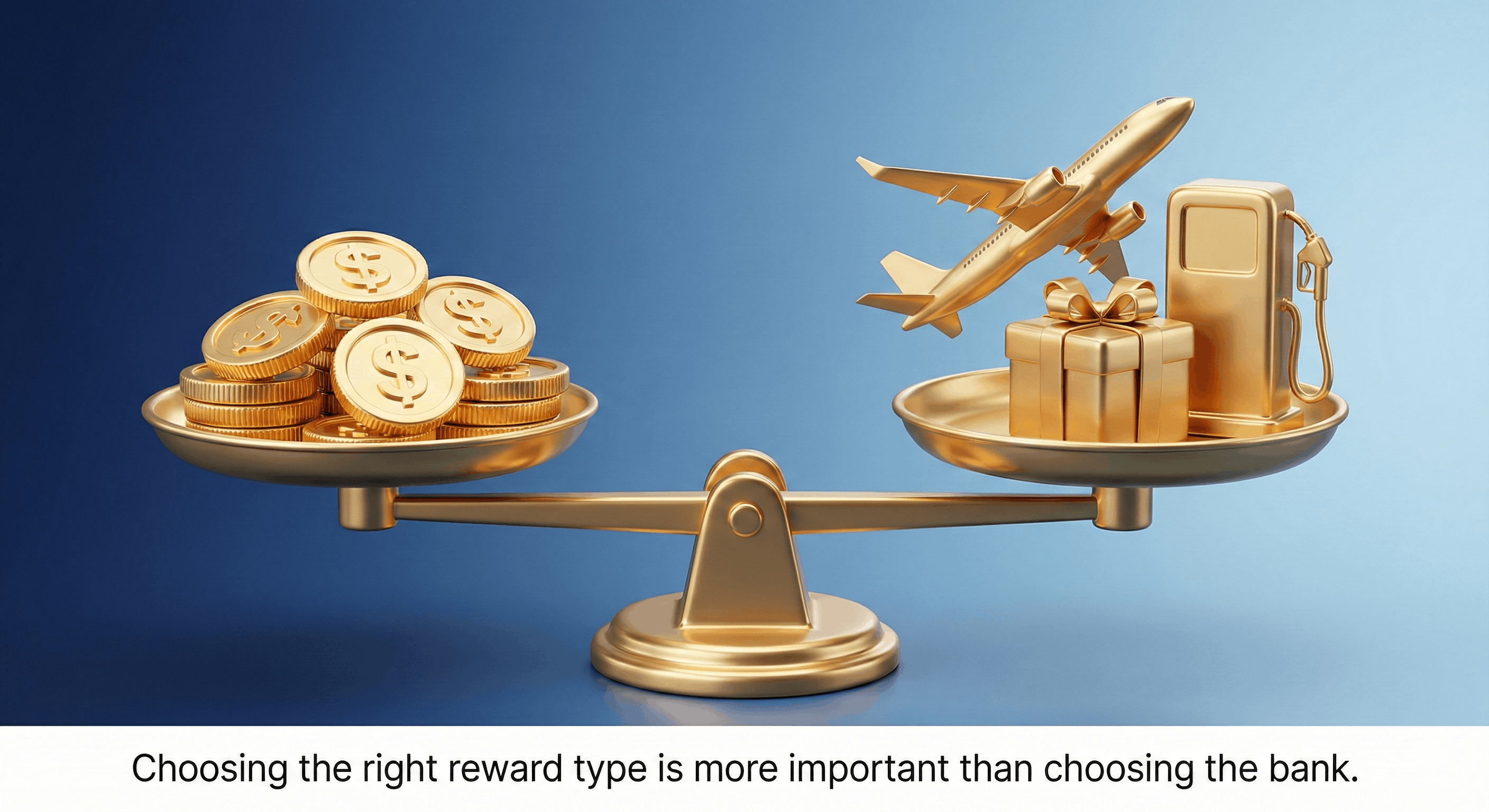
Credit Card Masterclass Part 3: Cashback vs. Rewards – How to Choose the Perfect Card & Earn Free Money
Introduction: The "Free Money" Myth Welcome to Part 3 of the Labhgrow Credit Card Masterclass.
In Part 1 and 2, we learned how to stay safe from debt traps and protect our CIBIL score. Now, it is time to have some fun. It is time to make the bank pay us.
Imagine going to a shop, buying a shirt for ₹1,000, and the shopkeeper secretly putting ₹50 back in your pocket. That is what a good Credit Card does. But here is the problem: There are hundreds of cards in the market. Some offer "Miles," some offer "Points," and some offer "Cashback."
How do you choose? If you pick the wrong card, you might end up paying a ₹3,000 Annual Fee for rewards you never use. In this guide, we will break down the Math of Rewards and show you how smart investors use these savings to fund their long-term goals like their PPF Account 2026.
Section 1: The Three Types of Credit Cards (Which one are you?)
Before you apply for a card, look at your lifestyle. Cards generally fall into three buckets:
1. The "Cashback" Card (For the Simple Spender)
- How it works: You spend ₹100, you get ₹1 to ₹5 back directly in your statement.
- Best for: People who hate math and just want to save money on groceries, utility bills, and online shopping.
- Pros: Real money. No expiry date.
- Cons: Capped limits (e.g., Max cashback ₹1,000 per month).
2. The "Rewards" Card (For the Shopper)
- How it works: You earn "Points" for every swipe. 1 Point could be worth ₹0.20 or ₹0.50.
- Best for: People who shop across different categories (Movies, Dining, Electronics).
- Pros: You can redeem points for vouchers (Amazon/Flipkart) or products.
- Cons: Points often expire after 2 years. Conversion rate is confusing.
3. The "Travel/Miles" Card (For the Jet-Setter)
- How it works: You earn "Air Miles" or "Hotel Points."
- Best for: Frequent flyers and luxury travelers.
- Pros: Massive value (Business Class tickets, 5-Star Hotel stays).
- Cons: High Annual Fee. Useless if you don't travel.
Section 2: The "Annual Fee" Debate (Free vs. Paid)
A common question I get is: "Bhai, why should I pay ₹1,000 or ₹3,000 as an Annual Fee when 'Lifetime Free' (LTF) cards exist?"
The Rule of Thumb: You should only pay a fee if the Value of Rewards > Fee Paid.
Example:
- Card A (Free): Gives 1% Cashback. If you spend ₹2 Lakhs a year, you save ₹2,000.
- Card B (Fee ₹1,000): Gives 3% Cashback. If you spend ₹2 Lakhs a year, you save ₹6,000.
- Net Profit: ₹6,000 (Savings) - ₹1,000 (Fee) = ₹5,000.
Verdict: In this case, the Paid Card is actually better because it puts an extra ₹3,000 in your pocket. Don't be afraid of fees; be afraid of low value.
Section 3: Connecting Rewards to Wealth (The Labhgrow Strategy)
Most people treat Cashback as "Free Money" and spend it on pizza. Smart Investors treat Cashback as "Investment Capital."
Let’s say you earn ₹5,000 Cashback annually from your credit card expenses. Instead of spending it, invest it!
The "PPF Booster" Strategy: Since you are already tracking your PPF Account 2026 limit (₹1.5 Lakh/year), you can use this credit card cashback to make a small extra contribution.
- Why PPF? It is EEE (Exempt-Exempt-Exempt).
- The Logic: Your credit card gives you money tax-free (cashback is usually not taxed as income), and you put it into PPF which grows tax-free.
- Result: You are using the bank's money to build your retirement corpus. This is how the rich get richer.
(Check our detailed guide on PPF Account 2026 to understand how even ₹500 extra can compound over 15 years!)
Section 4: The Dark Side of Rewards (Don't Get Tricked)
Banks are smart. They design rewards to make you spend more. Watch out for these traps:
1. The "Milestone" Trap "Spend ₹4 Lakhs this year and get a ₹2,000 voucher!"
- Reality: You might end up buying things you don't need just to hit that ₹4 Lakh target. Never spend to earn rewards. Spend only what you need, and take whatever rewards come naturally.
2. The "Devaluation" Risk Banks often change reward structures overnight.
- Today: 1 Point = ₹0.50.
- Tomorrow: 1 Point = ₹0.20.
- Strategy: Don't hoard points for 5 years. Redeem them regularly (at least once a year) to lock in the value.
3. The "Redemption Fee" Some banks charge ₹99 + GST just to redeem your points.
- Tip: Wait until you have accumulated a large number of points before redeeming, so the fee is a small percentage of your total value.
Section 5: How to Maximize Your Rewards (Pro Tips)
If you want to squeeze every rupee out of your card, follow these steps:
Use the Right Card for the Right Job:
- Use a Fuel Card for Petrol.
- Use a Shopping Card for Amazon/Flipkart.
- Use a Utility Card for Electricity/Bill payments.
Add-on Cards for Family:
- Get an "Add-on" card for your spouse or parents linked to your primary account.
- Benefit: All their spending adds to your reward points, helping you reach milestones faster without extra fees.
Check "Merchant Offers":
- Before buying a phone or fridge, check Amazon/Flipkart. Usually, specific banks offer "Instant 10% Discount." This is often worth more than regular reward points.
Conclusion: It’s Not About the Points, It’s About the Mindset
Choosing the right credit card is like choosing a business partner.
- If you travel a lot, get a Miles card.
- If you have a family and high grocery bills, get a Cashback card.
- If you want to build safe wealth, use that cashback to fund your PPF Account 2026 or SIPs.
You now know how to Choose the card and Use the rewards. But what if you are a student? Or a housewife? Or someone with a bad credit history who can't get any card? Don't worry. There is a "Backdoor Entry" into the world of credit cards.
Coming Up in Part 4 (Finale): The Secured Credit Card (FD Card) – How to get a credit card without a job or salary slip, and use it to repair a broken CIBIL score.
Disclaimer: The information provided in this series is for educational purposes only. Labhgrow.in does not promote any specific bank. Reward structures and interest rates are subject to change by banks. Please read the "Most Important Terms and Conditions" (MITC) carefully before applying.